A five-year-old company that lost $104 billion in nine months just became one of the ten most valuable public companies on Earth. Let that sink in for a second.
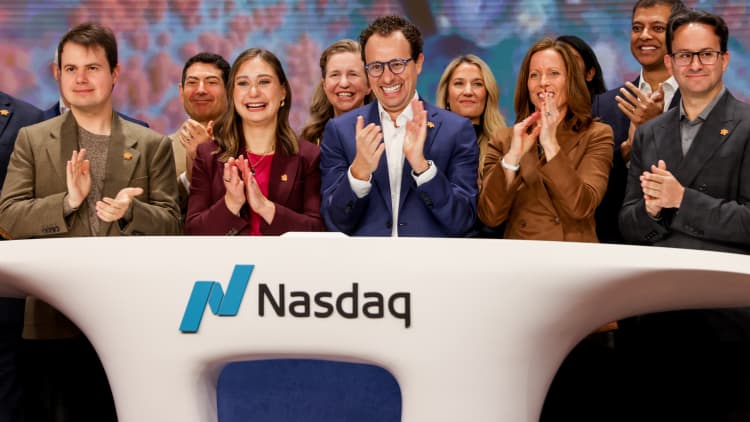
On Thursday, November 19, Anthropic, the AI lab behind Claude, pulled off the largest IPO in history, raising a record-breaking $81.3 billion. But the fireworks didn’t stop at the opening bell. When shares began trading on the Nasdaq under the ticker ANT, they opened at $111.50, a 34% pop from the $83 IPO price, briefly giving the company a nearly $2 trillion market cap.
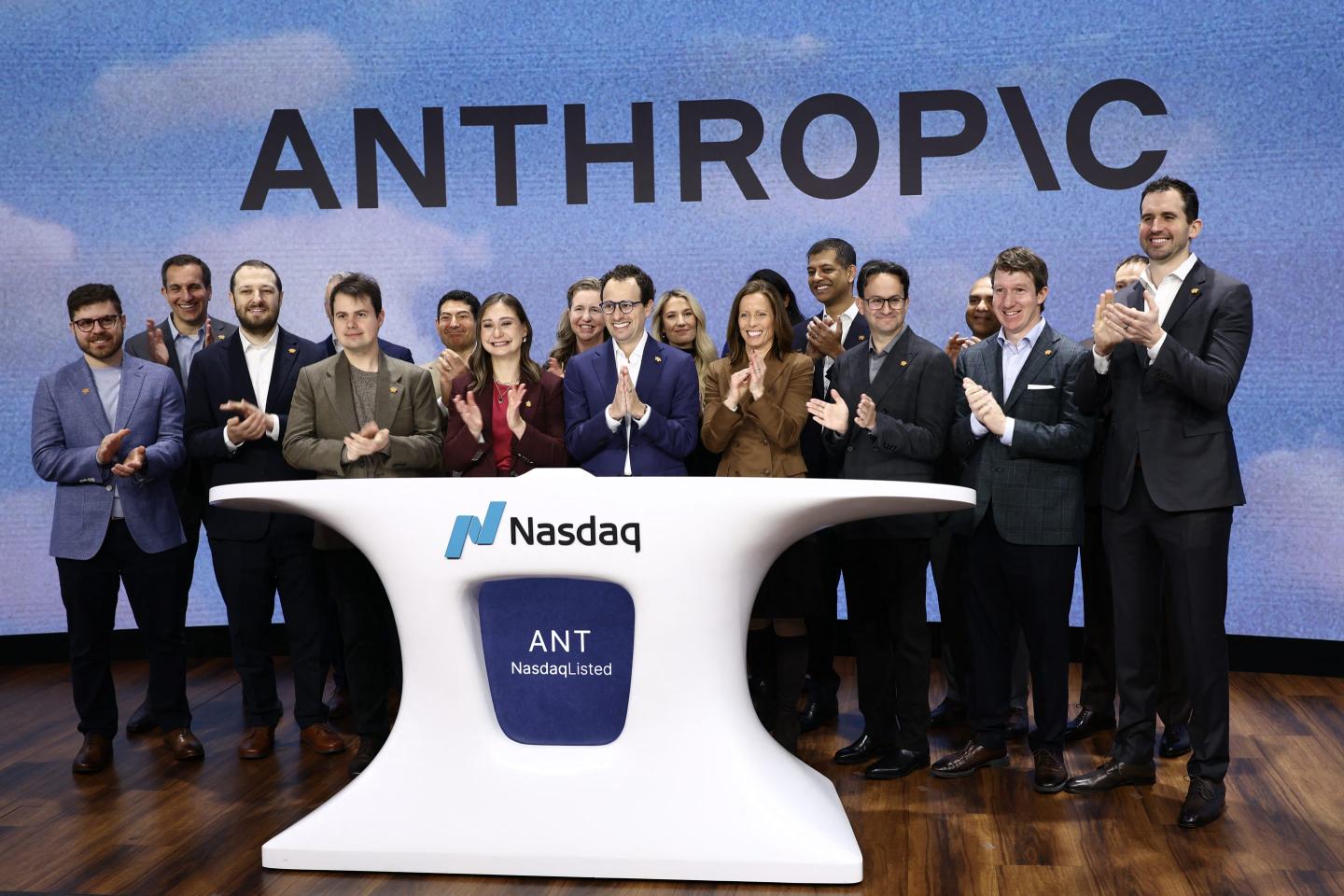
The stock eventually settled, closing the day at $97.17, up 17% from the IPO price, with a fully diluted market valuation of roughly $1.8 trillion. That puts Anthropic ahead of Meta, Tesla, and Broadcom, companies that took decades to build and actually generate profits.
But here’s the question that’s gnawing at everyone from retail traders to institutional investors: is this a genuine inflection point for the AI industry, or are we watching a bubble inflate in real time?
The Numbers Behind the Mania
Let’s start with the raw data, because the scale here is genuinely hard to wrap your head around.
Anthropic’s revenue story is nothing short of parabolic. The company generated $33.2 billion in revenue for the nine months ending September 30, up a staggering 1,200% from the $2.5 billion it posted in the same period last year. Annualized revenue hit roughly $81 billion as of the end of October.
For context, here’s the revenue trajectory from the IPO prospectus:
| Year | Revenue |
|---|---|
| 2023 | $41 million |
| 2024 | $386 million |
| 2025 | $4.585 billion |
| First half 2026 | $16.286 billion |
That’s a compound annual growth rate that would make even the most aggressive SaaS metrics look conservative.
The losses, however, are equally jaw-dropping. Anthropic posted a $104 billion net loss in the first nine months of 2026. The bulk of that red ink, about $94.3 billion, comes from non-cash accounting charges related to convertible notes and derivative liabilities. But even stripping those out, the company is burning through cash at a rate that would terrify most CFOs.
And then there’s the elephant in the room: the company has committed to roughly $900 billion in compute and infrastructure spending through 2045. CEO Dario Amodei, in his typical understated fashion, told CNBC that those commitments “don’t seem so large” when you look at the cash on the balance sheet and the revenue run rate. Whether that’s visionary confidence or delusional bravado depends entirely on which side of the bubble debate you sit on.
The Deal Mechanics: How Anthropic Pulled Off the Impossible
The IPO itself was a masterclass in deal engineering. Anthropic initially planned to sell 825 million shares at $70-$78 each. By the time the deal priced on Wednesday night, demand was so intense that the company expanded the offering to 980 million shares and raised the price to $83.
Institutional investors placed roughly $400 billion in orders, about five times what was available. Retail investors added another $100 billion in non-binding indications of interest, making this the largest retail demand for any IPO in history. The shares ended up being seven times oversubscribed, with only about half of institutional orders being filled.
The company also secured a $26 billion private placement from seven strategic partners: AMD, Broadcom, Google, Micron, Microsoft, Nvidia, and TSMC. These tech giants bought non-voting Class N shares at the same price as public investors, cementing their stake in Anthropic’s future, and creating a formidable alliance of interests that will only deepen as AI infrastructure spending continues.
Add in the underwriters’ greenshoe option for an additional 147 million shares, and the total potential capital raise hits $119.5 billion. To put that in perspective, that’s more than all the IPOs in 1999, 2000, 2014, or 2020 combined. SpaceX’s $75 billion IPO in June, which held the previous record, now looks almost quaint.
The Valuation Conundrum: What Is Anthropic Actually Worth?
Here’s where things get interesting, and where the bubble talk starts to heat up.
NYU finance professor Aswath Damodaran, one of the most respected valuation experts in the world, pegged Anthropic’s fair value at $76.98 per share in an analysis he updated before trading began. That’s about 30% below the IPO price and 45% below the opening trade. His model assumes data centers become significantly more expensive to build and that tighter AI regulation is on the horizon.
Wall Street research firms, predictably, are far more bullish. Wolfe Research initiated coverage with a $135 price target. Citizens went with $125. Needham said $150. Melius topped them all at $155. Morningstar’s fair value estimate sits at $92, which at least feels grounded in something resembling reality.
The gap between Damodaran’s $77 and Melius’s $155 isn’t just a difference of opinion, it’s a fundamental disagreement about whether AI companies can justify their infrastructure spending with sustainable returns. As one analyst on Twitter joked, “Anthropic could develop AI systems which become fully autonomous and wipe out humanity, which may lead to a serious decline in earnings.”
The Insider Signal: When Founders Buy Escape Land
Here’s a detail that should give anyone pause: some of Anthropic’s earliest employees are reportedly scouting remote land in escape communities, properties designed for wealthy tech insiders who want to ride out potential civilizational collapse. This isn’t a joke, and it’s not unique to Anthropic. It’s a well-documented phenomenon among AI researchers who genuinely believe they’re building technology that could end the world.
The juxtaposition is stark: Anthropic tells investors it’s building AI “for the long-term benefit of humanity”, while its S-1 filing lists “catastrophic or existential risks to humanity” as a risk factor, and some insiders are hedging against societal collapse. As we explored in our analysis of Anthropic insiders’ concerns amid IPO optimism, this cognitive dissonance is baked into the company’s DNA.
The Governance Experiment: A Public Benefit Corporation That Answers to No One
What makes Anthropic’s IPO particularly unusual is its corporate structure. The company is a public benefit corporation (PBC), which legally requires the board to weigh the interests of shareholders against the company’s stated mission: “the responsible development and maintenance of advanced AI for the long-term benefit of humanity.”
That sounds noble. But the structure also concentrates power in ways that would make most corporate governance experts uncomfortable. The seven co-founders control 50.1% of the voting power through a special class of shares held in “Founder LLC.” Combined with their direct holdings, they control 61.3% of the vote.
The board of directors is equally insulated. A five-member “Long-Term Benefit Trust” selects most board seats, and the trust’s members have no financial stake in the company. Former Federal Reserve Chair Ben Bernanke sits on it. This means public shareholders are essentially buying a ticket to a movie they have no control over, they can watch, but they can’t change the ending.
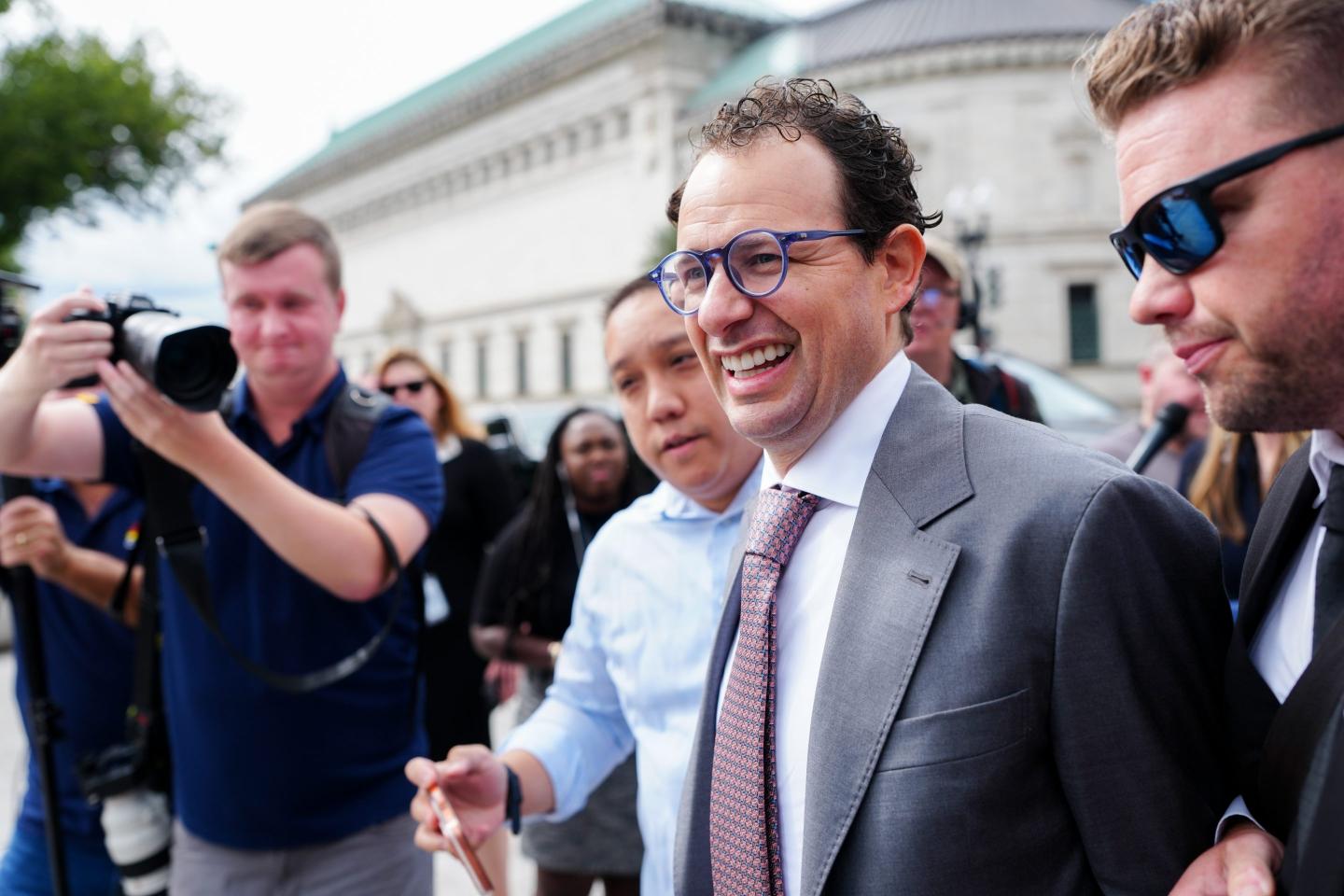
Amodei has been characteristically direct about this arrangement. “We will not bend to either business or political pressure”, he said in his opening bell speech at the Nasdaq. For investors who believe in the mission, that’s reassuring. For those who wanted a voice in how the company operates, it’s a deal-breaker.
The Founders’ Windfall and the Giving Pledge
The IPO minted vast fortunes. Each of the seven co-founders saw their stakes valued at approximately $18 billion at the IPO price. At least 400 early employees are worth $100 million or more, and roughly 5,100 of Anthropic’s 5,300 employees have equity worth over $1 million. The average employee is worth over $40 million.
The founders have pledged to give away the vast majority of their wealth, 80% of their Anthropic equity is committed to philanthropic causes. That’s a meaningful commitment, though it’s worth noting that the pledge is largely unenforceable and applies to equity they can’t sell for at least a year due to lock-up restrictions.
Eric Schmidt, the former Google CEO, is quietly sitting on a $20 billion windfall from his early investment in Anthropic. For Schmidt, the path to that fortune traces back to an introduction from his ex-partner Cami Clark, who is now Dario Amodei’s wife. Silicon Valley, as always, runs on relationships.
The Market Signal: AI Stocks Tanked While Anthropic Soared
Here’s the most telling detail from Thursday’s trading session: while Anthropic’s stock popped, nearly everything else in the AI sector got crushed.
The Nasdaq closed down 550 points (2.25%). The Dow dropped 1,101 points (2.19%). AMD shares sank 10.6% after a short seller report raised questions about its ties to blacklisted Chinese companies. Nvidia slipped another 3.5%, extending its losses from the Jensen Huang scandal. Roughly 93% of S&P 500 stocks closed lower.
The pattern suggests investors were selling other AI names to buy Anthropic, a classic rotation trade that may not bode well for the broader sector. As one market strategist put it, “Stocks got crushed in a broad selloff as Anthropic’s record IPO failed to rescue the AI trade.”
The timing of Anthropic’s debut was particularly awkward. Jensen Huang’s dramatic resignation as Nvidia CEO the previous week, following reports of extramarital affairs, including one with a customer suspected by US intelligence of being a Chinese intelligence asset, had already shaken investor confidence. The parallels between Nvidia’s founder-led governance risks and the broader AI market are hard to ignore.
What History Tells Us About Mega-IPO Performance
If you’re tempted to buy Anthropic stock at these levels, history offers a sobering perspective.
Ryan Detrick, chief market strategist at Carson Group, crunched the numbers on major IPOs since Google’s debut in 2004. The median first-day return was 31%, Anthropic’s 17% close was actually below that average. But here’s the kicker: the median maximum drawdown over the following 12 months was 53%.
Let me repeat that. Major IPOs since 2004 have lost, on average, more than half their value at some point in the year following their debut.
SpaceX offers the most recent cautionary tale. It IPO’d in June at $135, opened at $150 (up 11%), and traded as high as $176.52 on day one. By Thursday, it was trading at $138.43, barely above its IPO price and 22% below its debut-day high.
Anthropic has also set up a staggered lock-up schedule that could create significant selling pressure. The company has 23 different lock-up expiration dates, with tranches ranging from 174 million shares to as many as 3 billion. The earliest lock-up expirations begin on the first trading day, and the final tranche doesn’t unlock until after Q3 2027 earnings.
If you bought at the $111.50 open, you’re already down 13% from the closing price of $97.17. And as financial advisors were quick to remind retail investors, “Buying Anthropic at Thursday’s open could be like running into a casino after everyone else has already hit the jackpot.”
The Enterprise Bet: Is Claude Actually Better Than the Competition?
The bulls argue that Anthropic’s valuation is justified by its enterprise momentum. The company claims to have 14,000 business customers, with nearly 12,000 of them spending $100,000 or more annually. Nearly 80% of Anthropic’s revenue comes from token-based consumption, businesses paying for actual AI usage, not just subscriptions.
Data from Vertice, an AI procurement platform that tracks 1,000+ companies, found that enterprises spend more than twice as much with Anthropic as they do with OpenAI. That’s a significant data point, especially considering OpenAI’s first-mover advantage with ChatGPT.
Claude Code, Anthropic’s coding agent, has become the company’s most visible product. It’s been adopted by NASA engineers and is widely used across the Fortune 500. The tool has made Anthropic a driving force in the enterprise AI market, giving it an early foothold in workplace automation. As we noted in our analysis of Claude model evolution and architectural strategy, Anthropic’s approach to model design has positioned it well for enterprise adoption.
The company is also pushing into cybersecurity, where Wolfe Research analysts see a market opportunity as large as its coding business, potentially $500 billion annually. “Act 2 is Cyber which given the last week seems like it could be as big as Coding”, they wrote.
The Existential Question: Can Safety and Shareholder Value Coexist?
Before the IPO, more than 90 academics and AI safety experts signed “The MisAnthropic Statement”, accusing the company of using safety branding to court investors while quietly racing to build increasingly powerful AI systems.
“Anthropic warns that recursively self-improving AI could concentrate power and escape human control, yet races to build it first”, the statement reads. “The company uses safety branding to court investors, employees, and the public, even as it has quietly weakened its safety pledges and lobbied for self-serving regulation.”
Dario Amodei has called for the industry to “pace the frontier” of AI development, suggesting companies should drive “90 miles per hour” instead of “200 miles per hour.” But critics note that Anthropic released updates to its Fable and Mythos models in the same month it went public, and it loosened a core safety principle earlier this year, replacing self-imposed guardrails with a non-binding framework that “can and will change.”
Meanwhile, protesters gathered outside both the Nasdaq and Anthropic’s San Francisco headquarters, with chants of “ban AI that builds AI” and signs reading “AI out of healthcare” and “Stop tech oligarchs.”
The tension is real: can a company that’s legally obligated to serve shareholders also genuinely prioritize humanity’s long-term interests? Anthropic’s own S-1 filing lists the end of humanity as a potential risk factor, alongside more pedestrian concerns like its feud with the Pentagon and CEO reputation risk. Investors, naturally, seem to care more about the revenue growth than the extinction scenarios.
Amazon and Google’s $260 Billion Paper Windfall
One of the quiet winners here is Big Tech itself. Amazon and Google will collectively own nearly 30% of Anthropic after the IPO, Amazon at 14.7% and Google at 13.7%, representing a roughly $260 billion paper windfall on their combined investment.
Consider the timeline: Google invested in Anthropic in late 2022, shortly before Claude launched. Amazon made its initial investment in September 2023. Neither could have predicted that their bets would appreciate by this magnitude in such a short timeframe.
Nvidia also participated in the private placement, buying roughly $10 billion worth of Class N stock. This deepens the interdependence between the AI chipmaker and its largest customers, a relationship that’s already under scrutiny following the Huang scandal and reports of Nvidia’s increasing willingness to finance customers’ infrastructure purchases.
What’s Next: The Real Test Begins Now
The opening day pop is nice for the narrative, but the real challenge starts now. Anthropic will have to report quarterly earnings as a public company, and the market’s tolerance for massive losses will be tested in ways that private market investors never had to confront.
Several structural challenges loom:
- Revenue growth deceleration: Anthropic’s third-quarter growth slowed and costs jumped, according to its updated S-1 filing. The company’s run-rate revenue was $81 billion at the end of October, up from $65 billion in July, impressive, but the growth curve is bending.
- The $900 billion commitment albatross: The company has committed to spending nearly a trillion dollars on compute and infrastructure through 2045. Even with the IPO proceeds, that’s a staggering debt burden that will require either sustained hypergrowth or massive refinancing.
- Competition from every direction: OpenAI remains the market leader with a consumer brand Anthropic can’t match. Google continues to integrate Gemini across its ecosystem. Meta is pushing open-weight models. Mistral’s open-weight release is expanding options for enterprises that don’t want vendor lock-in.
- Regulatory risk: The midterm elections delivered a stinging rebuke to AI data center buildout, and lawmakers on both sides are circling. Senator Mark Warner has introduced legislation requiring AI companies to disclose financing details. The FTC is investigating product risks across the AI industry.
- The Nvidia overhang: Anthropic is deeply intertwined with Nvidia, as an investor, chip supplier, and strategic partner. The ongoing chaos at Nvidia following Huang’s resignation creates uncertainty that will inevitably spill over.
The Bottom Line: Betting on the “Age of Miracles” or Picking Up Pennies in Front of a Steamroller?
Anthropic’s IPO prospectus frames the company’s mission in grandiose terms: “an age of miracles.” The narrative is that AI will fit a century of scientific and medical progress into a decade, cure diseases, solve climate change, and unlock human potential in ways we can’t yet imagine.
That’s the pitch. The numbers behind it are genuinely remarkable. Enterprise adoption is real. Revenue growth is unprecedented. The technology, for all its flaws, is transformative.
But here’s the uncomfortable truth: no one knows how to value a company that could either transform civilization or destroy it. The range of reasonable outcomes is so wide that “valuation” becomes more of an exercise in storytelling than financial analysis.
Damodaran’s $77 price target assumes things get harder. The bulls’ $155 target assumes Anthropic maintains its trajectory and achieves the kind of margin expansion that current losses make difficult to envision.
If you’re a long-term believer in AI’s transformative potential, Anthropic might be the purest expression of that thesis available in public markets. If you’re looking for a reasonable entry point, history suggests waiting for the inevitable drawdown. The advancements in AI reasoning efficiency might eventually justify these valuations, but they’re not there yet.
The lock-up expirations alone will likely create opportunities to buy at lower prices. The median mega-IPO has historically lost more than half its value within a year. The question isn’t whether Anthropic will face serious turbulence, it’s whether the company’s growth can outpace the gravity of its commitments.
For now, the market has spoken: a five-year-old AI company is worth more than the UK’s five largest companies combined. That’s either the most bullish signal for AI’s future you’ll ever see, or the clearest sign yet that we’re in the final innings of a historic bubble.
Only time, and quarterly earnings, will tell which narrative wins.