AI.com didn’t just buy a Super Bowl ad, they bought a masterclass in public failure. For $15 million, they secured 30 seconds of airtime during Super Bowl LX to announce their arrival. For another $70 million, they had already purchased what might be the most expensive domain name in history. The total bill? $85 million to tell 127 million viewers that the future of AI had arrived. The problem? When those viewers actually showed up, the future crashed within minutes.
The Setup: $85 Million Worth of Hype
Let’s be clear about the stakes. Kris Marszalek, co-founder and CEO of Crypto.com, didn’t just wake up and decide to run a Super Bowl ad. This was a calculated land grab for AI mindshare. The domain purchase alone, confirmed by broker Larry Fischer as the largest domain transaction ever at $70 million, was meant to signal that AI.com wasn’t another chatbot wrapper. This was supposed to be foundational infrastructure.
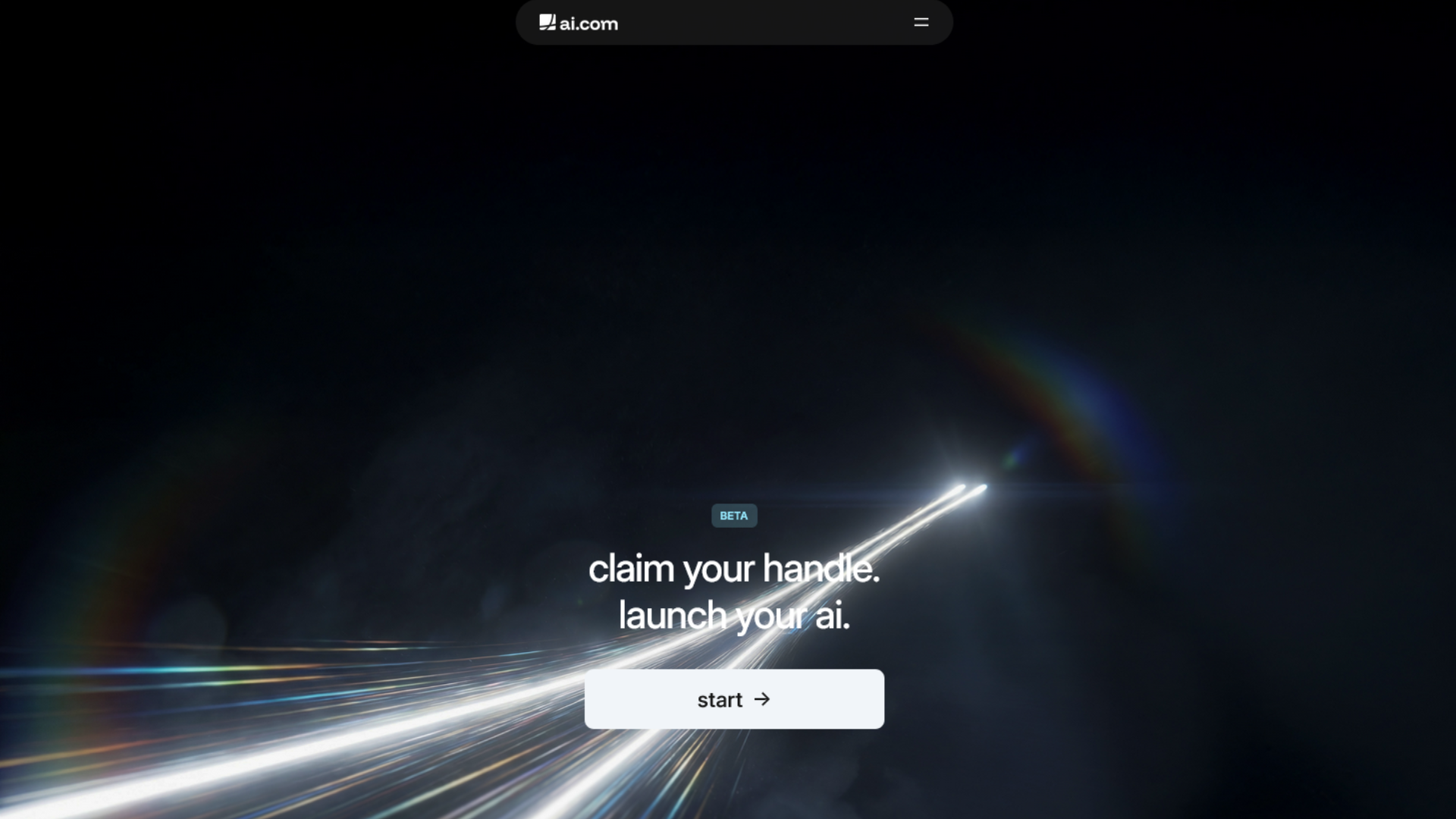
The ad itself, which aired in the fourth quarter, was straightforward: glowing orbs collide, the AI.com logo emerges, and viewers are urged to claim their handle. The spot even teased premium usernames like “Mark”, “Sam”, and “Elon”, a not-so-subtle wink at Zuckerberg, Altman, and Musk. The call-to-action was immediate and direct: visit AI.com right now and create your personal AI agent.
The platform promised something ambitious. According to their launch materials, users would get autonomous agents capable of “organizing work, sending messages, executing actions across apps, building projects, and more.” The key differentiator? These agents would “autonomously build out missing features and capabilities to complete real-world tasks”, sharing improvements across a network of millions.
It was a vision of AI that matched the price tag. But visions don’t matter if your servers can’t handle a traffic spike.
The Failure: When “Scale” Means Google Rate Limits
Within minutes of the ad airing, AI.com became unreachable. Users flooded social media with screenshots of failed sign-up loops and timeout errors. The site wasn’t just slow, it was dead. In the ADWEEK offices, staff who tried to check the site during the game got nothing but error pages.
Marszalek’s response on X was telling: “Insane traffic levels. We prepared for scale, but not for THIS.” He followed up with a more specific excuse: the site was “hitting Google rate limits (which are at their absolute global maximum).”
This is where the story shifts from embarrassing to illuminating. The “Google rate limits” excuse reveals the architectural reality behind the $85 million facade: AI.com’s entire onboarding flow was bottlenecked through a single third-party authentication provider. When millions of Super Bowl viewers simultaneously hit “Sign in with Google”, they didn’t just test AI.com’s infrastructure, they tested Google’s willingness to let one client consume a disproportionate share of authentication quota.
For a company positioning itself as foundational AI infrastructure, this is architectural malpractice. It’s the digital equivalent of building a skyscraper on a single load-bearing wall. When that wall cracks, the whole building collapses.
The Aftermath: Community Blood in the Water
Developer forums and social media didn’t respond with sympathy. They responded with savage precision. The sentiment across tech communities was uniform: this wasn’t just a mistake, it was a reveal.
The thread devolved from there. Some commenters noted the absurdity of a company with only 1,100 Instagram followers running a Super Bowl ad. Others pointed out that the “Mark, Sam, Elon” gimmick was less clever when you realized it was just referencing famous AI CEOs. The prevailing sentiment was clear: this wasn’t a technical hiccup, it was evidence of a company that prioritized marketing theater over engineering fundamentals.
The credit card verification requirement, where users had to provide payment details for “identity confirmation” but wouldn’t be charged, added another layer of suspicion. As one developer put it, the whole thing felt like a data collection play disguised as an AI platform. The crash just proved they couldn’t even do that competently.
The Deeper Problem: Scaling Theater vs. Scaling Reality
AI.com’s failure represents something larger than one company’s bad night. It’s a symptom of a culture shift in AI startups where the gap between marketing spend and engineering maturity has become a chasm.
Consider the numbers. AI.com spent:
– $70 million on a domain name
– $15 million on 30 seconds of airtime
– An unknown but presumably substantial amount on creative production
What they didn’t spend that money on was a infrastructure architecture that could handle the one event they were specifically preparing for. This isn’t just poor planning, it’s a fundamental misunderstanding of what scaling means.
Senior engineers who’ve actually scaled systems under pressure know that true scalability isn’t about handling your average Tuesday traffic. It’s about designing for the worst-case scenario you can imagine, and then adding margin for the scenario you can’t. It’s about circuit breakers, graceful degradation, multiple authentication pathways, and load testing that simulates actual user behavior.
AI.com’s approach was the opposite: a single point of failure (Google auth), no visible fallback mechanism, and an architecture that collapsed at the first sign of success. This is what happens when your “scaling strategy” is a line item on a pitch deck rather than a core engineering principle.
The AI Ad Bubble: 23% of Super Bowl Ads Can’t All Be Winners
AI.com wasn’t alone in the AI advertising blitz. According to iSpot, 23% of Super Bowl ads this year promoted AI companies or products. OpenAI, Anthropic, Google, and Microsoft all bought airtime. The AI gold rush has officially reached the last remaining mass-market advertising event.
But here’s the uncomfortable truth: when everyone is shouting “AI” at the same time, nobody can hear themselves think. The category becomes noise. And when your technical foundation is as shaky as AI.com’s, that noise quickly becomes mockery.
This over-saturation mirrors broader market concerns. Microsoft’s recent stock drop wasn’t due to a single technical failure, it was because investors are starting to question whether AI spending will ever deliver proportional returns. AI.com’s crash is a microcosm of that anxiety: massive investment, massive hype, minimal technical substance.
The Lessons: What Engineering Leaders Should Actually Learn
If you’re an engineering manager or technical leader, AI.com’s failure isn’t just entertainment, it’s a free case study in what not to do.
1. Marketing Launch ≠ Product Launch
A Super Bowl ad isn’t a product launch. It’s a marketing event that requires a product to be launch-ready. AI.com treated their marketing moment as the finish line when it was actually the starting gun. The result was a product that failed its most important test.
2. Single Points of Failure Are Suicide at Scale
Relying exclusively on Google authentication for a mass-market consumer product is reckless. Architectural failures in AI systems under real-world stress often follow the same pattern: one component fails, and the entire system cascades. Proper architecture assumes any dependency can and will fail, and plans accordingly.
3. Cost Doesn’t Equal Competence
Spending $85 million doesn’t buy you technical excellence. It doesn’t even buy you basic reliability. That money could have funded a world-class infrastructure team for years. Instead, it funded a domain name and a TV spot. The lesson: allocate your budget where it actually reduces risk, not where it looks good in press releases.
4. The “Success Disaster” Is Predictable
Every engineer knows the term “success disaster”, when your product is too successful and breaks under load. It’s a solved problem. Load testing, gradual rollouts, feature flags, and capacity planning exist for exactly this scenario. AI.com’s failure wasn’t a surprise, it was a choice to ignore decades of industry best practices.
The Bigger Picture: When AI Startups Forget How to Build
AI.com’s crash is more than a technical failure. It’s a cultural one. It represents a generation of AI startups that have learned to optimize for fundraising and media coverage while forgetting how to build systems that work under pressure.
The domain name purchase is instructive here. $70 million for AI.com wasn’t just expensive, it was a statement that the company’s identity was about owning AI, not necessarily building it. When your brand strategy is “we bought the best domain”, your engineering culture suffers. You start to believe that perception is reality, that having the right name matters more than having the right architecture.
But infrastructure doesn’t care about your marketing budget. Servers don’t read press releases. And users definitely don’t care how much you paid for your domain when they can’t sign up.
AI.com’s Super Bowl ad will be remembered, not as the launch of a revolutionary AI platform, but as a $85 million cautionary tale. The company had every advantage: massive funding, prime advertising real estate, and a simple, compelling call-to-action. What they didn’t have was the engineering discipline to handle the traffic they explicitly asked for.
In the end, the most honest moment of AI.com’s Super Bowl campaign wasn’t the polished ad. It was the error message users saw when they tried to engage. That blank screen said more about the state of AI startup culture than any 30-second spot ever could: we’re great at selling the future, but we’re still learning how to build it.
For engineering leaders, the takeaway is simple: before you spend millions telling the world you’re ready, spend thousands making sure you actually are. Because when the lights are brightest and the traffic is heaviest, there’s no marketing budget large enough to hide a broken architecture.
Want to understand how senior engineers actually approach scaling challenges? Read about the mindset gap that separates prepared teams from PR disasters.