Every few months, a developer posts the same question: “Where do I learn the basics of software architecture?” The thread fills up with book recommendations, “Fundamentals of Software Architecture”, “Software Architecture: The Hard Parts”, and the usual advice to “just build stuff.” But buried in one of these threads is a more interesting signal: “I’m trying to build a mental map of ‘when to use what.’ I’m not looking to memorize the implementation details of every pattern.”
That sentence captures the exact fault line in how most developers approach architectural education. The industry has spent decades treating design patterns like flashcards, memorize the UML diagram, recite the participants, pass the interview. But the developers who actually make good architectural decisions don’t have better memories. They have better mental models.
The Memorization Trap
Here’s the uncomfortable truth about the Gang of Four catalog: knowing 23 patterns by heart won’t make you a good architect. It will make you great at trivia night and marginally better at passing system design interviews. But when you’re staring at a real codebase with real constraints, thousands of files, legacy decisions, shifting requirements, pattern memorization becomes cargo cult thinking.
The developer who asked that question on Reddit recognized something crucial: the gap between “knowing a pattern exists” and “knowing when to reach for it.” That’s the difference between a trivia contestant and a working architect. The second skill requires building an internal decision tree that maps problems to solution shapes, not solutions to implementation checklists.
Think about how experts actually operate. A senior architect doesn’t mentally scroll through 23 patterns when faced with a design problem. They ask one question first: “What varies?” That single framing, popularized in Dive Into Design Patterns and the Refactoring.Guru materials, collapses the entire catalog into three branches: creation, structure, and behavior. Once you know which axis is varying, the pattern space shrinks dramatically.
The “What Varies?” Framework
The most elegant mental model for design patterns bypasses memorization entirely and starts with a single question: “What varies in my problem?” The answer funnels you directly into one of three buckets:
- Creation varies → Creational patterns (how objects are born)
- Structure varies → Structural patterns (how objects are wired)
- Behavior varies → Behavioral patterns (how objects communicate)
Within each bucket, the decision tree narrows further. If you need to create objects but don’t know the concrete type until runtime, you’re looking at Factory Method. If you need families of related objects that must stay consistent, that’s Abstract Factory. If your constructor has fifteen optional parameters, Builder is screaming at you.
This isn’t just a taxonomy trick. It’s a fundamental reframing of how you approach design. Instead of asking “Which pattern should I use?” you ask “What is changing, and how can I isolate that change?” The patterns become consequences of that isolation strategy, not arbitrary templates to apply.
The importance of disciplined architectural thinking in the AI era makes this distinction even more critical, AI coding assistants can generate pattern implementations on demand, but they can’t tell you which pattern your problem actually needs.
Active Recall Over Passive Reading
The reason most pattern learning fails is simple: reading is passive, architecture is active. You can read about the Decorator pattern fifteen times and still reach for it in the wrong context. What actually works is an active recall loop that forces your brain to reconstruct the pattern from scratch.
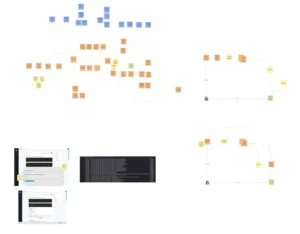
The approach used in the “What Varies?” mind map is worth stealing wholesale. The learning sequence looks like this:
- Trigger Q, Read only the trigger question (e.g., “Need families of related products and must keep them consistent?”)
- Say the one-liner, Articulate the pattern’s intent out loud without looking
- Sketch the participants, Draw the structure from memory
- Write a skeleton, Code 5-10 lines of a minimal implementation
- Check your notes, Identify what you got wrong
- Drill confusion pairs, Focus on patterns you consistently mix up (Decorator vs Proxy, Strategy vs State)
This isn’t study technique fluff. The active retrieval practice is backed by decades of cognitive science research as the most effective way to transfer information from short-term to long-term memory. And it directly addresses the problem the Reddit OP identified: building a map you can navigate, not a list you can recite.
The confusion pairs are particularly valuable. If you can’t clearly articulate the difference between Adapter (changes interface), Decorator (adds behavior with same interface), and Proxy (controls access with same interface), you don’t actually understand any of them. Drilling those distinctions forces you to think about intent, not implementation.
The Decision Tree as a Mental Compass
The most practical output of any good architectural mental model is a decision tree you can walk through in real time. When you encounter a design problem, you should be able to trace a path through a small set of branching questions that lands you on a pattern or composition of patterns.
The full decision tree from the “What Varies?” framework covers all 23 GoF patterns, but you don’t need to memorize the tree. You need to internalize the branching logic:
Creation branch:
- One of several products? → Factory Method
- Family of related products? → Abstract Factory
- Complex step-by-step construction? → Builder
- Clone an existing instance? → Prototype
- Exactly one instance? → Singleton (last resort)
Structure branch:
- Incompatible API? → Adapter
- Two varying hierarchies? → Bridge
- Tree of part/whole? → Composite
- Add behavior, same API? → Decorator
- Simplify a subsystem? → Facade
- Share intrinsic state? → Flyweight
- Control access/lazy/remote? → Proxy
Behavior branch:
- Pass request along handlers? → Chain of Responsibility
- Undo/queue/log actions? → Command
- Traverse a collection? → Iterator
- Untangle many-to-many communication? → Mediator
- Snapshot/undo state? → Memento
- Notify many listeners? → Observer
- Behavior changes by internal state? → State
- Swap algorithms? → Strategy
- Shared algorithm skeleton? → Template Method
- Add operations to stable structure? → Visitor
What’s striking about this tree is how few branches you actually walk through for most problems. In practice, 80% of your design decisions will land on no more than 10 of these patterns. The rest are specialized tools for specific contexts. The mental model helps you recognize when you’re in a specialized context, and when you’re not.
Why Implementation Details Are Overrated
There’s a strong counterargument: isn’t knowing implementation important? After all, a pattern you can’t code isn’t useful.
The distinction is between deep implementation knowledge and surface implementation recall. You should understand the structure and intent of a pattern well enough to implement it from scratch when needed. But you do not need to carry the entire implementation in your head at all times.
The developer who asked the original question got this exactly right: “Later, when I actually need to apply a given pattern, I’ll dig deeper into it.” This is how working architects operate. They maintain a mental index of what exists and what problem it solves. When a specific problem triggers the pattern’s signature, they pull the reference material, study the implementation details, and apply them with context.
This approach scales far better than brute-force memorization. The patterns catalog isn’t limited to 23 items. There are architectural patterns (event-driven, microservices, event sourcing), integration patterns, database patterns, deployment patterns. No human can hold all of those implementation details simultaneously. But anyone can build a mental map that maps problems to solution categories.
Architectural trade-offs when scaling AI systems demonstrate exactly this kind of pattern recognition in action, knowing that a vector search pipeline will break around 50,000 documents requires understanding the limits of the pattern, not just its API.
The Building Phase: Theory Meets Practice
The Reddit thread included a comment from a developer who articulated the actual learning cycle perfectly: “In my experience, that’s an iterative process. You read a book that covers the basics of OOP. Then you spend a couple of months writing a game or simple application. Then you find a job and get lost in a much larger project. Then you need to read more books to understand what is going on. Then you get your own component to evolve, and you want to read more and compare the reading with your own experience.”
This is the anti-tutorial approach to architectural education. It acknowledges that theory without practice is empty, and practice without theory is aimless. The iterative loop of:
- Study fundamentals (OOP, patterns, principles)
- Build something and hit a wall
- Identify what went wrong in architectural terms
- Study the patterns or principles that address the failure
- Rebuild with the new understanding
- Repeat
The “build something” phase doesn’t need to be a production system. A game, a CLI tool, a simple web application, any sufficiently complex personal project will surface design problems that pattern knowledge solves. The key is recognizing the problem as a pattern-shaped hole when you encounter it.
Using and critically evaluating architectural modeling techniques can help formalize this reflection process, diagramming what you built and where it struggled forces you to think in architectural terms.
Practical Resources That Build Mental Models
If the goal is mental model building over pattern memorization, not all resources are created equal. The most valuable ones share a common structure: they frame patterns as consequences of design principles, not as standalone solutions.
The Refactoring.Guru catalog by Alexander Shvets is probably the best starting point. Every pattern is presented with a consistent structure: real-world analogy, problem statement, solution, and code examples across multiple languages. The “Confusion Pairs” sections are particularly valuable for building discrimination between similar patterns.
The “What Varies?” mind map approach formalizes this into a recall-first system. Every pattern node in the map follows a consistent structure:
– Trigger Q: When does this pattern apply?
– One-liner: Intent in a single sentence
– Hook: A real-world metaphor for memory anchoring
– Structure: The participating types
– Skeleton: Minimal working code
– Trap: The most common misuse
This structure explicitly trains the mental index, not the implementation details.
For deeper architectural thinking, “Fundamentals of Software Architecture” by Mark Richards and Neal Ford and “Software Architecture: The Hard Parts” by the same authors provide the decision-making frameworks that patterns fit into. These books teach you to think about trade-offs, not templates.
The iSAQB curriculum (International Software Architecture Qualification Board) is another structured path, particularly in Europe. It provides a standardized body of knowledge and certification path that focuses on architectural thinking rather than pattern recitation.
The Quality of Architecture Discourse
One warning: the quality of architecture discussion online is deteriorating. The decline in quality of software architecture discussions due to AI-generated content is real, vague, generic responses that sound authoritative but contain no actual insight. A developer recently posted to r/softwarearchitecture: “I came to this sub hoping for high quality discussions instead it just ai slop spam now.”
This makes it even more important to have a solid personal mental model. When forums are full of noise, your internal decision tree becomes your primary filter. You need to be able to evaluate advice against your own understanding, not just accept pattern recommendations at face value.
The shift from memorizing patterns to building mental models isn’t academic, it’s practical. It changes how you learn, how you design, and how you communicate. Instead of saying “we should use the Observer pattern here” and hoping you’re right, you say “we have a one-to-many dependency where state changes in this object must trigger side effects in several others, and we don’t want tight coupling.” That’s a problem statement that leads naturally to Observer, but it also lets you consider alternatives (event bus, channels, reactive streams) that might be better for your specific context.
The patterns are the vocabulary, but the mental model is the grammar. Without grammar, you’re just shouting nouns at the problem.
Start with “What varies?” Drill the confusion pairs. Build the decision tree. And when you actually need to implement a pattern, you’ll know exactly where to look.