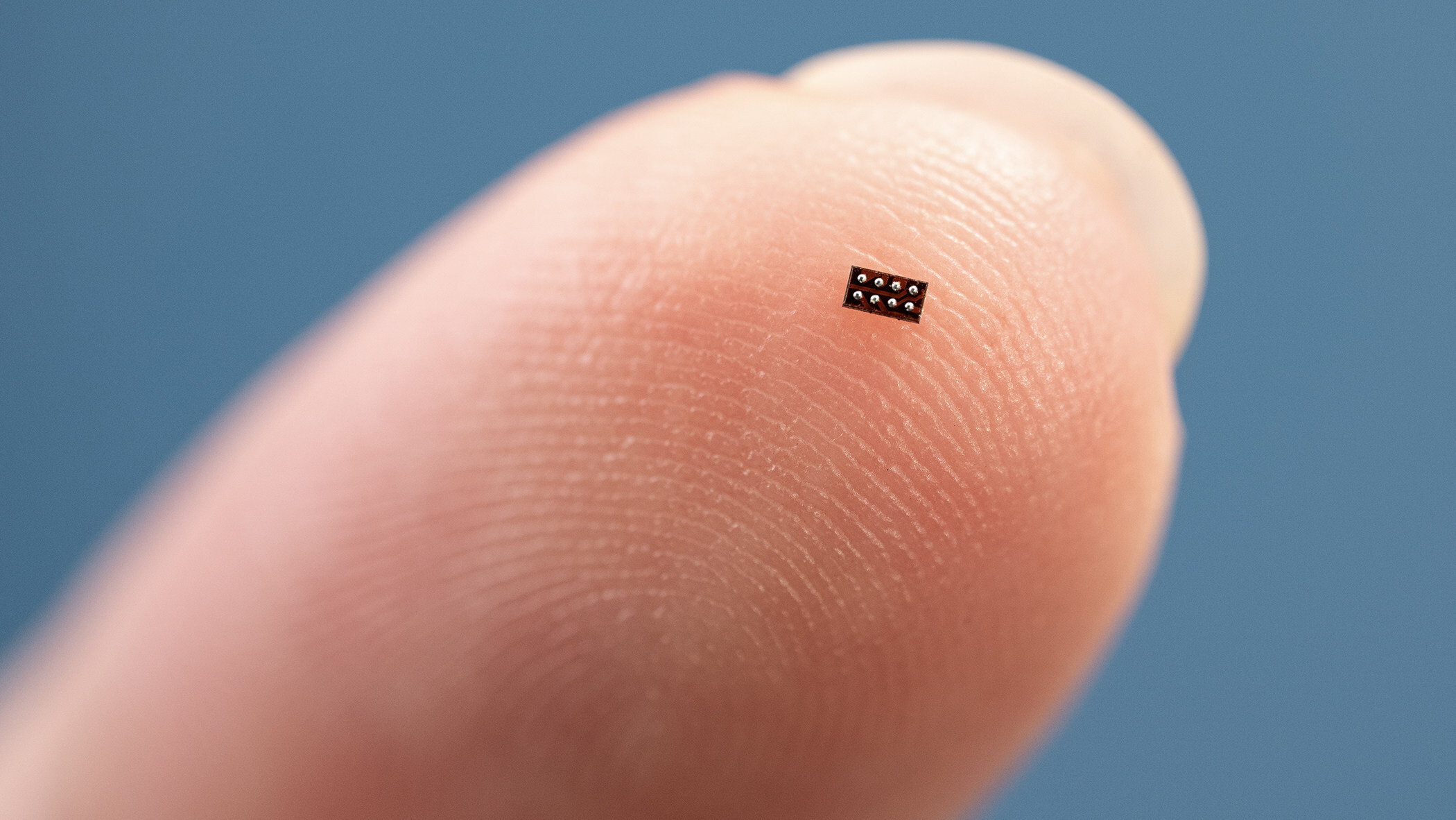
But something unexpected happened on the way to AGI. A quiet revolution is taking place on laptops, Raspberry Pis, and consumer GPUs. Small language models, those under 10 billion parameters, are becoming shockingly capable, and the community is figuring out exactly what to do with them.
This isn’t about benchmarks or leaderboard positions. It’s about real people running real models for real work, and the results are reshaping how we think about AI deployment.
The Meme That Started a Conversation
A Reddit post titled simply “Seriously, what do you do with them?” sparked an extraordinary discussion. The image attached showed a meme about small LLMs, but the comments told a different story, one of developers, compliance officers, and hobbyists who had already figured out what the hype cycle hadn’t caught up to yet.
The thread racked up nearly 400 upvotes and 89 comments in hours, with users from around the world sharing their production deployments of models under 8B parameters. This wasn’t theoretical. These were working systems.
The Killer App Nobody Expected: Compliance Filtering
The most compelling use case to emerge from the community discussion wasn’t coding assistance or document summarization. It was compliance pre-screening.
One developer described running a 1-4B parameter Phi model locally on mobile devices as a privacy-first filter. Here’s the scenario: users dictate into a phone, and before the audio ever reaches a cloud API, the local model scrubs it for personally identifiable information (PII), health records, or other regulated data.
“So how do we prevent that? Well instead of mapping the voice to text button to the cloud input we sent it to the local LLM to process and that local LLM on the device has clear instructions on what it’s looking for and what to strip before uploading it to the cloud.”
This is precisely the kind of architecture that makes enterprise use of compact, specialized AI models so compelling. A 7B model running on a laptop can handle compliance screening for an entire department at zero marginal cost.
Another developer confirmed using Qwen in a similar capacity: “I use Qwen in a similar way to check compliance to specific industry grammar norms, basically a technical version of simplified English.”
The 0.6B Embedding Model That’s Changing RAG Economics
The most surprising technical insight came from a developer pushing the boundaries of what “small” means. They’re using Qwen3’s 0.6B embedding model as the backbone for local Retrieval-Augmented Generation (RAG) pipelines.
“Qwen3 embedding 0.6B is great for powering local RAG without wasting a ton of valuable VRAM your other local models need… honestly the 0.6B is worth the trade offs for the size.”
The specific implementation runs entirely on CPU while the GPU handles the primary inference model. Here’s the exact command they shared:
CUDA_VISIBLE_DEVICES="" build/bin/llama-server \
    -m ~/myp/models/embedding/Qwen3-Embedding-0.6B-Q8_0.gguf \
    -c 8192 \
    -t 16 \
    --host 0.0.0.0 --port 8082 \
    --embeddings --pooling last
That’s a RAG pipeline running on a 600MB model that leaves your main GPU completely untouched. The implications for cost-efficient AI models enabling edge deployment are enormous.
The Model Router: When Small Becomes Strategic
Another commenter shared a lightweight 51M parameter router model that decides which model should take the first crack at any given query. This is the kind of architectural thinking that only emerges when the community stops chasing scale and starts optimizing for efficiency.
The router concept is brilliant in its simplicity: instead of throwing a 70B model at every query, route simple questions to a 1-3B model and escalate only the hard ones to the heavy artillery. This hybrid approach mirrors what running small LLMs on consumer-grade hardware enables at scale.
The Hardware Reality Check
Let’s be brutally honest about what you actually need. A quantized 7B model at Q4_K_M sits at roughly 4.5-5GB file size. You can run this on a laptop with 16GB of RAM. The 70B models require 40-43GB at the same quantization level, meaning you need either a massive GPU or are willing to crawl through CPU inference.
The local deployment ecosystem has matured dramatically. llama.cpp now has over 118,000 GitHub stars and 900 contributors. It ships with an OpenAI-compatible API server that takes about 40 minutes to set up from scratch. Ollama wraps this in an even friendlier package.
| Model | Q4_K_M Size | Min RAM | Key Strength |
|---|---|---|---|
| Llama 3.1 8B | ~4.9 GB | 16 GB | General reasoning, RAG |
| Qwen2.5 7B | ~4.5 GB | 16 GB | Multilingual, coding |
| Mistral 7B | ~4.3 GB | 12 GB | Fast inference, LoRA |
| Gemma 2 9B | ~5.5 GB | 16 GB | Clean outputs, safety |
| Phi-3 Mini | ~2.5 GB | 8 GB | Edge devices, CPUs |
The Production Economics Nobody Talks About
A private LLM deployment becomes economically justified versus managed APIs when you process over 2 million tokens per day or operate under strict compliance like HIPAA or PCI DSS. Most teams see payback within 6-12 months.
The cost breakdown is revealing:
| Tier | Infrastructure | Monthly Cost |
|---|---|---|
| Small prototype | Cloud GPU, fine-tuned 7B | $1,000 – $5,000 |
| SMB production | VPC + managed inference | $15,000 – $40,000 |
| Enterprise scale | Multi-GPU cluster | $50,000+ |
But here’s what 68% of enterprises underestimate: engineering, monitoring, and security typically add 1.5-2x on top of infrastructure spend. A $15,000/month GPU bill becomes a $35,000/month total with MLOps, guardrails, and evaluation pipelines.
This is precisely why the deployment of sovereign, on-premise AI models is gaining traction with governments and regulated industries.
The Emerging Stack: What’s Actually Being Deployed
The community has converged on a surprisingly consistent stack for local LLM deployment:
- Inference Engine: llama.cpp or Ollama (wraps llama.cpp)
- Model Format: GGUF with Q4_K_M quantization (the community’s sweet spot)
- API Layer: OpenAI-compatible local server (llama-server)
- RAG Backend: Qwen3 0.6B embeddings on CPU
- Frontend: Anything from custom Python to Open WebUI
The most sophisticated deployments use a hybrid architecture: a local llama.cpp server handling 95% of queries privately and for free, with a hosted frontier model reserved for the hardest 5%.
Where Small LLMs Actually Fail (And Where They Don’t)
Let’s address the elephant in the room. Small models are not replacing GPT-5.5 for complex reasoning tasks. But they’re not supposed to. The community has identified where they genuinely outperform their cloud counterparts:
Where small LLMs win:
- Real-time compliance screening (data never leaves the device)
- High-volume document classification (zero marginal cost)
- Personal assistants with private data (medical, legal, financial)
- Offline coding assistance (works on planes and air-gapped networks)
- Moderation pipelines (pre-filtering before cloud upload)
Where they still struggle:
- Complex multi-step reasoning
- Creative writing and nuanced content generation
- Tasks requiring up-to-the-minute knowledge (without RAG)
- Long-context understanding beyond 32K tokens
The Vision Model That Changes Everything
Gemma 4’s E2B variant introduces “effective parameters” through Per-Layer Embeddings, where each decoder layer gets its own small embedding table used as a lookup rather than full compute. This architectural innovation means models can appear larger than their actual parameter count suggests.
For vision-language tasks, the 4B and 8B vision variants are proving surprisingly capable at question answering, captioning, and object detection. One developer noted: “There’s way more efficient DL models but sometimes it’s easier to just use what you have loaded.”
The small LLM revolution isn’t about competing with frontier models on benchmarks. It’s about recognizing that most AI tasks don’t need a 70B model. They need something fast, private, and cheap that runs on hardware you already own.
The community has already figured this out. While the industry obsesses over the next frontier model, thousands of developers are quietly building production systems with models that fit in 4GB of VRAM. They’re not compromising, they’re optimizing.
The open-weight release of MiniMax M3 and similar models only accelerates this trend. When a capable 27B model can be quantized to fit on a consumer GPU, the argument for cloud dependency gets weaker by the day.
The question isn’t whether small LLMs are good enough. It’s whether you’ve realized yet that they’re already good enough for the problems you’re actually trying to solve.
Quick Takeaways
- Start with RAG, not fine-tuning: It’s cheaper, faster, and keeps sensitive data external. Fine-tune only when RAG can’t achieve required accuracy.
- Q4_K_M is your default quantization: It preserves nearly all model quality at 25% of the full-precision size.
- Hybrid architectures win: Let local models handle 95% of queries, use the cloud for the hard 5%.
- Compliance is the killer app: On-device pre-screening solves the data privacy problem that’s been blocking enterprise adoption.
- The 0.6B embedding model is your secret weapon: Run RAG on CPU while your GPU handles inference.