MiniMax’s M2.1 model launch was supposed to be a victory lap for open-source AI. Instead, it became a masterclass in how quickly developer trust can evaporate when promises vanish from a website overnight. The model that benchmarked at 88.6 on the VIBE aggregate score, outperforming Claude Sonnet 4.5 in multilingual scenarios, now sits behind an API wall, its promised HuggingFace weights reduced to a 404 memory.
The 24-Hour Open-Source Vanishing Act
On December 23rd, MiniMax’s official M2.1 announcement page contained explicit promises: model weights would be open-sourced on HuggingFace, complete with vLLM and SGLang integration instructions. There was even a placeholder repository link, broken but marked as “soon to be functional.” Less than 24 hours later, every trace of those commitments had been scrubbed clean. No HuggingFace mention. No local deployment guide. No explanation.
The speed of the reversal stunned developers who had already begun planning integrations. One researcher noted the page still contains language calling M2.1 “one of the first open-source model series to systematically introduce Interleaved Thinking”, creating a bizarre contradiction: open-source in name only, with no actual access to the weights. This isn’t a delayed release, it’s a strategic retreat from transparency.
Community Trust: Collateral Damage in the API Pivot
Developer forums lit up with a mix of disappointment and grim validation. The sentiment was clear: MiniMax had built credibility through previous open releases, and this move weaponizes that trust. Some pointed to financial reports suggesting MiniMax faces mounting pressure, with R&D costs running three times higher than revenue. The implication? The company may have realized M2.1 was too valuable to give away.
A head of research attempted damage control on Twitter, insisting a Christmas release was still planned. But the community’s patience wore thin. When a company’s official documentation makes concrete promises then erases them without comment, social media assurances feel like hedging. The damage wasn’t just about access, it was about the integrity of future commitments.
The timing proved especially problematic. Developers had already benchmarked M2.1 against competitors like GLM 4.7, with some discovering that GLM’s API was automatically routing between multiple model versions during single sessions, potentially skewing performance comparisons. The need for locally-hostable, consistent models has never been more critical for legitimate evaluation.
Benchmarks vs. Accessibility: The Cruel Irony
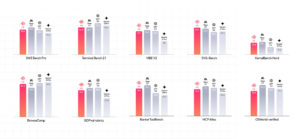
MiniMax didn’t just promise open weights, they delivered a technically impressive model that developers genuinely wanted to self-host. The benchmarks are eye-opening:
- VIBE (Visual & Interactive Benchmark for Execution): 88.6 aggregate score, with 91.5 in Web and 89.7 in Android subsets
- SWE-bench Verified: Exceptional framework generalization across Claude Code, Droid, Cline, Kilo Code, Roo Code, and BlackBox AI
- Multilingual performance: Systematic enhancements in Rust, Java, Golang, C++, Kotlin, Objective-C, TypeScript, and JavaScript, outpacing Claude Sonnet 4.5
- Agent/Tool scaffolding: Consistent results across multiple frameworks, with support for Skill.md, Claude.md, and Slash Commands
These aren’t incremental improvements. MiniMax M2.1 represents a genuine leap in full-stack development capabilities, from 3D interactive animations using React Three Fiber to native iOS widgets with “Sleeping Santa” Easter eggs. The model can generate a Matrix-style Web3 crypto dashboard, implement high-performance Java danmaku systems, and create C++ SDF snowman renderers with physically accurate light transport.
Partner testimonials from Factory AI, Fireworks, Cline, Kilo, Roo Code, and BlackBox AI all praised M2.1’s capabilities. Factory AI’s CTO called it “frontier performance (and in some cases exceed the frontier).” Fireworks’ co-founder highlighted its “complex instruction following, reranking, and classification” excellence. Cline’s founder noted it “quickly became one of the most popular model on Cline platform.”
Yet all this technical brilliance is now accessible only through MiniMax’s API pricing tiers. The very developers who could help scale and improve the model through community contributions are locked out, left to watch from behind a paywall.
The Open-Washing Controversy: A Pattern Emerging?
This isn’t MiniMax’s first dance with ambiguous openness. The company has historically released model weights, creating an expectation of community contribution. The M2.1 situation suggests a calculated bet: leverage the “open-source” label for marketing buzz and developer goodwill, then pivot to API-only monetization once the model’s value becomes clear.
The strategy carries long-term risks. Open-washing, claiming open-source credentials while withholding core assets, poisons the well for companies genuinely committed to transparency. Developers increasingly view corporate open-source promises with skepticism, and each high-profile betrayal makes it harder for the next project to build community trust.
The broader context makes this more troubling. Industry reports show 35% of AI projects from just three months ago have already been replaced, with open-source alternatives to commercial models often dying within weeks. The ecosystem is churning, and trust is the scarcest resource.
The Financial Reality Check
Let’s address the elephant in the server room: money. MiniMax, like many AI labs, burns cash at a staggering rate. The reported 3:1 R&D-to-revenue ratio means every dollar earned costs three dollars in research. In that light, giving away a model that benchmarks near Claude Opus 4.5 feels like corporate suicide.
But this framing misses a crucial point: open-sourcing isn’t charity, it’s a strategic decision with proven benefits. Meta’s Llama models created an entire ecosystem that reinforces their market position. Mistral’s open weights drove enterprise adoption of their paid APIs. Stability AI’s open models attracted talent and partnerships that kept them relevant.
The question isn’t whether MiniMax can afford to open-source M2.1. It’s whether they can afford the reputational damage of not doing so after promising it. API revenue today might cost them partnership opportunities tomorrow.
What This Means for AI Development
The M2.1 retreat signals a disturbing trend: the window for truly open, state-of-the-art models may be closing. As training costs escalate and performance gaps narrow, companies face increasing temptation to hoard their best models. We’re witnessing the “tragedy of the commons” play out in AI, individual actors rationally maximizing short-term profit while depleting the shared resource of community trust.
For developers, this means three concrete shifts:
- Verify before you integrate: Don’t trust launch announcements. Wait for actual weight releases before building dependencies.
- Self-hosting becomes a premium feature: The best models increasingly require API budgets, pushing out smaller teams and researchers.
- Community benchmarks lose relevance: When models can’t be run locally, reproducible research suffers. Performance claims become harder to verify independently.
Practical Takeaways for Developers
If you were planning to build on M2.1, you have options, just not the ones MiniMax advertised:
- API evaluation: The model is live on MiniMax’s platform with usage-based pricing. Test it, but architect your system with vendor lock-in risks in mind.
- Alternative models: Consider Qwen 2.5 Coder, DeepSeek Coder, or Mistral Medium for multilingual development tasks. While they may not match every M2.1 benchmark, you can actually host them.
- Framework abstraction: Use tools like LiteLLM or OpenRouter to minimize API-specific code, making future migrations easier when (or if) MiniMax reverses course.
- Community pressure: Monitor the LocalLLaMA subreddit and MiniMax’s Discord. Sustained developer feedback has forced reversals before.
The Bottom Line
MiniMax M2.1’s disappearing open-source promise isn’t just a corporate communications failure, it’s a litmus test for the AI industry’s commitment to transparency. The model’s technical excellence makes the betrayal sting worse. Developers can see exactly what they’re being denied: a genuinely powerful tool that could accelerate their work.
The company now faces a choice. They can double down on the API-only strategy, sacrificing long-term ecosystem growth for short-term revenue. Or they can acknowledge the misstep, release the weights with a reasonable license, and rebuild trust through actions rather than tweets.
For now, the community’s verdict is clear: promises that vanish overnight aren’t promises at all. They’re marketing. And in an industry built on open collaboration, that’s a dangerous game to play. The weights might be missing, but the lesson is crystal clear, trust, once deleted, is far harder to restore than any model repository.