Europe’s Data Platform Dilemma: Why Homegrown Databricks Alternatives Keep Missing the Mark
The data sovereignty conversation in Europe took a sharp turn in June 2025 when Microsoft executives admitted under oath to the French Senate that they cannot guarantee protection of European citizen data from U.S. government access. This wasn’t theoretical posturing, it was a direct acknowledgment that the U.S. CLOUD Act creates an uncloseable loophole in even the most stringent EU data protection frameworks. For European companies running critical analytics on Databricks and Snowflake, this admission transformed regulatory compliance from a checkbox exercise into an existential gamble.
The Reddit thread asking about European alternatives to Databricks and Snowflake captures the raw frustration. One commenter suggested “DuckDB or Spark”, prompting immediate pushback: Spark isn’t European, and DuckDB, while Dutch-born, lacks the managed platform capabilities that make Databricks attractive. The discussion devolved into the familiar “just build your own platform on Kubernetes” refrain, which another user correctly dismissed as missing the point entirely. The technical nuance here matters: open-source Apache Spark on paper is free, but EMR, Dataproc, and Azure’s Databricks integration run “several multiple times faster for average queries and orders of magnitude faster for specific use cases”, as one engineer noted. The cost of rolling something competitive isn’t just engineering hours, it’s the opportunity cost of slower insights and the operational risk of maintaining infrastructure that isn’t your core business.
This performance gap explains why the search for truly European alternatives keeps hitting dead ends. Take ClickHouse, frequently cited as a contender. The Reddit thread reveals the ownership confusion: it started at Russian Yandex, spun into a San Francisco-based company, yet some claim it’s Dutch-owned. The reality is ClickHouse Inc. is U.S.-based, making it subject to the same legal frameworks companies are trying to escape. Polars, with headquarters in Amsterdam, shows more promise for data frame operations, but its cloud offering runs on AWS, ironically the same infrastructure sovereignty-conscious companies want to avoid.
The scarcity of options reflects a deeper market failure. European venture capital has historically favored SaaS applications over foundational infrastructure, leaving a gap that U.S. hyperscalers filled aggressively. Now, as the geopolitical tide turns, European companies find themselves dependent on platforms they can’t legally trust. The European Commission’s cloud sovereignty framework, released in October 2025, inadvertently highlighted this problem by scoring providers higher for operational efficiency than legal independence, essentially rewarding AWS and Microsoft for being good at what they do while ignoring the sovereignty question.
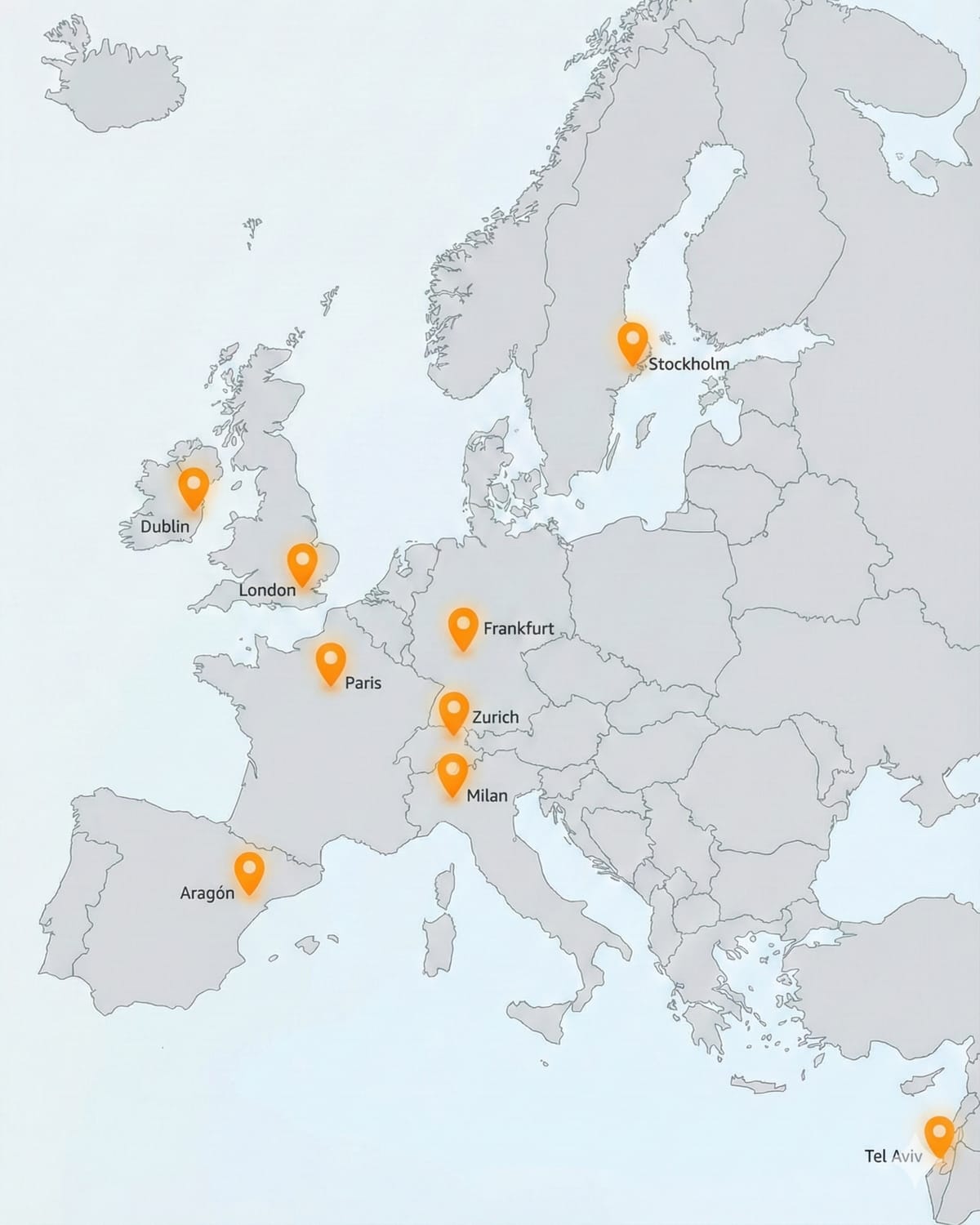
The AWS European Sovereign Cloud represents the hyperscaler’s attempt to thread an impossible needle. The infrastructure is physically and logically separate, operated exclusively by EU residents, with governance through German GmbH entities led by EU citizens. The partition aws-eusc and Region eusc-de-east-1 create a technical air gap from other AWS infrastructure. Customer metadata, including IAM roles, permissions, and billing data, stays within EU borders, and technical controls prevent access from outside the EU.
For data engineering teams, this means the Databricks and Snowflake integrations available in the sovereign cloud run on infrastructure that meets the strictest data residency requirements. The AWS Nitro System provides hardware-enforced isolation, and the Sovereignty Reference Framework (ESC-SRF) offers third-party validated compliance documentation. Early adopters include EWE AG, Medizinische Universität Lausitz, and Sanoma Learning, organizations where data sovereignty isn’t optional.
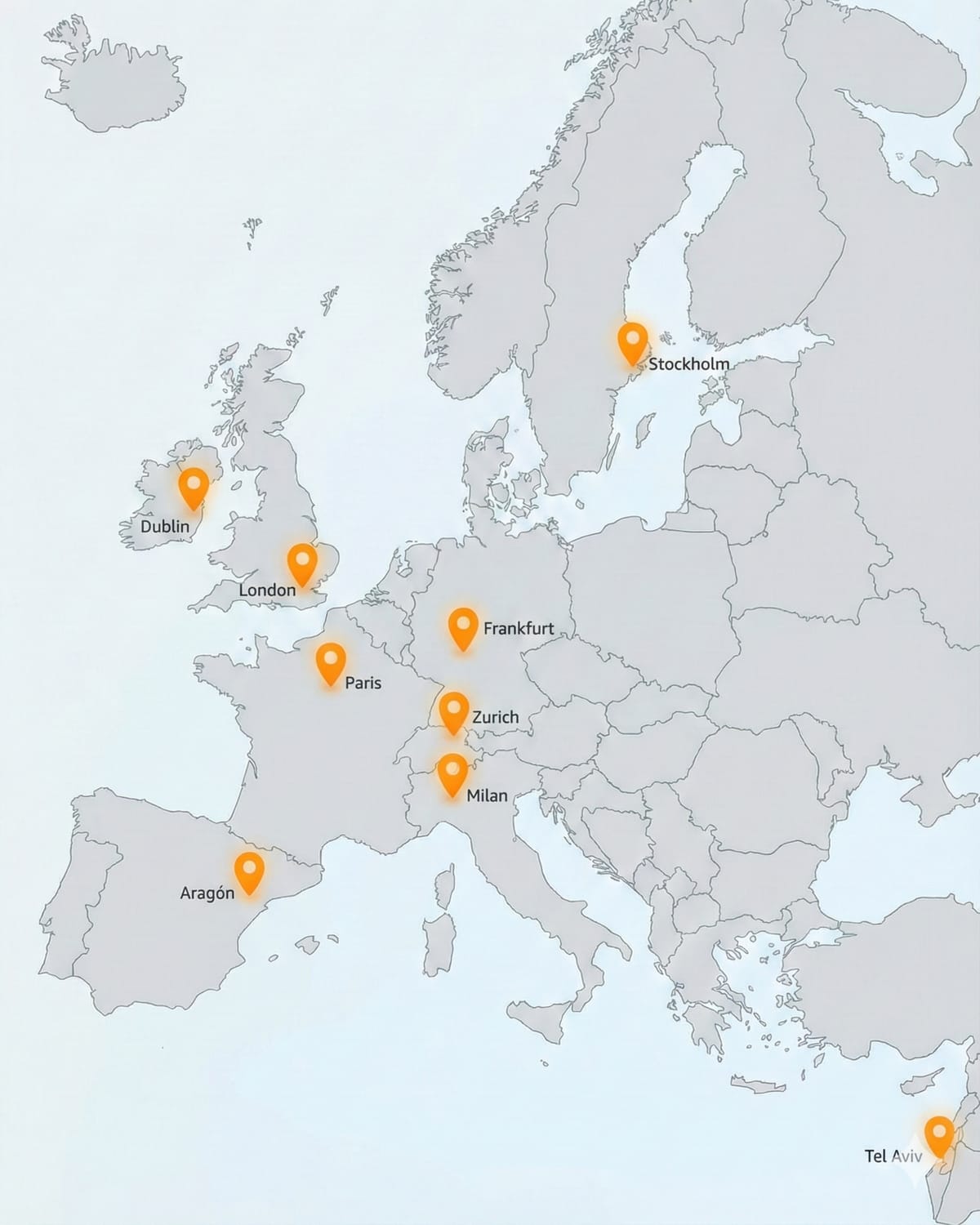
But here’s the uncomfortable truth: the AWS European Sovereign Cloud is still Amazon. The parent company is American, the profit flows to Seattle, and the long-term roadmap answers to U.S. shareholders. German BSI President Claudia Plattner acknowledged this tension, stating that “the future of hyperscalers in Europe therefore lies in offerings such as the AWS European Sovereign Cloud” while committing to “closely monitor the implementation.” The €17.2 billion projected contribution to Germany’s GDP through 2040 creates a powerful incentive for regulators to accept the compromise.
For enterprise architects, this presents a brutal trade-off. The sovereign cloud delivers the managed platform experience teams expect from Databricks, auto-scaling clusters, collaborative notebooks, integrated MLflow, while satisfying legal requirements. But it deepens dependency on a single provider and offers no guarantee that future U.S. legislation won’t pierce the sovereignty veil. The alternative, building on truly European infrastructure like scalable, high-performance data systems with European roots like ClickHouse, means accepting performance penalties and operational complexity that most organizations can’t justify.
The technical sovereignty trap extends beyond compute. Data engineers must consider the entire stack: storage, networking, security, and increasingly, AI model hosting. The AWS European Sovereign Cloud includes SageMaker and Bedrock, but using them means feeding data into Amazon’s AI ecosystem. IBM’s competing Sovereign Core approach, built on Red Hat OpenShift, lets organizations run AI workloads under their own control plane, but lacks the polished managed experience that makes Databricks sticky. This mirrors the broader debate in European AI: European-born AI innovation favoring efficiency and open licensing over scale suggests a different path forward, but enterprise procurement cycles favor proven platforms over principled alternatives.
The Reddit thread’s most upvoted comment cut through the noise: “Just build your own platform is not an answer to the question.” It reflects a pragmatic reality, companies want sovereign control without sacrificing velocity. Yet the current market forces a binary choice: accept U.S. legal exposure or accept operational friction. Some European organizations are exploring decentralized, censorship-resistant data infrastructure as an alternative to U.S.-controlled systems, but these architectures remain experimental for mainstream enterprise workloads.
What emerges is a sovereignty spectrum rather than a binary choice. On one end: pure U.S. cloud with legal exposure. On the other: fully European-built, owned, and operated platforms that barely exist. In the middle: AWS European Sovereign Cloud, IBM Sovereign Core, and similar offerings that provide contractual and technical controls while acknowledging economic reality. For data engineering leaders, the strategic question isn’t “which European Databricks alternative should we choose?” but rather “what level of sovereignty risk are we willing to accept for what level of capability?”
The uncomfortable answer for most will be AWS’s compromise. The €7.8 billion investment, 2,800 jobs, and BSI endorsement make it the path of least resistance. But this creates a new risk: European data infrastructure becomes a regulated subsidiary of U.S. tech giants, subject to shifting political winds. The real alternative isn’t another managed platform, it’s a fundamental rethinking of how Europe funds and builds foundational technology. Until that happens, data engineers will keep searching for options that don’t exist, while making do with the least-worst choice.
The sovereignty debate ultimately exposes a capability gap. Europe excels at regulating technology but struggles to create it. Databricks and Snowflake succeeded because they solved real problems: making data engineering accessible, collaborative, and scalable. European alternatives won’t emerge from compliance checklists but from engineering teams building better solutions for European use cases, European-engineered solutions for resilient, integrated data architectures that address both technical and legal requirements natively.
Until those solutions materialize, the search continues. But it’s no longer just about finding alternatives. It’s about deciding whether sovereignty means true independence, or just a well-regulated form of dependence.