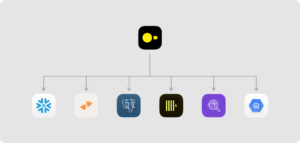
Let’s be clear: DuckLake is a fantastic idea stuck in an awkward relationship. Meta-stored in SQL tables, real data in Parquet files, what’s not to love? The promise of “operational simplicity compared to Iceberg” by avoiding “all of the catalog/metadata-file/maintenance complexity” is compelling. But until now, enjoying that simplicity meant you had to be all-in on DuckDB.
Enter ducklake-sdk, the open-source project that just severed that dependency. Written by a developer unaffiliated with DuckDB Labs, this Rust/Python SDK provides a standalone way to read and write DuckLake tables, bypassing the official DuckDB extension entirely. It’s a power move that fundamentally changes DuckLake’s role in the data ecosystem.
The Problem: Stuck in the DuckDB Sandbox
DuckDB is a powerhouse for in-process analytics, but modern data pipelines are polyglot. The original Reddit post cuts to the chase: “many data pipelines (including those at my company) are built around other data processing tools such as Polars.” If your world revolves around Polars, Spark, or another DataFrame library, being forced to spin up DuckDB just to access a lakehouse format feels like a detour through a foreign country just to get to your neighbor’s house.
The core premise of the SDK is simple: let any data processing tool “piggyback off the implementation of the DuckLake specification.” If metadata is in SQL and data is in Parquet, why should you be locked into a single compute engine to use it? This decoupling isn’t just about convenience, it’s about turning DuckLake from a clever DuckDB feature into a true, standalone open table format. The fact that the project gained immediate traction shows the community’s pent-up demand for this exact thing.
Architecture: A Solid Rust Foundation with Python Sweetener
The SDK’s design philosophy is its biggest strength. It’s built on a ducklake Rust crate that implements the core specification. This Rust core provides all the heavy lifting: metadata operations (schemas, tables, schema evolution, partitioning), transactions with conflict resolution, data inlining for small writes, metadata configuration, and time travel queries. This Rust foundation is then exposed as a high-level Python package, ducklake-sdk.
This dual-pronged approach is smart. It provides a performant, correct base in Rust that any other language binding could theoretically be built upon, while giving the Python data crowd the immediate practical integration they crave. The Python package’s first-party support? Polars.
Let’s look at the “Quick Example” from the repository that shows how simple it becomes:
import ducklake as dl
import polars as pl

# Create a new DuckLake backed by SQLite metadata and local Parquet storage
ducklake = dl.create("sqlite:///metadata.sqlite", data_path="data_files/")

# Define a table.
table = ducklake.create_table(
    "events",
    schema={"id": dl.Int64(), "message": dl.Varchar()},
)

# Write data using Polars
lf = pl.LazyFrame({"id": [1, 2, 3], "message": ["hello", "ducklake", "sdk"]})
table.sink_polars(lf)

# Read it back as a Polars LazyFrame
df = table.scan_polars().collect()
Notice what’s absent? Any import of DuckDB or any call to duckdb.sql(). You’re thinking about your data in Parquet, your metadata in SQLite or Postgres, and your compute in Polars. It’s a clean separation of concerns that finally matches the elegant architectural premise of DuckLake itself.
Compatibility and Gaps: Navigating the Alpha Phase
The SDK is pragmatically realistic about its current state, it’s an alpha release. The README includes a clear compatibility matrix that tells you exactly where you stand.
Catalog Databases:
* SQLite: ✅ Full support.
* Postgres: ✅ Full support.
* MySQL: 🟧 Limited support (no data inlining).
Storage Backends:
* Local/NFS & AWS S3: ✅ Supported.
* GCS & Azure Blob Storage: ❌ Not yet implemented.
Spec Versions: Actively supports v1.0, with support for migrations from older versions (0.1-0.4).
The honesty continues in the “Known limitations” section. The Rust core, while functional, hasn’t yet implemented push-down filtering for non-identity partitioned tables or optimized metadata queries. The Python SDK, while revolutionary, still outsources some maintenance tasks (like compaction and snapshot expiration) back to DuckDB, and acknowledges performance overheads in Polars I/O due to upstream library limitations. This transparency is a refreshing change from projects that overpromise.
Why This Matters: Simplicity as a Feature
The real competitor here isn’t just DuckDB with its native extension, it’s the pervasive, complex metadata management of formats like Apache Iceberg. As noted in the community coverage, DuckLake’s “streamlined architecture where metadata resides in a standard SQL database, and the actual data is stored efficiently in Parquet files” is pitched precisely against Iceberg’s “catalog/metadata-file/maintenance complexity.”.
For teams running polyglot data stacks, this SDK makes DuckLake a frictionless choice. A Rust-based ML pipeline can write to a DuckLake table (via the crate), a Python-based Polars app can read from it for analysis (via the SDK), and a BI tool can query it via DuckDB, all concurrently, with a single source of truth. The SQL metadata store becomes the universal coordination layer.
This friction reduction is critical for modern engineering teams who are tired of managing the complexity of heavyweight lakehouse platforms. It aligns with a broader trend of choosing simple, composable tools over monolithic platforms, a trade-off that often comes down to evaluating data orchestration trade-offs and operational management strategies.
The Road Ahead and the Community Bet
The developer’s stated goal is powerful: “my bigger hope is that this SDK can help make DuckLake feel less like a DuckDB-specific feature and more like an open table format that different engines and data processing tools can build on.”.
That’s the ballgame. The SDK is an open invitation to the broader data community. If it gains traction, we could see native integrations into tools like Apache Arrow Flight, Spark, or even other query engines. It’s an attempt to bootstrap an ecosystem.
But there are open questions. Will this unofficial effort get official blessing or integration from DuckDB Labs? How will it navigate the inevitable evolution of the DuckLake specification? Can it keep pace with the official extension? The project’s reliance on community contributions out of sheer interest is both its strength and its fragility.
The ducklake-sdk is more than just another library, it’s a declaration of independence. It proves that DuckLake’s architectural elegance, SQL for governance, Parquet for data, is valuable and useful in its own right, beyond the confines of its original DuckDB host.
For data engineers building pragmatic pipelines, especially those on the Python/Polars track, this SDK is an immediate productivity boost. It provides a simpler on-ramp to a managed data lakehouse paradigm without the typical lock-in or operational overhead. For a project just released “yesterday”, it’s already pointing toward a future where the choice of table format is decoupled from the choice of compute engine, a future that looks a lot simpler.