Docker’s announcement that hardened container images are now free and open source isn’t just a product update, it’s a fundamental reordering of security economics in cloud-native development. With over 1,000 production-ready images built on Debian and Alpine, complete with SBOMs and SLSA Level 3 provenance, Docker is essentially saying: security is no longer a premium feature you sell, it’s the default floor you build on.
This move, backed by an Apache 2.0 license and supported by heavyweights like Google, MongoDB, and the CNCF, drops a bomb into a market where startups have been building entire business models around “hardened” containers. The message is clear: charging developers for basic security hygiene in 2025 is like charging for seatbelts.
The Technical Reality Behind the Marketing
Let’s cut through the press release noise. What Docker is actually delivering are images with 96% fewer vulnerabilities compared to standard community images. That’s not a marginal improvement, it’s a wholesale reconstruction of how containers are built.
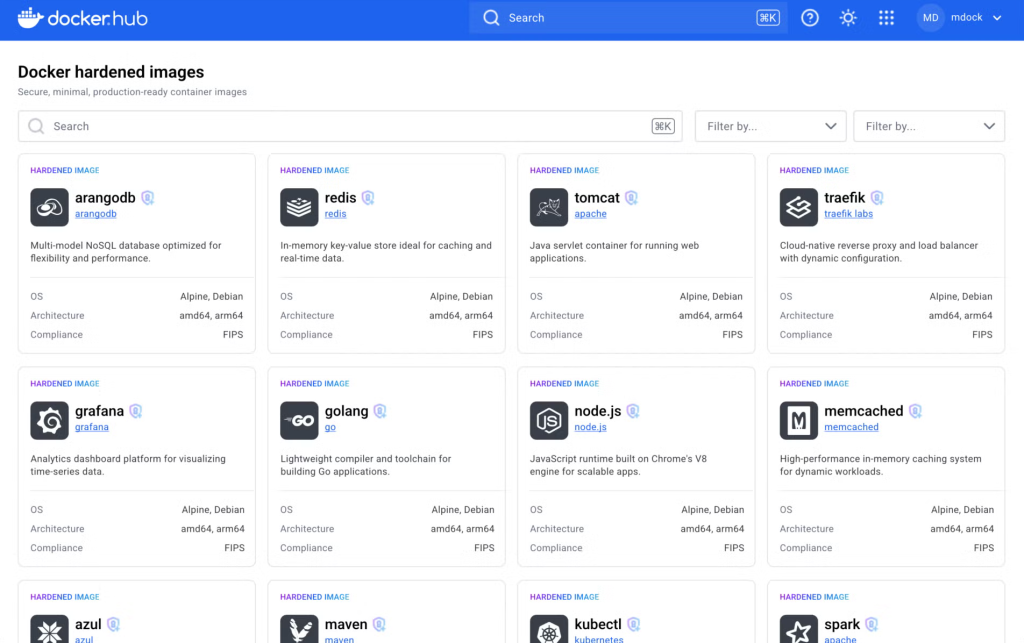
Each hardened image includes:
– Complete SBOM (Software Bill of Materials) with transparent CVE data
– SLSA Build Level 3 provenance, meaning reproducible builds with strong authentication
– Distroless runtime that strips out everything except what your application actually needs
– Cryptographic proof of authenticity to prevent tampering
The genius here is compatibility. By building on Debian and Alpine rather than a proprietary distribution, Docker ensures teams can adopt these images with minimal friction. The AI assistant can even scan your existing containers and recommend hardened equivalents, though calling it “AI” feels generous, it’s pattern matching with better PR.
The Economic Disruption Nobody’s Talking About
Here’s where it gets spicy. Companies like Chainguard, RapidFort, and ActiveState have been charging premium prices for hardened images, arguing that security is worth paying for. Docker just made that value proposition evaporate for the bottom 80% of the market.
The supply chain attack statistics tell the story: $60 billion in damages in 2025, triple the 2021 figures. When Docker Hub serves 20 billion pulls monthly, securing that firehose isn’t a luxury, it’s infrastructure. Docker’s COO Mark Cavage framed it as “giving the entire industry the best possible baseline”, but the subtext is more brutal: if you can’t compete with free, your business model was extracting rent on fear.
But this isn’t altruism. Docker’s play is classic platform economics:
– Free tier: Get everyone using hardened images by default
– Enterprise tier: Pay for FIPS/STIG compliance, <7 day CVE remediation SLAs, and customization
– ELS add-on: Keep end-of-life software patched for five more years
Organizations like Adobe and Qualcomm are already all-in, with Adobe’s principal scientist Vikram Sethi noting they chose DHI for “alignment with our supply chain security posture” and ecosystem compatibility. Translation: it plugs into our existing pipeline without making us rewrite everything.
The AI Infrastructure Land Grab
The most forward-looking piece of this announcement is Docker extending hardening to Model Context Protocol (MCP) servers. If you haven’t been tracking MCP, it’s the emerging standard for AI agents to interact with external tools and data sources.
The security community has already flagged MCP servers as a new attack vector, with risks of malicious servers and data exfiltration. By hardening these images, Docker is positioning itself as the secure default for the AI-native development stack, not just today’s containers, but tomorrow’s agent infrastructure.
The Transparency Gambit
One detail that deserves more attention: Docker promises to be “always transparent, even when we’re still working on patches.” This is a direct shot at vendors who suppress CVEs to p maintain a green scanner dashboard.
It’s a risky move. Being transparent about unfixed vulnerabilities could scare away skittish enterprises. But it’s also the only intellectually honest approach. As Socket CEO Feross Aboukhadijeh puts it: “Pull a hardened image, run npm install, and the Socket firewall embedded in the DHI is already working for you. That is what true secure-by-default should look like.”
The enterprise offering doesn’t hide vulnerabilities, it just guarantees you’ll get the fix in under seven days (with a roadmap to same-day). For regulated industries, that’s the difference between “we don’t know” and “we’re on it.”
The Architectural Implications
For architects, this changes the calculus of base image selection. The traditional flow was:
1. Pick a base image (often ubuntu:latest or alpine:latest)
2. Hope it’s maintained
3. Add your application
4. Run a scanner in CI/CD and pray
5. Firefight CVEs as they appear
The new flow becomes:
1. Start with a hardened image from Docker Hub
2. Build your application
3. Let Docker’s automation handle patching
4. Upgrade to enterprise when you need compliance guarantees
This is secure-by-default architecture in practice. The secure choice is the easy choice, not the path that requires a security champion fighting for budget.
The Catch (Because There’s Always a Catch)
Free doesn’t mean zero-cost. Migrating to hardened images still takes work. The images are smaller (up to 95% reduction), but that also means they contain fewer debugging tools. When something breaks at 2 AM, that minimalism hurts.
And the enterprise features matter. FIPS 140-2 compliance, STIG readiness, and <7 day SLA remediation aren’t niche requirements, they’re mandatory for government, healthcare, and finance. Docker’s free tier gets you 96% of the way there, but that last 4% is what regulators care about.
Extended Lifecycle Support (ELS) is the real unsung hero. When upstream maintainers abandon a project after five years, Docker will keep patching it for another five. For organizations running legacy systems they can’t replatform, that’s not a nice-to-have, it’s the only thing standing between them and vulnerability reports they can’t fix.
The Controversial Take
Here’s what nobody wants to say: making hardened images free might actually reduce security innovation. If you can’t charge for baseline security, where’s the incentive to invest in next-generation protections? The enterprise tier becomes the only monetization path, which could create a two-tier system where the free images are “good enough” but never great.
Docker’s Jonathan Bryce argues this “strengthens the software supply chain together”, but history suggests commoditization drives margins to zero and starves R&D. The browser security wars gave us free SSL, but also a decade of underinvestment in PKI infrastructure.
The counterargument is that security shouldn’t be a profit center, it should be infrastructure. You don’t pay extra for seatbelts because automakers compete on safety ratings, not safety features. Docker is forcing the container ecosystem to compete on what builds on top of secure foundations, not the foundations themselves.
What Architects Should Do Next
- Audit your base images: Run
docker scout quickviewon your top 10 most-used images. If they’re not hardened, you’re carrying unnecessary risk. - Pilot the migration: Use Docker’s AI assistant to scan a non-critical service and migrate it to a hardened image. Measure the image size reduction and CVE count.
- Update your image policy: Mandate hardened images for all new services. Grandfather existing services with a sunset timeline.
- Evaluate enterprise needs: If you’re in a regulated industry, trial DHI Enterprise. The <7 day SLA might be cheaper than staffing a team to do it yourself.
- Plan for MCP: If you’re building AI agents, start with hardened MCP servers. The attack surface is too new to take chances.
The Bottom Line
Docker’s move to free hardened images is less about charity and more about setting the terms of engagement for the next decade of cloud-native development. By making security the default, they’re commoditizing the problem and forcing the industry to compete on higher-level value.
For architects, this is a gift. The secure choice is now the easy choice. But it’s also a challenge: if everyone has secure foundations, your competitive advantage has to come from what you build on top, not what you build on.
The industry isn’t ready because it’s still selling fear. Docker is selling infrastructure. In a world where supply chain attacks cost $60 billion a year, infrastructure wins.
Ready to start? Explore the free hardened images catalog or join the launch webinar to see the migration tools in action.