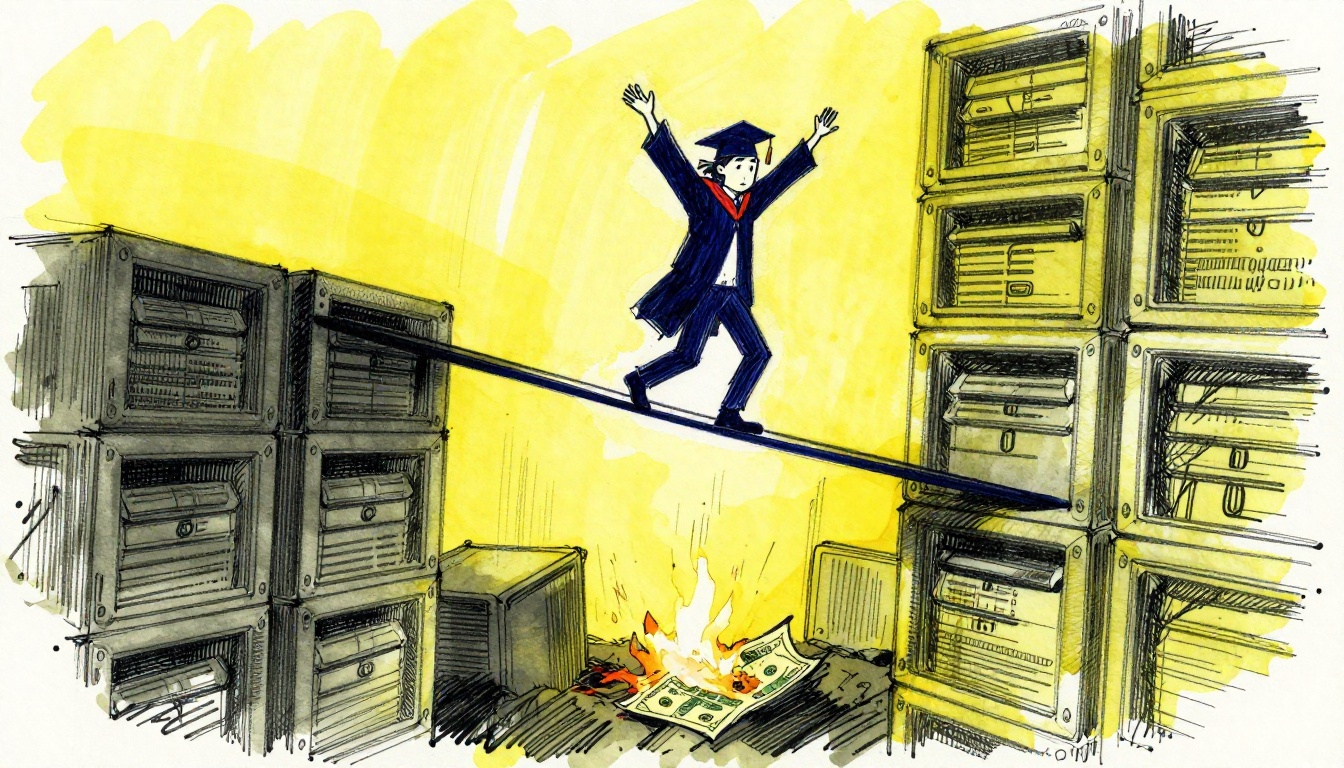
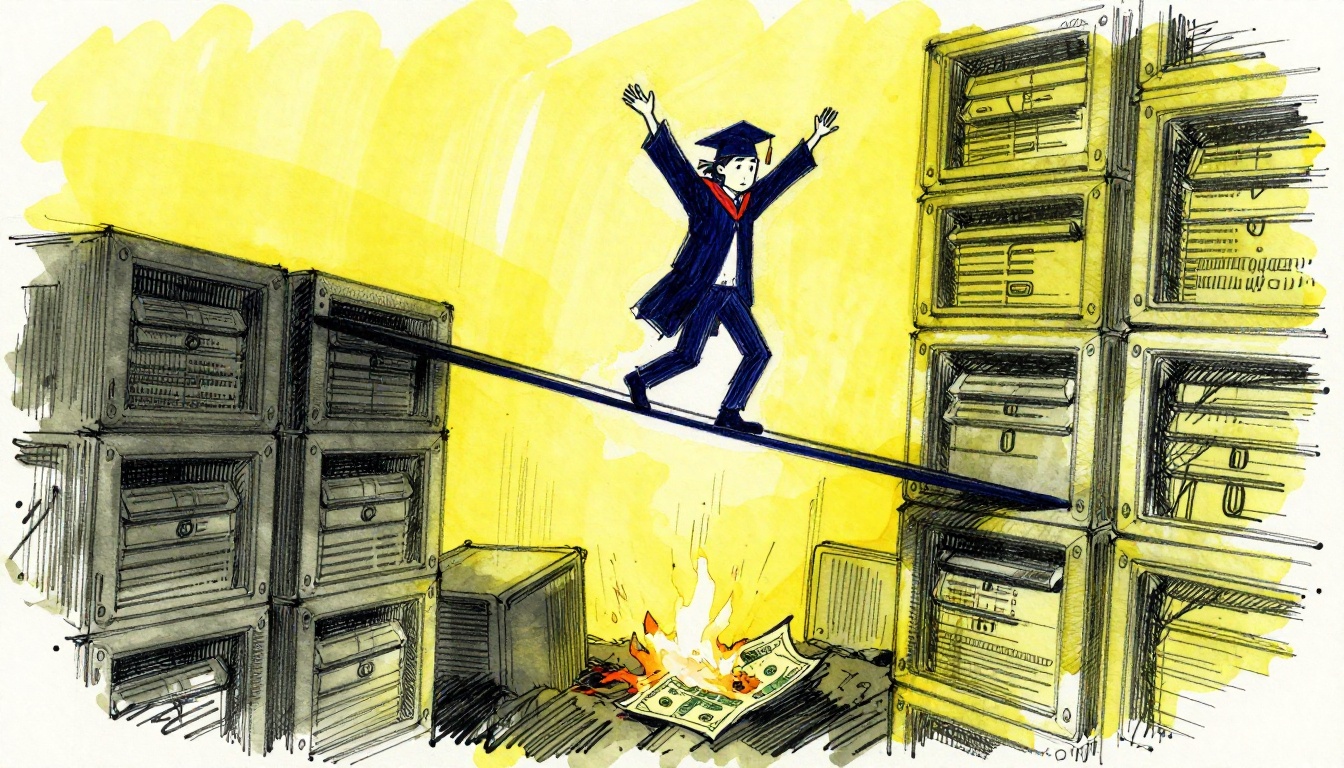
You’ve accepted the offer. You’ve celebrated. You’ve maybe even signed a lease in Menlo Park or Seattle. Then you read the news: Meta is preparing to axe roughly 20% of its workforce, potentially 15,800 positions, to offset the astronomical costs of its AI infrastructure binge. You’re joining in three months as a new grad data scientist. Congratulations, you’ve just enrolled in the most expensive game of musical chairs in tech history.
This isn’t just Meta’s problem. Amazon shed 16,000 roles in January and another 14,000 corporate jobs last October. Atlassian is cutting 1,600 people (10% of staff) because, apparently, AI now does the work of humans, at least according to the press releases. Block’s Jack Dorsey is openly bragging that AI allows companies to operate with “smaller teams and more efficiency”, which is CEO-speak for “we overhired during the pandemic and now we’re using ChatGPT as cover.”.
Welcome to the era of AI-washing: where layoffs are rebranded as “efficiency gains” and your entry-level job is simultaneously essential and expendable.
The Rescinded Offer Is Back (And It’s Not Just Meta)
Let’s address the elephant in the room. If you’re joining as a new grad in June, you’re not just worried about being laid off in month six, you’re worried about the offer vanishing before you even set foot in the building. During Meta’s last “year of efficiency” in 2022-2023, the company cut 11,000 workers in November, followed by another 10,000 in March. They also reneged on offers, leaving new grads scrambling for Plan B before they’d even packed their graduation gowns.
Big companies usually avoid rescinding new grad offers because it destroys their campus recruiting pipeline. You’re cheap labor with minimal equity, and you’re supposed to be the future talent pipeline. But when a company is staring down a 20% workforce reduction to finance a $600 billion data center buildout by 2028, all bets are off. The math is brutal: Meta employed roughly 79,000 people as of December 2025. A 20% cut equals approximately 15,800 jobs, more than the entire headcount of many mid-size tech firms.
Why This Time Feels Different (Hint: It’s the AI Bill)
Previous layoff cycles were about correcting pandemic over-hiring and interest rate anxiety. This cycle is about structural replacement. Meta isn’t just cutting costs, they’re actively restructuring around AI automation. The company recently created a new AI engineering organization where manager-to-employee ratios hit 1:50, a flatness that would make a pancake jealous.
Mark Zuckerberg has been explicit: projects that “used to require big teams” are now being “accomplished by a single, very talented person.” This is corporate speak for “we’re going to see how much work we can dump on the survivors before they break.” The company is also paying hundreds of millions in four-year packages to poach top AI researchers like Scale AI’s former CEO Alexandr Wang, even as they prepare to fire thousands of existing employees. The message is clear: expensive AI talent is in, generalist engineers are out.
Meanwhile, Meta’s internal AI projects are struggling. The Llama 4 “Behemoth” model was shelved, and the new “Avocado” and “Mango” models have reportedly fallen short of internal expectations, delayed until May. So they’re firing people to pay for AI infrastructure that’s supposed to replace the people they’re firing, while the AI itself isn’t actually ready. It’s corporate ouroboros.
The New Grad Survival Playbook
If you’re already locked in (or locked into a lease), you need a strategy that assumes you’re walking into a burning building. Here’s how to survive the first 90 days when your employer is actively trying to figure out if they need you:
1. Ship Something Visible in Week 3, Not Week 8
During chaotic periods, visibility trumps depth. Find your team’s highest-priority metric, revenue, user retention, cost reduction, and ship something that moves it within your first 60 days. It doesn’t need to be revolutionary. A dashboard fix that saves senior engineers two hours a week builds more political capital than a month of “deep-dive analysis” that nobody asked for.
Ramp aggressively on internal tools (Meta’s custom notebooks, data pipelines, experiment frameworks). Being productive in week 3 instead of week 8 matters because by week 9, your manager might be gone, restructured, or too busy fighting for their own job to notice your ramp time.
2. Document Everything (You’re About to Become the Expert)
In periods of high churn, institutional knowledge walks out the door faster than the severance packages are signed. Document everything you learn during onboarding, the tribal knowledge about “how things actually work here” versus the official documentation. Within three months, you’ll be the accidental expert on legacy systems because everyone who built them got the axe. This makes you temporarily indispensable, which is the best you can hope for as a new grad.
3. Keep Interviewing (Quietly)
The most pragmatic advice from recent hires: treat your offer like it’s made of tissue paper. Keep your LeetCode skills sharp, your GitHub green, and your network warm. Update your resume quarterly, not annually. The protecting yourself against exploitative hiring practices before signing your offer mindset applies here too, if they can rescind on you, you can (and should) keep your options open.
4. Build Mental Resilience (You’ll Need It)
The stress of joining a company during mass layoffs is unique. You’ll suffer from “survivor’s guilt” before you’ve even survived anything, and imposter syndrome will hit harder when you see senior engineers packing boxes. Focus on building mental resilience and coping mechanisms under professional pressure, the psychological tools for navigating ambiguity are as important as your technical skills right now.
The “AI Efficiency” Smokescreen
Let’s be clear about what’s happening. Sam Altman and other industry figures have called out the “AI-washing” of job cuts, using AI as cover for correcting over-hiring mistakes made during the zero-interest-rate era. Meta’s Reality Labs already cut 1,500 people in January as they effectively gave up on the Metaverse pivot. Now they’re pivoting to AI, and the same pattern repeats: hire aggressively for the new shiny thing, realize the margins don’t work, fire everyone to placate Wall Street.
The cruel irony for new grads is that you’re entering at the bottom of the stack-ranking curve. You have zero political capital, zero internal network, and zero leverage. When the layoff algorithms (human or otherwise) start running, new grads are often the first to go, not because you’re bad, but because you’re cheap to fire and expensive to keep during a hiring freeze.
Strategic Positioning: How to Not Be the 20%
If you’re already committed, focus on these three areas:
- AI Infrastructure Adjacency: Get as close to the revenue-generating AI projects as possible. If you’re in data science, pivot toward the teams working on the new “Superintelligence” initiatives or the AI engineering org. Being associated with the $600 billion bet is safer than being associated with legacy ad-tech infrastructure.
- Tribal Knowledge Arbitrage: As mentioned, document everything. Become the person who knows how the old pipelines work while everyone else is building the new ones. During transitions, translators are valuable.
- External Validation: Publish papers, speak at conferences, maintain a public GitHub. If you do get cut, you want to be able to prove you weren’t fired for incompetence. In the current climate, being laid off from Meta is almost a badge of honor, but you need the portfolio to back up the narrative that you were a casualty of AI-washing, not performance issues.
The New Employment Contract
The era of Big Tech as a stable career ladder is over. The new contract is: we pay you well for 18-24 months, you ship code until we figure out how to automate it, and then we part ways with a severance package that’s probably less than your signing bonus was worth after taxes.
If you’re joining Meta in June, go in with eyes open. Get the name on your resume, it’s still worth something, like a degree from a university that recently had a major scandal. But keep your bags packed, your interview skills sharp, and your expectations realistic. The “year of efficiency” never really ended, it just got rebranded as the “decade of AI infrastructure.”.
And remember: when they tell you AI is replacing jobs, they’re half right. It’s replacing the jobs of the people they’re firing. Your job is to not be one of them, at least until the next earnings call.