There’s a moment in every major technological shift where the gap between what we think is happening and what’s actually happening becomes too wide to ignore. We might be living through that moment right now with AI, and most of us are looking the wrong way.
The conversation has been dominated by a familiar binary: robots take jobs, or robots create jobs. But that framing misses something far more fundamental that’s happening beneath the surface. AI isn’t just changing what we do, it’s changing how society determines who’s capable, what expertise means, and whether the institutions that trained the last generation can possibly train the next one.
The Number That Should Terrify You
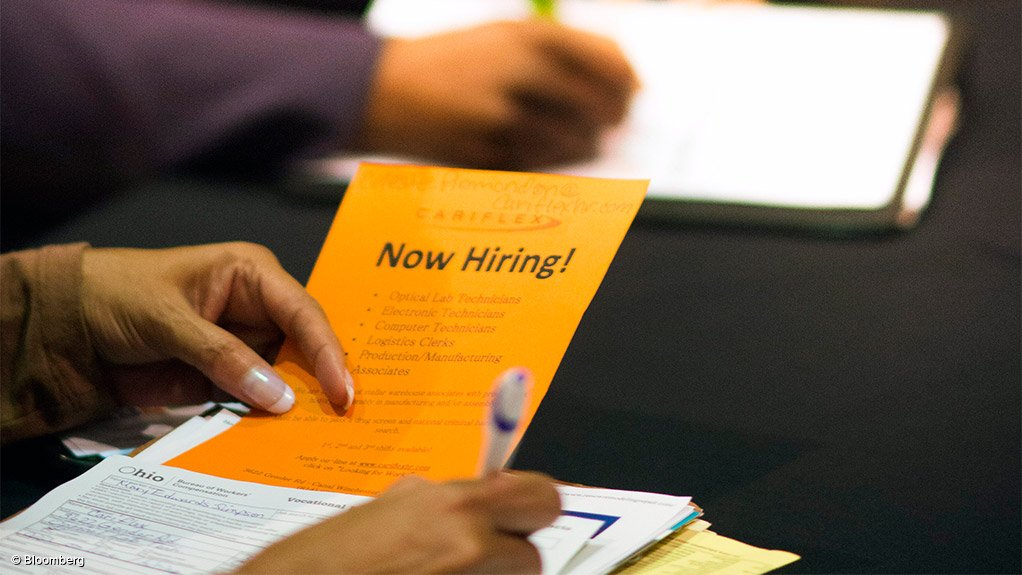
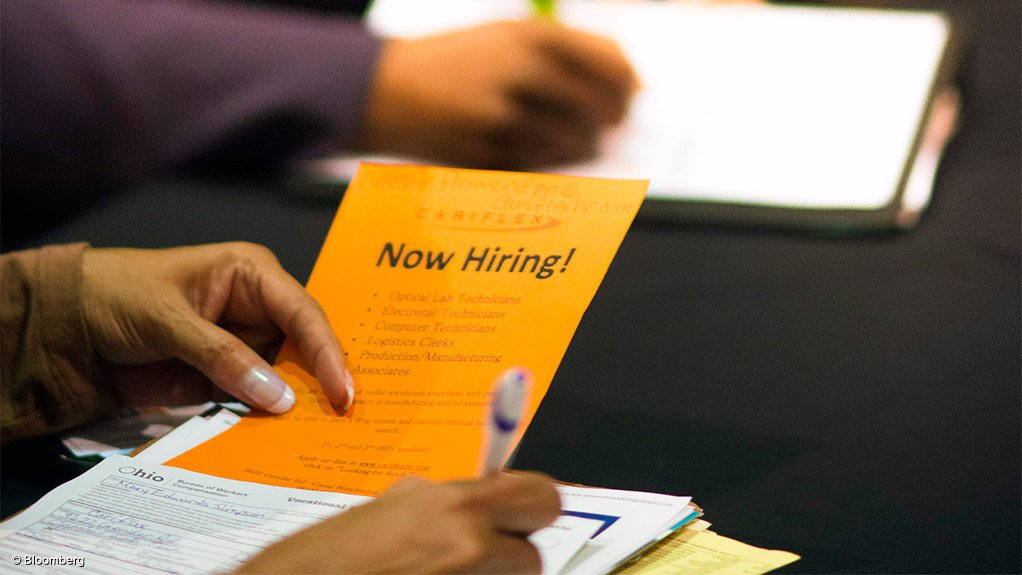
Let’s start with a projection that doesn’t get nearly enough attention. The World Bank Group recently highlighted a staggering gap: 1.2 billion young people will enter the workforce over the next decade, while only 400 million jobs are projected to be available. That’s roughly 800 million people at risk of not finding employment.
Mohamed Eissa, chief investment officer at the International Finance Corporation, makes a crucial point: this employment deficit existed before AI. The technology just poured gasoline on it. “I think AI has just increased a sense of urgency”, he said, “because that’s now having a huge impact on that situation.”
The speed of adoption is the real story here. Eissa contrasts the gradual spread of personal computers with ChatGPT reaching 200 million users in 12 to 18 months. That’s not an evolution, it’s a shock to the system. Education systems, workforce training programs, and entire career paths were built on a timeline that assumed change happens in decades, not quarters.
And before you dismiss this as apocalyptic doom-mongering, consider what Sharat Raghavan, director of LinkedIn’s Economic Research Institute, told the same panel: we genuinely don’t know yet how much of the employment challenge comes from AI versus macroeconomic conditions. The uncertainty itself is the problem, policymakers and businesses are making decisions about education and workforce development without clarity on what’s driving the crisis.
The Expertise Paradox Nobody’s Talking About
Here’s where the debate gets genuinely uncomfortable. We’ve been so focused on job loss that we’ve missed a subtler crisis: the erosion of expertise itself.
A recent essay by Sreejith Sreedharan captures the dilemma perfectly: “What happens when a skill that once proved you were good at something no longer proves very much?”
This isn’t hypothetical. It’s happening right now in classrooms, hospitals, and engineering teams. A person who needed years of practice to produce a decent report can now generate a first draft in minutes. Someone with no formal training can ask an AI to structure an argument, explain a dataset, or write functional code. The barrier to entry for competent first-order work has collapsed.
The research that validates this concern is worth sitting with. In a preregistered experiment involving 758 consultants, participants using GPT-4 completed 12.2% more tasks, worked 25.1% faster, and produced higher-quality work, but only for tasks within AI’s capability frontier. Outside that frontier, AI users were actually less likely to reach the correct solution.
That’s the jagged frontier of AI capability, and it has profound implications. A novice can’t tell where the frontier lies. An expert can. Which means the value of expertise isn’t disappearing, it’s being concentrated in the ability to judge, direct, and verify what the machine produces.
As AI cost efficiency continues to disrupt enterprise procurement, this distinction becomes even more critical.
The “ADHD Advantage” and the Mental RAM Bottleneck
One of the more fascinating threads in this debate comes from practitioners who’ve noticed something unexpected: AI hasn’t eliminated the need for human cognition, it’s shifted the bottleneck.
Several experienced professionals have noted that AI tools have made them dramatically more productive, but the constraint has moved to what one developer called “mental RAM”, the ability to track multiple workstreams, manage competing contexts, and make the micro-decisions that come with having many more things in flight.
This might seem counterintuitive, but it has surprising implications. Some long-time tech leaders have observed that people with ADHD seem to have an unexpected advantage in this new environment, the ability to context-switch rapidly and track multiple threads simultaneously is actually a valuable skill when AI handles the detailed execution work.
The point isn’t to romanticize neurodivergence or pathologize it. It’s that AI is fundamentally changing which human capabilities are scarce, and therefore valuable.
The Slow Death of the Generalist
Corporations are already making their bets. IBM’s chief talent, leadership, and culture officer, Aparna Nair, put it bluntly: “The world of generalists is long gone.”
Nair argues that generalists relying on AI to learn broadly won’t cut it. IBM’s clients don’t want general advice, they hire IBM for deep technological expertise. The same expectation now applies to entry-level hires. IBM expects new workers to arrive with domain expertise and the skills to take on complex work earlier in their careers.
This marks a radical shift from the “learn to learn” philosophy that dominated the last two decades of tech hiring. The software engineer who spent 20% of their time coding and 20% testing is being replaced by someone whose real job is critical-thinking, judgment, and evaluation, because AI handles the mechanical work.
But this creates a chicken-and-egg problem. How do people develop judgment without going through the apprenticeship that builds it? The software engineer of 2035 needs domain expertise that extends beyond what AI can handle, but they need to acquire that expertise in a world where AI handles much of the intermediate work that previously built it.
The Classroom Problem
The evidence from education is sobering. A study by Bastani and colleagues found that students using GPT-based assistance performed better during practice, but when the AI was removed, their performance actually declined. A carefully designed GPT tutor with appropriate safeguards substantially mitigated this problem, but the finding remains uncomfortable.
This is what the research literature calls the “expertise paradox”: AI can increase the apparent competence of novices while simultaneously reducing the cognitive struggle through which expertise traditionally develops. The polished output hides the missing mental models underneath.
The fix isn’t to ban AI from classrooms, that battle is already lost. It’s to redesign learning so AI becomes part of the pathway toward expertise rather than a shortcut around it. For a novice, AI should scaffold cognition. For a developing practitioner, it should challenge cognition. For an expert, it should augment cognition.
The same technology, the same tools, but fundamentally different instructional design depending on where the learner sits on the expertise curve.
The Power Concentration Problem
Let’s be honest about the uncomfortable question the Reddit post at the center of this debate raises: will AI actually empower ordinary people, or just make the handful of companies controlling it ridiculously powerful?
The pattern isn’t encouraging. The free tiers of AI tools are loss leaders designed to build dependency. As one skeptical observer noted, “You didn’t think they would empower you to be a one-man band without paying for it right? It’s free right now to build adoption, but to use this in the future will be a service and the more reliant you are on it the more it will cost.”
Think about your smartphone bill. AI services will carry a similar, likely steeper, rent. The people who benefit most from the alleged democratization of intelligence will be the ones who can afford the toll gates.
Even the open-weight movement doesn’t fully solve this. Anyone with a modest budget can now run capable models locally on consumer hardware, and edge AI progress is enabling powerful on-device agents without cloud dependency. But running a model isn’t the same as having the infrastructure to train one, the data to fine-tune one, or the ecosystem to deploy one at scale.
What Actually Comes Next
Here’s the honest answer: we don’t know. Anyone who tells you they have a clear picture of what society looks like in 2035 is either selling something or fooling themselves.
But the direction of travel is becoming clearer. The future of mastery depends less on preserving every difficult skill and more on deciding which skills are worth mastering. Knowing what deserves an answer may matter more than producing one, in a world full of machine-generated answers, the person who knows which questions matter, which outputs deserve scrutiny, and which processes can’t be trusted without verification becomes the scarce resource.
As transparent open-weight AI models reduce black-box dominance, we’re also seeing a shift in what “understanding” means. The institutions that survive this transition will be the ones that stop treating yesterday’s obstacles as permanent measures of merit. The engineers who thrive will be the ones who combine deep expertise with the right behaviors and use AI as leverage, a combination one IBM executive called “lethal.”
The question ahead is no longer how to protect every skill that machines can now perform cheaply. It’s what humans should become good at once those skills are no longer scarce.
We’re leaving the road for the sky. The mistake would be to fly with driving skills. Our skills and perspectives must rise with the technology, or get left behind with everything else.