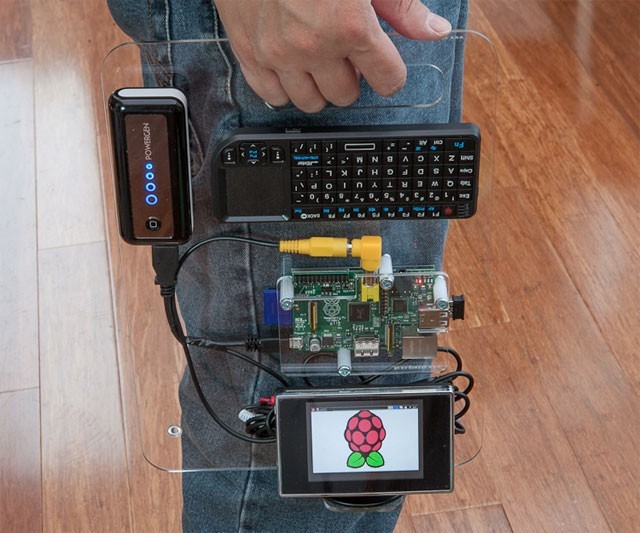
The idea that a 30-billion parameter language model could run on a Raspberry Pi sounds like a late-night fever dream from someone who’s spent too long tuning batch sizes. Yet here we are: ByteShape’s quantized Qwen3-30B-A3B-Instruct-2507 achieves 8.03 tokens per second on a Raspberry Pi 5 with 16GB RAM, retaining 94.18% of BF16 quality at 2.70 bits per weight. The model fits, it runs, and it genuinely feels real-time.
But the real controversy isn’t that it works. It’s what this breakthrough reveals about how we’ve been thinking about model optimization entirely wrong, especially on GPUs.
The Quantization Paradox: When Smaller Gets Slower
For years, the mantra has been simple: compress the model, reduce memory footprint, speed up inference. On CPUs, this holds up. The ByteShape team found that once a model fits in RAM, “smaller tends to be faster in a fairly monotonic way.” The tradeoff curve behaves like you’d expect, chop bits, gain speed.
GPUs, however, are a different beast entirely. The research shows that on NVIDIA hardware, “fewer bits does not automatically mean more speed.” In fact, pushing quantization too aggressively can make your model slower while using less memory. On an RTX 5090, a matrix multiply that takes ~54µs with iq4_xs balloons to ~62µs with iq3_xxs, a 13% slowdown despite cutting 25% of the weight footprint.
This happens because GPU performance depends as much on kernel choice as on raw memory usage. NVIDIA GPUs process work in fixed groups of 32 threads called warps, optimized for specific data formats and memory access patterns. When your workload hits these “golden paths”, you get peak performance. Step outside them, and you’re paying for decode overhead and scattered VRAM reads.
The ByteShape benchmarks make this painfully clear. On an RTX 5090, multiple ~4-bit models cluster around 302-303 TPS with nearly identical quality. Push to 3-bit or lower, and throughput drops off a cliff, even though the model file shrinks. The kernels for sub-4-bit quantization simply aren’t as optimized, requiring more decode instructions and less efficient memory access.
Memory as Budget, Not Goal
This leads to a fundamental rethinking of optimization strategy. As the ByteShape team argues, we should treat memory as a budget to meet, not a goal to minimize. Once your model fits comfortably in available RAM (or VRAM), the only tradeoff that matters is speed versus quality.
This “fit-first” philosophy explains why their approach consistently outperforms alternatives like Unsloth and MagicQuant across devices. On a Raspberry Pi, their Q3_K_S-2.70bpw variant hits the magic 8+ TPS threshold for real-time interaction while maintaining 94.18% accuracy. Unsloth’s comparable models either don’t fit or land lower on the speed-quality curve.
The methodology is straightforward: for each quantized variant, measure throughput on the target device and compute normalized quality relative to BF16 baseline. Then plot the curve and pick your sweet spot. On a Pi, that’s 2.70 BPW. On an RTX 4080 with 16GB VRAM, it’s IQ4_XS-3.87bpw delivering 214.81 TPS at 98.66% accuracy, 1.59× lower error rate than Unsloth’s closest competitor.
The Hardware Quirks That Matter
The counterintuitive results stem from several GPU-specific behaviors that most developers never encounter:
-
VRAM reads happen in aligned 32-byte blocks. Reading 1 byte or 32 bytes consumes the same bandwidth. If your quantization scheme requires fetching data that isn’t aligned or contiguous, you’re wasting cycles.
-
On-chip memory contention can serialize warp accesses. A warp’s memory operations may complete in one step or get broken into 32 sequential steps depending on data layout. Lower-bit quantization can fragment data across more blocks, triggering the worst-case path.
-
Decode overhead varies wildly by format. Each quantization scheme requires different instructions to decompress weights before computation. The 4-bit kernels in llama.cpp are highly optimized, 3-bit and 2-bit kernels are afterthoughts.
llama.cpp’s design philosophy explains this gap. The project prioritizes portable, space-efficient quantization that runs everywhere. It stores quantized weights in fixed 256-value blocks, simple to implement, but requiring parallel decodes that can fragment VRAM traffic. Optimizing every bit-width for every GPU would demand more circuitry, more power, and more complexity than most hardware vendors are willing to commit.
The 4-Bit Sweet Spot and Beyond
The data reveals a clear pattern: ~4 bits per weight is the current GPU optimization frontier. On high-end cards like the RTX 5090, this is where you’ll find the “golden path” kernels. The ByteShape benchmarks show multiple 4-bit models from different quantization families all hitting ~302 TPS, suggesting this is hardware-limited, not software-limited.
For edge devices, the calculus shifts. On an RTX 4080’s constrained 16GB, you can’t fit the 4-bit sweet spot for a 30B model. Here, ByteShape’s device-specific quantization (IQ4_XS-3.87bpw) delivers 214.81 TPS while Unsloth’s Q3_K_XL manages only 196.42 TPS with worse accuracy. The optimization target isn’t absolute speed, it’s the best possible speed within your memory budget.
This is where the Raspberry Pi results become truly impressive. On a 16GB Pi 5, the team achieves 8.5 TPS at 92%+ accuracy, which reshapes expectations for what “edge AI” even means. We’re no longer talking about tiny 1B models running inference at crawling speeds. We’re talking about models that rival GPT-3 in capability, running on hardware that costs less than a graphics card.
What This Means for Practitioners
-
1. Stop treating quantization as a monotonic dial. On GPUs, you can’t just crank bits-per-weight lower and expect linear speedups. You need to benchmark on your exact hardware.
-
2. Use device-specific builds. ByteShape provides separate CPU (KQ) and GPU (IQ) variants for a reason. The optimal quantization strategy differs radically between architectures.
-
3. The 8 TPS threshold matters. For interactive applications, 8 tokens per second is the magic number where generation feels real-time, roughly matching human reading speed. On a Pi, this is achievable at 2.70 BPW. On an Intel i7, you can push to 26+ TPS with higher quality.
-
4. Evaluation is the bottleneck. The ByteShape team openly admits that careful benchmarking is their limiting factor, not quantization itself. If you’re deploying at scale, invest in measurement infrastructure.
-
5. Blame the datatypes, not the silicon. As the researchers put it: “If your system can’t run a 30B model smoothly, don’t blame the model or the silicon. Blame the datatypes.”
The Community Response
Developer forums have been buzzing with both excitement and skepticism. Some point to alternative architectures like Mamba2 hybrids that theoretically offer better throughput, though real-world performance varies depending on optimization maturity. Others question whether closed-source quantization algorithms limit the broader community’s ability to reproduce results.
The consensus, however, is that we’re witnessing a fundamental shift in edge AI. The conversation is no longer about if large models can run on small devices, but how to optimize them effectively. The focus has moved from crude compression to sophisticated bitlength learning that treats each tensor differently based on its impact.
Looking Forward
The Raspberry Pi milestone is symbolic, but the underlying optimization revolution applies everywhere. As llama.cpp continues adding backend-specific kernels and quantization-aware schedulers, we’ll likely see more “sweet spots” emerge for different hardware configurations.
The real breakthrough isn’t just that 30B models fit on edge devices, it’s that our mental models for optimization were oversimplified. Speed, quality, and size form a three-way tradeoff surface, not a simple dial. Navigating that surface requires hardware-aware algorithms and rigorous benchmarking.
For AI practitioners, this means letting go of heuristics and embracing empirical device-specific optimization. For hardware vendors, it means exposing more quantization-friendly primitives. And for the field as a whole, it means rethinking what “edge AI” can accomplish when we stop treating memory optimization as a hammer and every model as a nail.
The Raspberry Pi running a 30B model isn’t just a party trick. It’s a wake-up call.
Try it yourself: ByteShape’s Qwen3-30B-A3B-Instruct-2507 models are available on Hugging Face with detailed benchmarks on their blog. For llama.cpp optimization details, see the DeepWiki documentation.