Showing page 62 of 69
When high-stakes RAG deployments fail silently, teams discover that traditional accuracy metrics miss everything that matters
IBM’s new language models challenge the status quo with radical efficiency gains and browser-based execution
DeepSeek’s new OCR model introduces a paradigm shift by making visual tokens more efficient than text tokens, challenging traditional assumptions in multimodal AI architecture.
MiniMax’s 229B-parameter MoE model delivers Claude-level coding performance at 8% the price, challenging the economics of agentic development.
Anthropic and OpenAI’s unprecedented transparency reveals the messy reality of large-scale AI system design, and why architects should pay attention.
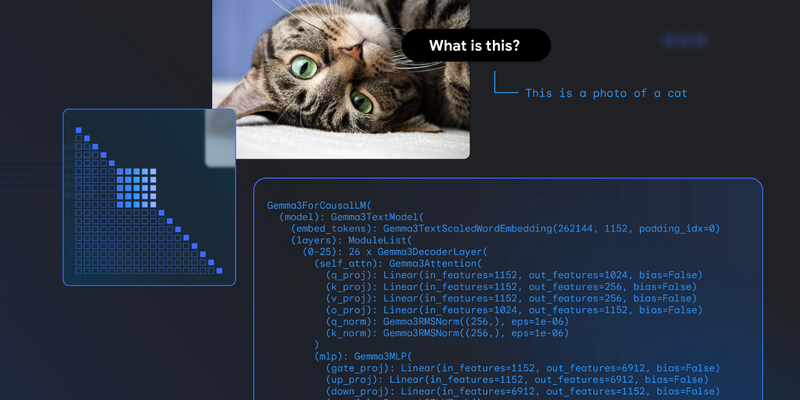
Debunking the myth that Google’s Gemma models are lagging behind, and exploring how their multilingual capabilities are quietly dominating the AI landscape.
Why treating AI data as transactional tables beats unstructured blob chaos
Accenture’s AI rush and Deloitte’s hallucinated citations expose a dangerous trend, enterprises paying premium rates for Blackbox AI systems with zero accountability.
Sentient AI’s ROMA framework tackles hierarchical task decomposition with recursive planning, delivering SOTA performance on complex agent benchmarks
As venture capital fuels trillion-dollar AI valuations without profits, local and open-source models face an existential threat when the bubble bursts.
With 2.65x faster CPU inference, BitDistill signals a potential shift toward CPU-efficient AI deployment, reducing reliance on expensive GPU infrastructure.
M5’s 3.5x AI performance leap and 153GB/s memory bandwidth reshape local LLM economics, but is it enough to dethrone PC builds?