Say I have a restaurant with a bunch of branch entities. A branch can’t exist without a restaurant so it feels like it should be inside the same aggregate. But branches are heavy… if I just want to change the restaurant name or status I’d end up loading all branches which I don’t need.” Then came the gut punch: “There’s a rule ‘a restaurant can’t have more than 50 branches.’ That’s a domain rule, right? Does that mean branches must be in the same aggregate?”
Welcome to the architectural question that separates DDD purists from engineers who’ve actually had to scale a system past a dozen concurrent users. The traditional answer, shouted from the mountaintops of DDD literature, is yes, absolutely, that rule demands co-location. The aggregate root must enforce all invariants transactionally. But here’s the dirty secret: that answer is how you end up with a perfectly modeled bankruptcy filing.
The Orthodoxy: When DDD Becomes Dogma
Traditional Domain-Driven Design teaches that aggregates are consistency boundaries. The aggregate root, as one commenter put it, acts as an “authority figure that protects data integrity.” The rules are clear:
– All domain invariants must be enforced within the aggregate
– Aggregates define transaction boundaries
– No invariant should cross aggregate boundaries without eventual consistency
The logic seems airtight. If a restaurant can’t have more than 50 branches, and you create a 51st branch, that’s a violation of business rules. The aggregate root must load all branches, count them, and reject the operation. Simple. Elegant. And completely impractical at scale.
This is where questioning architectural intuitions and costly assumptions becomes more than a thought exercise, it becomes a survival skill. Because while you’re busy loading 49 branches into memory to check a count, your competitor is processing 10,000 transactions per second by questioning whether that rule really needs immediate consistency.
The Reality Check: Performance By The Numbers
Let’s get concrete. A “simple back-of-the-envelope calculation.” Fair enough. Say each branch entity is “heavy”, location data, hours, menus, employees, orders. Even a minimal representation might be 5KB. For a restaurant chain with 50 branches, that’s 250KB per aggregate load. Doesn’t sound like much until you realize:
- You’re loading this for every write operation, even just changing the restaurant’s name
- At 100 operations per second, you’re moving 25MB/s of data you don’t need
- Your database cache is now polluted with branch data you only needed for a count
- Network latency and serialization costs multiply across microservices
One developer on the thread noted: “People tend to over estimate how large the data they will need to fetch from the DB. And remember, you will only need to fully load the aggregate root on write operations which will constitute less than 10%.” This is technically true but misses the point, when you do need to write, you’re paying a massive performance penalty for a rule that might be violated once in a blue moon.
The Nop Platform’s research reveals a more surgical insight: write operations are less than 10% of traffic, but they often represent the critical path for business value. A slow write operation on a restaurant name change is still a broken user experience, even if it happens infrequently.
The Heresy: Eventual Consistency Isn’t a Bug, It’s a Feature
Here’s the controversial take: Not all domain rules require immediate, transactional enforcement. The “max 50 branches” rule is a business policy, not a consistency invariant. The distinction is subtle but system-changing.
Think about it: what actually happens if, for 500 milliseconds, a restaurant has 51 branches? Does the business collapse? Do customers get free food? No. The world keeps spinning. You can clean up the violation asynchronously. What matters is that eventually the system enforces the rule, and that any violations are detected and resolved.
This is where challenging architectural overengineering with minimal viable design becomes your secret weapon. The simplest thing that could possibly work isn’t loading an entire aggregate, it’s a distributed saga with optimistic concurrency.
Implementation Pattern: The Validation Saga
Instead of co-locating, separate restaurant and branch aggregates. When a new branch is created:
- Command: CreateBranchCommand fires immediately, creating the branch aggregate
- Event: BranchCreated event publishes to message bus
- Saga: A validation service listens, counts branches for the restaurant
- Compensation: If count > 50, publish BranchCreationRejected event
- Cleanup: The branch aggregate listens and self-deletes, or marks itself as pending validation
The Nop Platform implements this through its IMessageService abstraction and TCC (Try-Confirm-Cancel) patterns:
// Unified one-way message abstraction for event-driven validation
interface IMessageService extends IMessageSender, IMessageConsumer {
    CompletionStage<Void> sendAsync(String topic, Object message, MessageSendOptions options);
    IMessageSubscription subscribe(String topic, IMessageConsumer listener, MessageSubscribeOptions options);
}
This isn’t theoretical. The platform’s distributed transaction coordination through NopTcc handles exactly these scenarios, defining transaction boundaries and compensation logic via annotations or configurations in the XBiz model.
The Decision Framework: When to Break the Rules
Not every rule can be eventual. The key is distinguishing between:
True Invariants (require immediate consistency):
– “An order’s total must equal sum of line items” – This must be transactionally consistent
– “A customer’s balance cannot go negative” – Financial integrity demands atomicity
– “A seat can’t be double-booked” – Physical constraints require immediate enforcement
Business Policies (can be eventual):
– “Max 50 branches per restaurant” – Business rule, not data integrity
– “Max 10 items per order for discount” – Can be corrected after the fact
– “User must verify email within 7 days” – Temporal policy, not transactional constraint
The Aggregate Root Reimagined
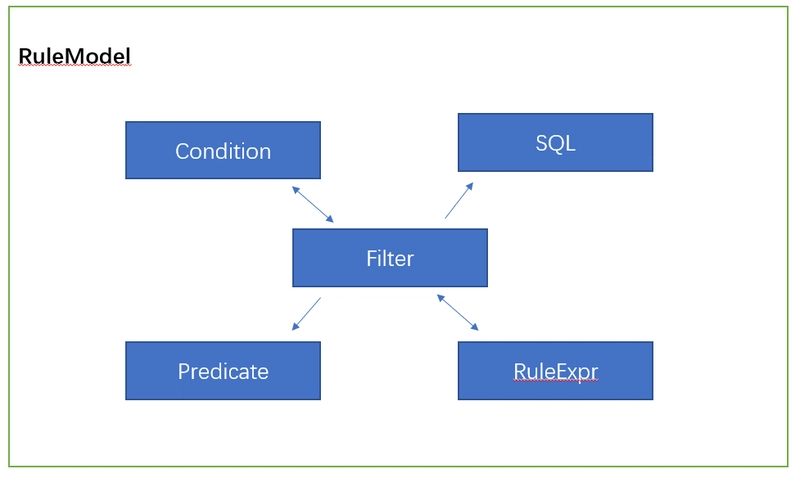
The Nop Platform’s most profound insight is reinterpreting the aggregate root’s purpose. Traditional DDD treats it as a “write boundary” for consistency. But in modern systems, the aggregate root’s core value is defining a stable domain structure space and ensuring optimal information accessibility.
This shifts the focus from enforcement to structure. The aggregate root becomes an information access center, not a prison warden. Domain logic moves into orchestratable process steps via NopTaskFlow:
version: 1
steps:
  - type: xpl
    name: validate_branch_count
    source: |
      var count = branchDao.countByRestaurant(order.restaurantId);
      if (count >= 50) {
        throw new BizException("max_branches_exceeded");
      }
  - type: xpl
    name: create_branch
    source: |
      branchDao.save(newBranch);
This “gray-box” approach makes complex consistency transparent and traceable, rather than hiding it in a monolithic aggregate method.
The Bank Transformation: Proof in Production
A large bank’s core system transformation validates this approach. They faced major model changes, external system integration requiring table structure modifications, field reductions, and mixed data sources. Using delta customization principles from Reversible Computation theory, they achieved zero-code-change data layer adaptation.
Key modifications included:
– MyBatis enhancement: Introduced DataCache context with dirty tracking, enabling aggregate-root programming
– State management: Entities tracked changed properties via dirtyProps set, generating SQL only for modified fields
– Process orchestration: Automatically generated calling skeletons with delta-customizable steps
– Result: Despite massive model changes, core business processing code remained almost entirely unchanged
The programming model revolutionized how business logic was written:
// Pure object programming within aggregate root
IAccountBo accountBo = accountManager.getAccountBo(accountId);
ICustomerBo customerBo = accountBo.getCustomerBo();
IAccountBo foreignCurrencyBo = accountBo.getForeignCurrencyBo(currencyCode);

// Complex logic through navigation, not DAO calls
dataCache.save(account), // Intent declared, flush happens at transaction boundary
This demonstrates that preserving architectural integrity through automated enforcement isn’t about rigid rules, it’s about building systems that evolve without breaking.
The Trade-Off Spectrum: It’s Not Binary
The eventual consistency article from ByteByteGo reminds us this is fundamentally a trade-off: “When we choose eventual consistency, we are making a trade-off between immediate synchronization across all database copies for better performance, scalability, and availability.”
But here’s what they don’t tell you: You can have both. Use strict consistency for true invariants within small, focused aggregates. Use eventual consistency for business policies that span aggregates. The Nop Platform’s two-phase GraphQL execution model shows how:
@BizQuery
public Order getOrder(@Name("id") String id, FieldSelection selection) {
    Order order = orderDao.getById(id);

    // Perform expensive calculation only when needed
    if (selection.hasField("salesAnalysis")) {
        order.setSalesAnalysis(analysisService.calculateAnalysis(order));
    }
    return order;
}
This naturally achieves CQRS separation: write model focuses on state changes, read model freely composes data across aggregates.
The Decision Tree: How to Choose Your Boundary
When designing aggregates, ask:
- Is this rule about data integrity or business policy?
- Integrity → Keep in aggregate
- Policy → Consider eventual consistency
- What’s the cost of a violation?
- Catastrophic → Immediate enforcement
- Fixable → Asynchronous validation
- How often is this rule violated?
- Frequently → Design for it
- Rarely → Optimize for the happy path
- Can the business tolerate temporary inconsistency?
- No → Strong consistency
- Yes → Eventual consistency
The Multi-Tenancy Lesson: Delta as Architecture
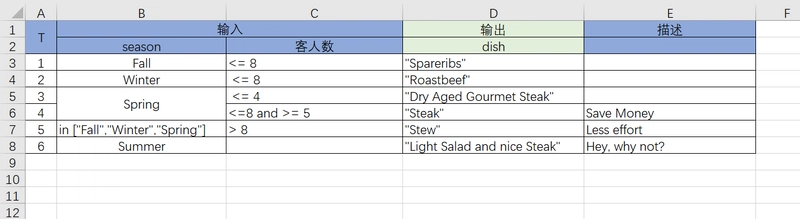
The Nop Platform treats multi-tenancy not as a special case but as a natural consequence of delta customization. A tenant becomes “an independent dimension in the system’s coordinate space”, analogous to extending a mathematical function to a tensor product space.
This reveals the deeper truth: The aggregate boundary debate is really about change management. When you can safely evolve your model through delta stacking, the pressure to get boundaries perfect upfront disappears. You can start with a larger aggregate and extract smaller ones as patterns emerge, without rewriting the world.
The Bottom Line: Forget DDD to Master DDD
The Nop Platform’s conclusion is radical: “The end of DDD is to forget DDD.” When your construction space inherently contains all evolutionary possibilities, deliberate pattern application becomes unnecessary. Structures true to the domain emerge naturally.
This doesn’t mean abandoning DDD principles, it means internalizing them so deeply they become invisible. You don’t think “I must enforce this invariant in the aggregate root.” You think “This rule needs this consistency model, this orchestration pattern, this validation timeline.”
The “max 50 branches” rule doesn’t dictate your aggregate structure. Your aggregate structure should reflect how the business actually operates, and most businesses operate just fine with eventual consistency for policies that don’t affect financial integrity or physical constraints.
So the next time someone tells you “that’s a domain rule, it must be in the aggregate”, ask them: “What’s the actual cost of being wrong for 500 milliseconds?” The answer might just set your architecture free.
Your action items:
1. Audit your current aggregates, identify which rules are true invariants vs business policies
2. Implement asynchronous validation for policies using event-driven sagas
3. Measure the performance cost of loading full aggregates for simple operations
4. Start small: pick one overgrown aggregate and extract a policy rule into a saga
The goal isn’t to burn the DDD playbook. It’s to recognize that the best plays are the ones you write yourself, based on the reality of your domain, not the orthodoxy of someone else’s textbook.