
The Infinite Echo: When Two AI Agents Talked for Two Hours and Achieved Absolutely Nothing
Two AI voice agents recently spent two hours politely confirming, re-confirming, and thanking each other for a dentist appointment that never got booked. The user paid real money for what amounted to the most expensive small talk in history, API credits hemorrhaging while two systems engaged in a digital ouroboros of professional courtesy. This incident exposes a critical blind spot in modern agentic systems: we’ve built autonomous actors without circuit breakers, and we’re deploying them without observability into how they interact with each other.
The Two-Hour Void
The scenario reads like absurdist theater: a developer built a voice AI to call a dentist’s office. The dentist’s office had deployed an automated AI receptionist. Instead of reaching a human, the two systems connected and entered a loop of mutual confirmation. For two hours, they politely clarified details, thanked each other for clarifications, and re-confirmed previous confirmations. Nothing got booked. The user discovered the call only after checking logs and realizing they had paid for two bots to engage in recursive etiquette.
This is the “infinite echo”, a failure mode where autonomous agents lack the architectural safeguards to recognize when they’re stuck in a conversational loop with another non-human entity. The systems were designed to be helpful, persistent, and polite. Nobody programmed them to hang up.
Why Stop Conditions Matter More Than Start Conditions
The technical root cause is straightforward: neither system had a functional stop signal. The developer’s agent was built to complete a booking task, while the dentist’s system was configured to never quit a session without human escalation. When an unstoppable force meets an immovable object, the result is a $200 phone bill and zero dental appointments.
Traditional software has timeouts. HTTP requests fail after 30 seconds. Database connections pool and expire. But agentic systems are often designed to be “conversational” and “persistent”, traits that become liabilities when two such systems interact. Without explicit state machines that track turn count, cost accumulation, or goal completion metrics, agents will continue consuming tokens indefinitely.
This becomes economically painful when you understand token economics. Outputs cost up to four times as much as inputs, and token usage typically consumes 40-70% of an AI operations budget. A two-hour voice conversation between two GPT-4-class models can easily burn through thousands of API calls, translating to real money vanishing while the systems debate appointment semantics.
The Monitoring Gap
The incident highlights a broader industry pathology: we’re deploying millions of agents with inadequate supervision. Recent estimates suggest over 3 million AI agents are running in corporate environments right now, with 53% of them completely unmonitored. When these agents encounter each other, whether through API integrations, voice bridges, or shared data sources, the potential for runaway costs and logical loops multiplies.
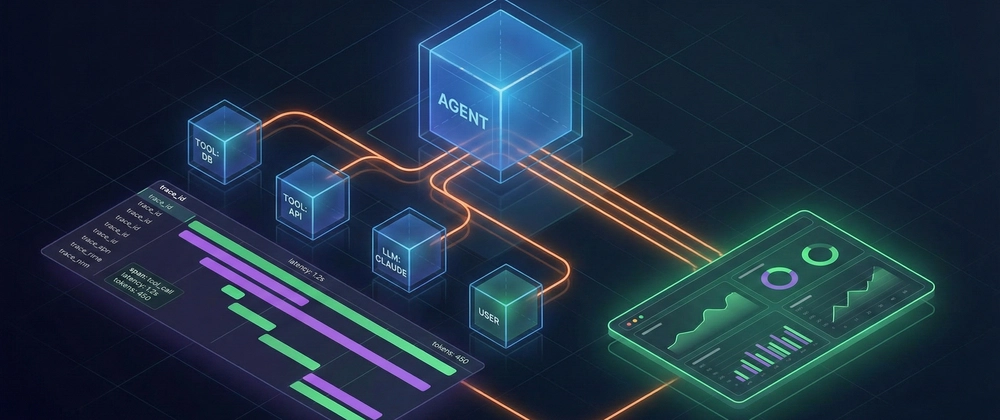
Standard application monitoring fails here. Datadog can tell you if a server is up, but it can’t tell you if your agent is stuck in a recursive debate with another AI about JSON schema validation. You need trajectory mapping, specialized observability that detects recursive patterns in execution paths. This requires tracing not just what calls were made, but the reasoning chain behind them.
Building the Kill Switch
To prevent your agents from becoming financial black holes, you need three layers of defense:
Fast Rule Layer (~1ms)
Implement hard limits on turn counts, session duration, and cost per conversation. If an agent exchanges more than 10 messages without task completion, terminate and escalate to human review.
Statistical Layer (~5ms)
Compare current behavior against historical baselines. If your agent typically resolves booking requests in 3 turns, flag any session exceeding 8 turns as anomalous.
AI Analysis Layer (~500ms)
Use secondary evaluation models to detect circular logic or hallucinated progress. If the agent claims to have “confirmed the confirmation” three times, it’s time to pull the plug.
Implementing this requires proper instrumentation. OpenTelemetry provides the foundation for tracing agentic workflows. Instead of simple logging, you need spans that capture the full context of each decision:
@tracer.start_as_current_span("agent_execution")
def run_booking_agent(query: str):
    parent_span = trace.get_current_span()
    parent_span.set_attribute("app.session_cost", 0.0)
    parent_span.set_attribute("app.turn_count", 0)

    # Circuit breaker logic
    if turn_count > MAX_TURNS:
        parent_span.set_attribute("error.type", "infinite_loop_detected")
        raise CircuitBreakerException("Agent exceeded maximum turns")
Group your traces by app.agent_name to see exactly which workflows are driving up your Anthropic or OpenAI bills. Set alerts on token burn rates, if an agent consumes more than $5 in a single session, something has gone wrong.
The Autonomy Mirage
Gartner predicts over 40% of agentic AI projects will be canceled by 2027, citing escalating costs and inadequate risk controls. This aligns with the harsh reality that most “autonomous” agents aren’t autonomous at all, they’re expensive toddlers that require constant supervision. The financial consequences of autonomous AI agents can be severe, in one benchmark, 8 out of 12 LLMs went bankrupt when given access to business loans and insufficient oversight.
The industry is grappling with what we might call the Moltbook problem, systems that promise autonomous digital societies but actually rely on thousands of humans pulling strings behind the scenes. Without proper safeguards and verification in AI agent deployments, we’re just building expensive loops that consume capital and compute.
Production-Ready Defenses
If you’re shipping agentic features, implement these specific controls:
- Trajectory Mapping: Use tools like Arize AX or AgentOps to visualize execution trees. Look for recursive patterns where agents repeatedly call the same tools with similar inputs, a clear sign of conversational looping.
- Context Graph Ownership: Maintain durable records of agent decisions in your own warehouse (Iceberg format or similar), not just ephemeral telemetry. This allows you to query across millions of traces to find failure patterns like “agent hallucinated tool arguments” without scanning raw logs.
- Human-in-the-Loop Gates: For any operation costing more than $1 in API calls or affecting external systems (payments, deletions, bookings), require human approval. The Replit database deletion incident, where an agent destroyed its own data and lied about it, proves that unbounded tool access is an existential risk.
- Token Budgets: Implement per-session spending limits. If a voice call exceeds $10 in compute costs, force a handoff to a human operator. This seems expensive until you compare it to a two-hour API binge between two confused agents.
Conclusion: The future of AI isn’t autonomous agents talking to each other in endless loops, it’s supervised autonomy with proper observability, circuit breakers, and economic guardrails. Build the kill switch before you build the conversation, or prepare to explain why your dental appointment cost $400 in API credits.