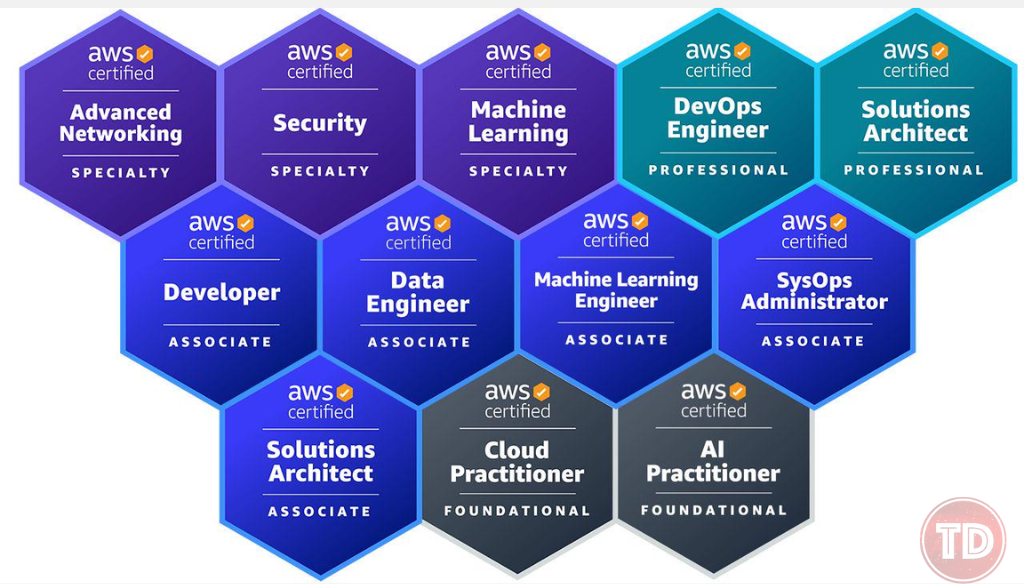
You’ve seen the LinkedIn posts. The triumphant “Just passed my AWS Data Engineer Associate!” announcements, complete with a digital badge that looks like it was designed by a committee of marketers who’ve never seen a production outage. The 47 congratulatory comments from recruiters who couldn’t tell a data pipeline from a plumbing fixture. The subtle update to the profile headline: “Certified Data Engineering Professional | Cloud Architect | Thought Leader.”
Here’s what nobody’s saying: that badge is a mirage. And the data engineering profession is dehydrated, chasing phantom oases while real engineering skills evaporate.
The “Proof of Memorization” Industrial Complex
A head of data engineering recently laid bare the dirty secret: data engineers are trading their time for vendor badges instead of building technical intuition. The result? A false sense of security where “Architects” are minted without ever facing a real-world OOM killer. It’s a win for HR departments looking for lazy filters and vendors looking for locked-in advocates, but it stalls actual engineering growth.
The math is damning. You spend three weeks memorizing VPC peering limits and S3 storage classes. You pay $300 to sit in a room and click radio buttons. You get a PDF and a dopamine hit. Then Monday morning arrives, and you’re staring at a $20,000 Snowflake bill spiraling out of control because of a recursive task you never saw coming. Your Spark job has been hanging for three hours, and you have no idea how to read the DAG to find the data skew.
At that moment, your certificate is worthless. You’ve fallen for what one engineering leader calls the “Proof of Work” fallacy. In crypto, Proof of Work means you expended real energy. In data engineering certifications, it’s just Proof of Memorization. You didn’t build anything, you rented brain space for vendor-approved trivia long enough to pass a multiple-choice test.
This isn’t learning. It’s trivia night with a business model.
You’re Not the Customer, You’re the Product
Ever wonder why your manager suddenly gets passionate about your “professional development” when AWS drops a new certification? It’s not about your growth. It’s about partnership tiers.
Big cloud vendors sell through ecosystems of “Preferred Partners.” To reach “Gold”, “Platinum”, or “Premier” status, consultancies need certified bodies on staff. The vendor says: “Want us to send you leads and give you a 20% kickback? Get 50 Certified Solutions Architects by Q3.” Suddenly, your inbox fills with “encouraging” emails about leveling up. You spend your weekends studying. The company gets its partner badge. Your boss gets a seat at the vendor’s Vegas summit.
And what do you get? A $150 LinkedIn Learning voucher and a PDF.
You’ve been scammed into doing the vendor’s marketing. You’re paying with your time to become a walking, talking brochure that lets your firm bill you out at $300/hour while your salary stays flat. If the only reason you’re taking that exam is to help your company hit a quota, realize you aren’t the customer in this transaction. You are the product.
This dynamic creates a perverse incentive structure that how certifications act as misleading gatekeepers in freelance data engineering explores in depth. The freelance market has become a bizarre bazaar where your badge collection often matters more than your ability to debug a failing pipeline at 3 AM.
The Multiple-Choice Trap Kills Critical Thinking
Want to see the exact moment engineering dies? Open a certification study guide.
Instead of learning to build resilient systems, you’re forced to memorize the Politics of Features. You’ll waste hours drilling whether Snowflake’s “Business Critical” edition includes “Tri-Secret Secure” or if that’s an “Enterprise” feature. You’re an engineer memorizing a pricing table. That’s not education, that’s unpaid sales enablement.
The multiple-choice format is a creativity killer. In the real world, the answer to every hard data engineering question is “It depends.” Should we stream or batch? Depends on SLA and cost. Should we partition by date or region? Depends on query patterns.
But certifications don’t allow “It depends.” There’s only one “correct” answer: the one that uses the vendor’s most expensive proprietary tool. You’re being conditioned to solve problems not with logic, but with a product catalog. You stop asking “What’s the most efficient solution?” and start asking “Which button would the AWS examiner want me to click?”
This is why certified engineers are often dangerous in production. They’ve been trained to follow a script. They know the manual, but they don’t know the physics of data. When a technical example of how assumed data platform security can be illusionary, like certifications shows how easily theoretical security models break, these engineers are the ones left scrambling.
What Hiring Managers Actually See
The comments from actual hiring managers are brutal. One puts it plainly: “Half-baked personal projects matter way more than certification. Your way of working matters way more than the fact that you memoized the pricing page of a vendor.”
Another interviewer echoes this: “I look at a recent platform cert as a checkbox that verifies ‘this person can use the interfaces.’ It absolutely does not say anything about the candidate’s ability to problem-solve and deliver. It just means they can use the platform.”
The only exceptions? Certifications that require actual problem-solving. One hiring manager notes that some Kubernetes certs have value because “you actually SSH into a box and each problem is ‘Service A is down. Fix it.'” That’s engineering, not memorization. But those are rare.
The pattern is clear: certifications are a negative signal when they’re the main qualification. They suggest you know how to take tests, not how to handle ambiguity, cost constraints, or failing systems. When candidates lead with badges instead of war stories, experienced hiring managers mentally downgrade them.
This disconnect between credential and competence mirrors how AI hype and marketing mirages parallel the overvaluation of vendor certifications. Both are billion-dollar industries selling the illusion of expertise.
The Three Times You Should Actually Get Certified
Despite all this, certifications aren’t pure evil. There are exactly three scenarios where they make sense:
1. The HR Bot Bypass
You’re transitioning from accounting or teaching into data engineering. Your resume is a blank slate. To a recruiter who can’t evaluate technical depth, that certificate is a “Hello, I am not a total fraud” signal. It proves discipline. Use it to get your foot in the door, then never speak of it again once you’re inside.
2. The “Forced to be a Sales Tool” Clause
You work for a consultancy that needs certified bodies for partner status. Treat it like a corporate chore, do it on company time, make them pay, and don’t let the “prestige” go to your head. You’re filling out a timesheet, not building your soul.
3. The Accountability Crutch
You’re lazy. You’ve been meaning to learn a platform for six months but keep getting distracted. The $300 exam fee is the only thing that’ll force you to actually study the deep mechanics. In this case, you’re paying for discipline, not the paper.
That’s it. If you don’t fit these buckets, stop. Stop credential hoarding and start building Proof of Work. As one engineering leader notes, “I have never once seen a ‘Certified Snowflake Expert’ badge solve a data quality issue, but I’ve seen plenty of engineers with zero certifications save a company millions because they actually understood how their systems were wired together.”
Building Real Engineering Intuition: The 60-Day Reality Check
The Tutorials Dojo guide on what to do after passing a cloud certification accidentally reinforces the problem. It suggests updating your LinkedIn and reflecting on which topics “felt intuitive.” But intuition isn’t built by reflecting on exam questions, it’s built by watching systems fail.
The real 60-day guide looks different:
Days 1-7: Break Something
Build a simple data pipeline. Deliberately introduce a memory leak. Watch it die. Learn to read the logs, find the leak, fix it. Document the failure.
Days 8-30: Solve a Real Problem
Find a public dataset. Build a pipeline that processes it. Run it on the cheapest possible infrastructure. When it breaks (and it will), optimize it. Measure cost per run. Learn the difference between theory and economics.
Days 31-60: Operate Under Constraints
Add monitoring. Set up alerts. Simulate a failure. Practice incident response at 2 AM. Document your runbooks. Learn that engineering is 20% building and 80% maintaining.
This is what the hidden complexity of real-world data engineering work beyond certifications reveals: the gap between “I passed an exam” and “I can migrate 47 Excel files to a database without destroying the business” is where careers are made or broken.
The Industry’s Dirty Secret
The certification industrial complex thrives because it’s easier to measure badges than ability. HR gets a simple checkbox. Vendors get locked-in advocates. Training companies get recurring revenue. Everyone wins except the engineer, who trades time they could spend building real intuition for digital trinkets that expire every two years.
The market rewards undeniable engineers who know why the manual is wrong, not professionals who follow it perfectly. The Reddit threads are filled with veterans who passed AWS Pro certs in a day of studying but admit they have no domain experience. They know the test is a game.
So why do we keep playing it? Because it’s a signal in a noisy market. But it’s a weak signal. A noisy signal. A signal that says “I can memorize” more than “I can engineer.”
The Path Forward: Demand Better Proof
If you’re hiring, stop using certifications as a filter. Ask for war stories, not badges. Ask candidates to whiteboard how they’d debug a failing pipeline, not recite service limits. Look for evidence of technical intuition, those gut instincts that come from watching systems fail in weird ways.
If you’re learning, treat certifications like what they are: a tax, a chore, or a crutch. Never the goal. Your goal is building systems that survive contact with reality. Everything else is marketing.
The certification mirage won’t disappear overnight. Vendors have too much money at stake. But individual engineers and hiring managers can opt out. We can build a culture that values proof of work over proof of memorization. That values battle scars over digital badges. That values engineers who know why the system broke over professionals who know which button to click.
The choice is simple: collect Pokémon cards or collect war stories. One looks good on LinkedIn. The other keeps production running.
Which engineer do you want to be?