OneLake’s 30% Performance Tax: The Strategic Cost of Microsoft’s Unified Data Vision
Engineers running comparative benchmarks have noticed something unsettling: queries against Iceberg tables in Microsoft OneLake consistently run 20-30% slower than identical queries against Azure Data Lake Storage (ADLS) Gen2. The performance gap isn’t random noise, it’s a structural feature of how Microsoft has architected its “unified” data lake, and it reveals a calculated strategy that should worry any multi-cloud enterprise.
The Two-Tier API Architecture Nobody Asked For
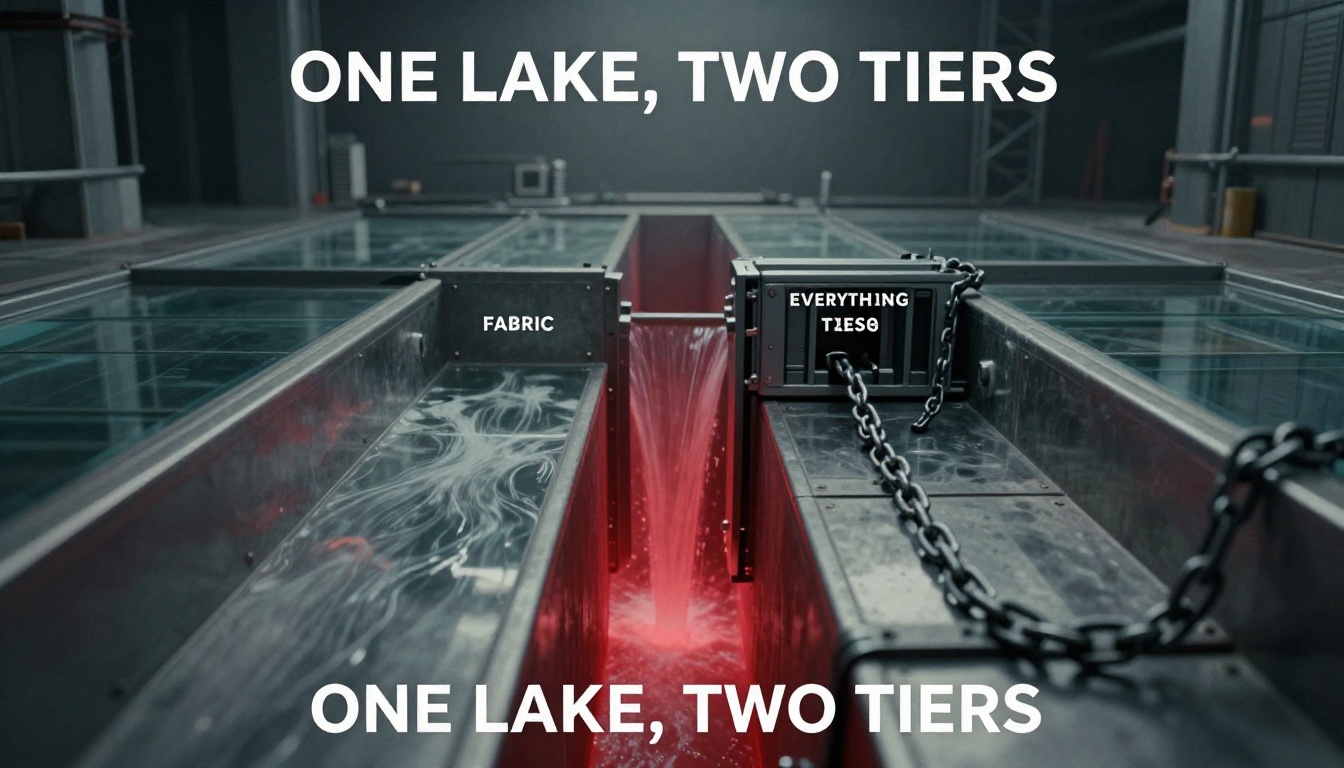
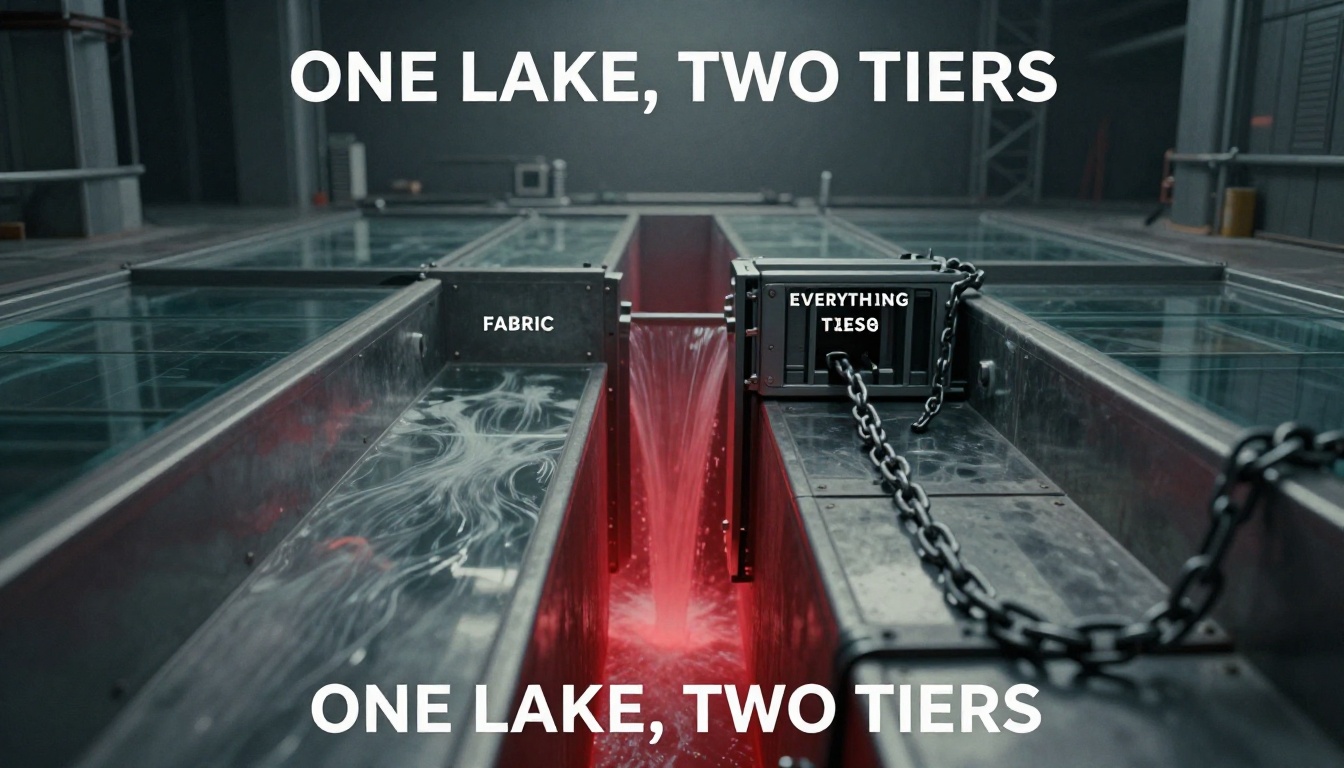
Under OneLake’s hood lurk two distinct APIs that determine your performance destiny. The Redirect API translates OneLake paths directly to underlying ADLS paths with minimal overhead, but it’s reserved exclusively for Fabric-native engines. Everyone else, Snowflake, Kubernetes-hosted Spark, Databricks, any third-party query engine, gets shunted through the Proxy API, an additional compute layer that intermediates every storage operation.
This isn’t speculation. Engineers comparing Snowflake and Spark-on-K8s performance have documented the disparity, particularly on tables with high file counts where the Proxy overhead compounds. The Proxy API “probably is just as it sounds”, as technical discussions have noted: a gateway that introduces latency, reduces throughput, and ensures Microsoft maintains control over the storage access pattern.
The implications are stark. OneLake isn’t operating as open storage, it’s a premium tier for Fabric workloads and a deliberately suboptimal experience for everything else. Call it what it is: ADLS with shackles.
Performance Degradation as a Migration Nudge
Microsoft’s sales machinery tells a different story. Enterprise reps push OneLake relentlessly, positioning it as the modern choice while framing ADLS as legacy. The concern isn’t paranoia, it’s pattern recognition. Microsoft’s history of ecosystem coercion runs deep, from the OneDrive reinstallation wars to the Teams bundling controversies. When your Microsoft rep insists OneLake is “the future”, they’re not having a technical discussion, they’re executing a land-and-expand playbook.
The performance differential functions as a subtle but persistent migration nudge. Each 30% slower query becomes a data point in a business case: “If we just moved this workload to Fabric, we’d see immediate performance gains.” It’s the cloud equivalent of a casino comping your hotel room, generous on the surface, but the house always wins.
This matters because organizational dependency on Microsoft’s ecosystem creates existential risks. Dutch universities are already testing life outside the Microsoft stack, recognizing that vendor lock-in at scale becomes a geopolitical liability. When the International Criminal Court defected from Microsoft over sovereignty concerns, it wasn’t about email, it was about who controls your data infrastructure when political winds shift.
The Fabric Revenue Mirage
Microsoft executives celebrate Fabric’s meteoric rise, touting $2 billion in annual recurring revenue achieved in less than two years. But is this real innovation or just Power BI revenue in a trench coat? The number is impressive until you realize it includes existing Power BI customers automatically enrolled in Fabric SKUs. The “fastest-growing product in Microsoft’s history” narrative masks a conversion strategy, not organic adoption.
For enterprises running transactional workloads across multiple clouds, this matters. You can’t egress petabytes of data to a single cloud for analytics without destroying your economics. The open stack approach, Snowflake for analytics, Spark on Kubernetes for processing, ADLS for storage, maintains architectural sovereignty. OneLake asks you to trade that sovereignty for convenience.
When OneLake Actually Makes Sense (And When It Doesn’t)
Let’s be fair: OneLake isn’t without legitimate use cases. For organizations already committed to the Microsoft stack, Power BI for visualization, Azure Synapse for warehousing, Teams for collaboration, the integrated governance and Direct Lake mode for Power BI deliver genuine value. The unified security model through Microsoft Purview and workspace-based RBAC simplify compliance for single-ecosystem enterprises.
| Decision Factor | Choose OneLake | Choose ADLS |
|---|---|---|
| Platform Usage | Microsoft Fabric-native workloads | Custom big data pipelines |
| Business Intelligence | Power BI-led analytics | Third-party BI tools |
| Tool Flexibility | Staying with Microsoft stack | Integrating with best-of-breed |
| Cost Management | Flat-rate SKU pricing | Pay-per-use transparency |
| Multi-cloud | Single-cloud only | Hybrid and multi-cloud setups |
The hybrid approach, ADLS for raw storage, OneLake for analytics via shortcuts, sounds appealing but operationalizes the two-tier problem. You’re still paying the performance tax on any data accessed through OneLake shortcuts from non-Fabric engines.
The Architectural Lock-in Mechanism
The lock-in isn’t just about performance. It’s about data gravity and governance entanglement. Once you centralize governance in OneLake’s Purview integration and build workspace-based access controls, migrating away requires not just data movement but a complete security model rebuild. The metadata, lineage, and compliance history don’t export cleanly. You’re not just moving files, you’re rebuilding your data operating system.
This is why enterprise readiness assessments for Fabric show mixed results. Since launching two years ago, Fabric has attracted over 28,000 organizations, but production deployments at scale remain cautious. The promise of “one platform to replace your fragmented data stack” collides with the reality that most enterprises run intentionally fragmented stacks to avoid single-vendor dependency.
The Multi-Cloud Reality Check
For businesses operating across AWS and Azure (or Google Cloud), OneLake represents a strategic dead end. The Proxy API architecture assumes all compute lives in Azure. When your transactional systems span clouds, the egress costs alone make OneLake economically irrational. Snowflake’s cross-cloud query capabilities and open table formats like Iceberg become not just technical choices but sovereignty preservation tools.
The concern that Microsoft might deprecate ADLS isn’t fantasy, it’s how platform vendors sunset competing products. First, they build a superior integrated experience. Then they nudge. Then they announce “end of active development.” Finally, they set a hard deprecation date, giving you 18 months to migrate or face support cliffs.
Actionable Takeaways for Enterprise Architects
If you’re evaluating OneLake:
- Benchmark your actual workloads before committing. Run Snowflake, Spark, and Databricks against both ADLS and OneLake with production-scale data. The 20-30% penalty may be acceptable for some queries but devastating for others.
- Model the total cost of ownership including egress, migration, and the eventual cost of extraction. The flat-rate SKU pricing looks simple until you factor in productivity losses from performance degradation.
- Pressure-test your exit strategy. Can you export metadata, governance policies, and access controls? How long would a migration to pure ADLS or another cloud take?
- Negotiate contractual protections. Get explicit commitments on ADLS support timelines and OneLake performance SLAs for non-Fabric engines. Don’t accept verbal assurances.
- Consider the hybrid as transitional, not permanent. Use OneLake shortcuts for specific Power BI workloads, but maintain ADLS as your system of record. Treat OneLake as a caching layer, not primary storage.
If you’re already invested in OneLake:
- Minimize data movement through the Proxy API. Structure your pipelines to land data in ADLS first, then use OneLake shortcuts for Fabric-native consumption only.
- Maintain parallel tooling. Keep your Spark and Snowflake environments ADLS-native to preserve optionality.
- Document performance baselines. When Microsoft inevitably improves Proxy API performance, you’ll want to measure whether it truly closes the gap or just reduces the tax.
The Bigger Picture
Microsoft isn’t alone in this strategy. Every major cloud provider builds moats, but OneLake’s architecture is particularly brazen because it degrades the open alternative (ADLS) while pretending to be a neutral layer. It’s not a technical necessity, it’s a business choice.
The real value in modern data infrastructure isn’t the storage layer, it’s the control plane. By making OneLake the control plane, Microsoft positions itself to tax every query, every transformation, every insight. The 30% performance penalty isn’t a bug, it’s the price of admission to a walled garden where Microsoft sets the rules.
For comparison between Microsoft Fabric and best-of-breed platforms like Snowflake, the choice becomes clear: specialization beats integration when integration comes with handcuffs. The enterprises that thrive will be those that treat OneLake as a tactical tool for specific workloads, not a strategic foundation for their entire data estate.
The question isn’t whether OneLake works. It’s whether you can afford the performance tax and the lock-in it buys.