
Middleware Doesn’t Scale, It Accumulates: The Hidden Technical Debt of CRM-ERP Integration
Every enterprise architect eventually faces the same uncomfortable realization: the integration layer that once saved your project is now slowly strangling it. What starts as a “simple” API bridge between Salesforce and your ERP mutates into a brittle, high-maintenance beast that requires more feeding than the systems it connects. With Gartner reporting that 70% of ERP implementations fail to meet objectives and the iPaaS market ballooning to a projected $78.28 billion by 2032, we’re witnessing a massive architectural gamble. Are we building resilient systems or just shifting complexity around?

The Scaling Paradox: When Simple Bridges Become Load-Bearing Walls
In smaller environments, API integrations between Salesforce and external ERPs usually work fine. But as order volume, SKU complexity, and financial reporting demands increase, integration layers start carrying more operational weight than expected, often becoming the single point of failure for your entire revenue operation. Architects on developer forums note that while point-to-point connections suffice for basic data sharing initially, the maintenance burden grows exponentially once you hit enterprise scale.
This isn’t just anecdotal. The data reveals a harsh reality: manufacturing environments face ERP failure rates as high as 75%, with average cost overruns hitting 189% across all industries and 215% for manufacturing. When your middleware becomes the critical path for every order, invoice, and inventory update, you’re no longer running a CRM and ERP, you’re running a middleware company that happens to sell products on the side.
The Five Integration Methods: A Timeline of Regret
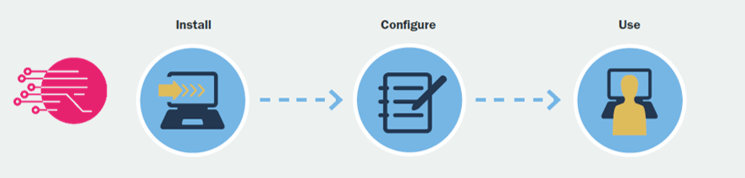
Not all integration strategies age equally poorly. The method you choose today dictates your technical debt trajectory tomorrow:
| Method Type | Business Needs | Projected Time | Technical Debt Risk |
|---|---|---|---|
| Point-to-point | Small-scale, basic data sharing | 4-8 weeks | High (spaghetti architecture) |
| Third-party connectors | Rapid, standard integration | 2-6 weeks | Medium (vendor lock-in) |
| iPaaS | Scalable integrations with minimal IT overhead | 2-8 weeks | Low-to-Medium (platform dependency) |
| Middleware-based | Scalable, flexible integrations | 8-16 weeks | Medium (complexity accumulation) |
| Custom API | Tailored workflows and niche requirements | 12-36+ weeks | Very High (maintenance nightmare) |
Point-to-point integrations devolve into “spaghetti architecture” where each new connection requires custom configuration, creating an unmaintainable web of dependencies. Meanwhile, custom API integrations offer complete flexibility but demand continuous maintenance by skilled developers, becoming a black hole for engineering resources. When evaluating if internal API complexity justifies external middleware, most architects discover they’ve built a distributed monolith without realizing it.
The Native ERP Temptation: Centralization vs. Resilience
Faced with middleware maintenance hell, some organizations are making a radical architectural shift. Salesforce-native ERP products like Axolt aim to eliminate heavy middleware entirely by running inventory, service, and finance logic inside the same environment. It’s a tempting proposition: remove the integration layer, remove the integration problems.
But this centralization creates its own vulnerabilities. While reducing integration layers eliminates synchronization failures and data format mismatches, it introduces tight coupling that makes system evolution difficult. When your CRM is your ERP, upgrading either becomes impossible without disrupting both. Decoupled systems, conversely, offer better long-term resilience by isolating failure domains, when your ERP goes down, your sales team can still access customer data, and vice versa.
The Data Integrity Nightmare: A Six-Part Horror Show
Once middleware enters the picture, you’re not just managing two systems, you’re managing the translation layer between them. The operational challenges read like a catalog of integration anti-patterns:
Data format mismatches plague even simple implementations. Salesforce might store phone numbers as (555) 123-4567 while your ERP demands 5551234567, requiring transformation logic that adds latency and failure points. Data integrity issues multiply when duplicate or incomplete records propagate across systems, creating situations where the same customer exists in both platforms with slightly different information, different names, emails, or tax IDs.
Real-time synchronization failures occur when system timeouts or connection issues delay order processing, leaving sales reps promising inventory that doesn’t exist. Timing issues emerge when concurrent updates create race conditions, a customer updates their shipping address with service at 2:00 PM while their purchasing manager updates it online at 2:01 PM, leaving your middleware confused about which version is canonical.
The solutions, master data management strategies, timestamp-based synchronization, and batch processing during off-peak hours, add yet more complexity to your integration layer. Assessing whether legacy connectivity protocols contribute to technical debt becomes crucial when these translation layers start behaving like the legacy systems they were meant to modernize.
AI Agents and the Integration Paradox
By 2026, Gartner predicts 40% of enterprise applications will use AI agents, autonomous systems that plan tasks, make decisions, and complete multi-step workflows. For integration architecture, this presents a paradox: AI promises to automate the very middleware maintenance that’s killing us, but it also risks creating opaque, self-modifying integration layers that nobody understands.
Early adopters report 20% to 30% faster workflow cycles and 25% to 40% less time spent on repetitive tasks. Salesforce’s Agentforce platform, launched in 2025, already handles routine data synchronization without human intervention. But there’s a catch: when AI agents manage your integration layer, debugging failures requires understanding not just your systems, but the agent’s decision-making process. You’ve traded technical debt for algorithmic opacity.
The Decoupling Decision: When to Cut the Cord
when you have complex, multi-directional data flows between best-of-breed systems that evolve independently. This preserves system autonomy but requires ongoing governance.
when your data flows are predominantly one-way and your teams lack the operational capacity to manage distributed systems. This reduces integration surface area but creates vendor dependency.
unless you enjoy debugging spaghetti code at 2 AM while your sales team can’t process orders.
The Modern Data Stack Reality Check
As the integration market consolidates, evidenced by the Fivetran-dbt merger creating a $600 million ARR behemoth, we’re seeing a shift from utility tools to platform dependencies. Modern data integration platforms promise to reduce technical debt, but often just shift it from your engineering team to your vendor relationship. When your middleware provider changes their pricing model or sunsets a connector, you’re not just refactoring code, you’re re-architecting your business.
The hard truth? Integration layers don’t solve complexity, they redistribute it. Whether that redistribution creates value or just moves the pain around depends entirely on whether you treat middleware as a temporary bridge or a permanent foundation. Spoiler alert: most organizations choose incorrectly, and they pay for it in the form of 189% budget overruns and integration teams that spend more time maintaining connections than building features.
Choose your poison carefully. Just remember that every “temporary” integration has a funny way of becoming permanent infrastructure, complete with its own roadmap, maintenance windows, and eventually, its replacement project.