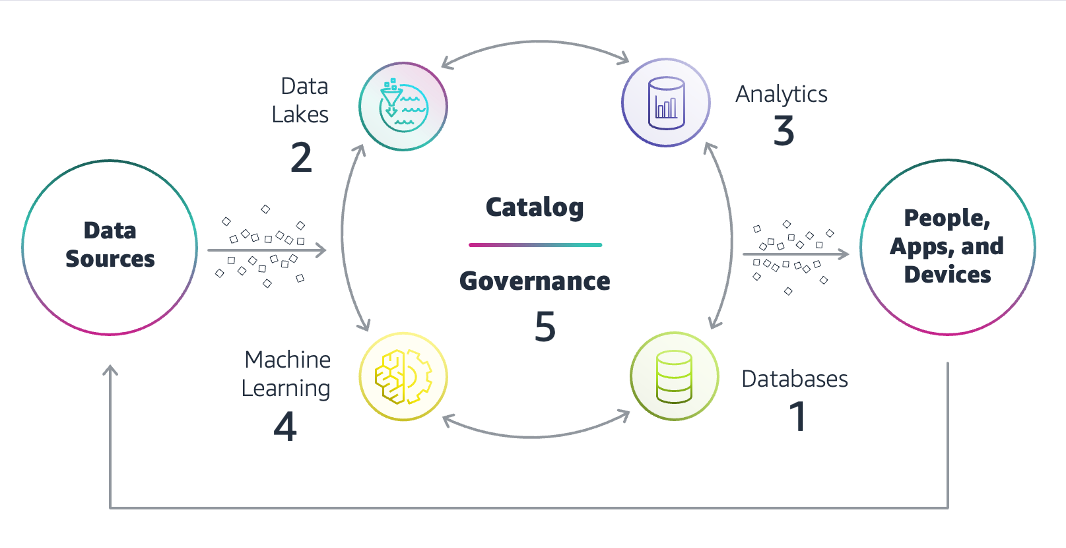
Let’s address the elephant in the lecture hall. You’re 21, majoring in data science and actuarial science, and every professor, tech blogger, and LinkedIn influencer is telling you the same thing: coding is dead. AI writes it now. The so-called “ever-presence of computing power” has made implementation obsolete. What’s left? Architecture.
Here’s the uncomfortable truth hiding beneath that career advice: they’re not entirely wrong, but they’re dangerously oversimplifying what “data architecture” actually means, and how long it takes to learn.
The Great Abstraction Paradox
Every generation of technology does the same thing: it automates the previous generation’s grunt work, then demands more sophistication from the humans who use it. SQL made file processing obsolete. Query builders made SQL “easy.” Now AI makes queries obsolete. But each abstraction layer doesn’t eliminate the underlying complexity, it just moves it somewhere else.
The framing that “coding is obsolete” mistakes spelling for writing. Knowing Python syntax was never the valuable skill. The valuable skill was always knowing what to build, how the pieces should fit together, and what happens when the assumptions break, which is always, eventually.
This is why the advice to focus on data architecture is actually sound, but the framing needs serious correction. You’re not “learning architecture instead of coding.” You’re learning architecture because coding became too cheap to matter. And that’s a fundamentally different mandate.
Why Legacy Architecture Fails Exactly When You Need It Most
The modern data architecture landscape in 2026 is a graveyard of good intentions. Most enterprises didn’t design their data systems, they accumulated them. A CRM here, a data warehouse there, a data lake that became a data swamp, SaaS applications multiplying like rabbits, and event streams somewhere in between.
When you add AI to this mess, the cracks become chasms. There are four specific reasons legacy architectures break down for AI workloads, and each one is a career opportunity hiding in plain sight.
Fragmentation Is Killing Context
Data is scattered across more systems and formats than ever. Each database, application, and event stream organizes information differently. Legacy architectures, designed for a handful of structured systems, simply cannot integrate these silos at the speed AI requires.
When an AI agent asks “what’s the current status of customer X’s order?” it needs to correlate data from your CRM, your order management system, your warehouse database, and your shipping provider, all in real time, all with consistent semantics. Most enterprise architectures can’t answer that question in real time even with a human at the keyboard.
Analytics and AI Don’t Speak the Same Language
Traditional analytics queries structured tables, runs batch jobs overnight, and produces dashboards you check in the morning. AI doesn’t work that way. It needs continuous data flows for model training, low-latency feature retrieval for inference, and retrieval-augmented generation (RAG) pipelines that plumb context into prompts.
The infrastructure that serves a quarterly revenue report is not the infrastructure that serves a fraud-detection model making decisions in milliseconds. Modern architecture must support both, which means a fundamental rethink of your entire data stack.
Trust Is Now an Architectural Requirement
When an AI agent makes a decision based on your data, you can’t just blame the model. The data quality, lineage, governance, and semantics must be trustworthy enough that you’d stake your business on them, because you are.
Context and trust have become architectural requirements, not governance afterthoughts. Data quality, metadata management, lineage tracking, and access policies must travel with the data as it moves across platforms. If an AI system can’t trace where its input came from, you can’t trust its output.
Point-to-Point Integration Is a Spaghetti Factory
Every organization connects systems one use case at a time. This pipeline for the CRM sync, that pipeline for the reporting dashboard, another custom integration for the ML team. These point-to-point connections multiply into a tangled web of dependencies, duplicated logic, and single points of failure.
Modern architecture needs reusable integration patterns, data products, semantic layers, governed APIs, rather than custom connections that break every time a vendor updates their schema.
The Streamhouse Paradigm: What “AI-Ready” Actually Looks Like
There is a new architecture form taking shape that completely redefines what we expect from data infrastructure. The Streamhouse approach treats business state not as something you batch-process overnight, but as something you maintain continuously, in real time.
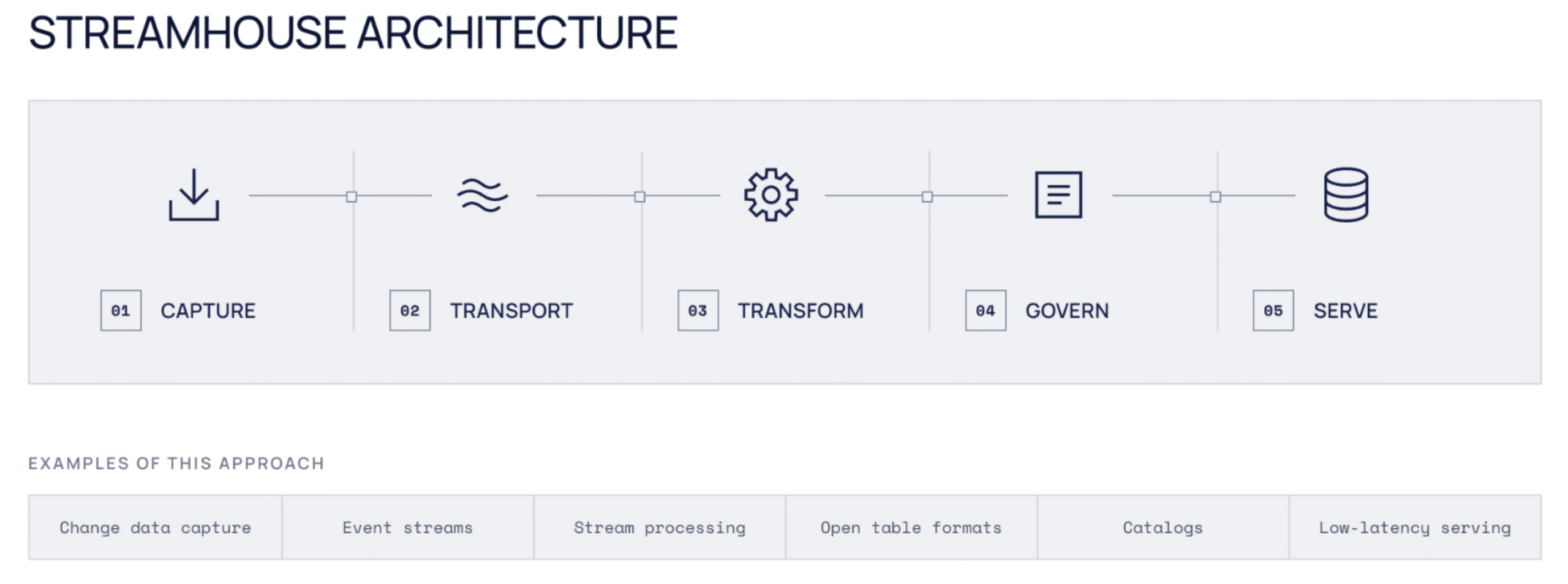
The thesis is simple: AI agents don’t have time for yesterday’s data vault. They need the business state as it exists right now, with semantic context attached, and they need to reuse that understanding across applications without each one rebuilding the same contexts from scratch.
Streamhouse requires three things:
- Always current: Build from history, then maintain state as changes happen. Replay, correct, and recompute when business rules change.
- Decentralized: Don’t consolidate the business onto one platform. Let systems retain their specialized roles while sharing a common understanding.
- Mission critical: When software acts based on your data, correctness, availability, security, and traceability become non-negotiable.
This isn’t theoretical. Yelp built a streaming lakehouse architecture that reduced analytics data latency from approximately 18 hours to minutes and cut storage costs by 80%. Siemens Healthineers uses Apache Flink to process operational data before it hits the warehouse, killing multi-hour batch reprocessing cycles. In September 2026, Aiven, Confluent, Redpanda, StreamNative, and Ververica formed the Streamhouse Working Group to standardize the architecture.
The pattern is real, it’s forming now, and it’s exactly what the “architecture over coding” crowd means when they say that system design is where the value lives.
The Eight Capabilities That Separate Architects from Implementers
If you want to understand what modern data architecture actually requires, forget the platform marketing and focus on capabilities. The DATAVERSITY framework breaks it down into eight non-negotiable functions:
| Capability | Business Outcome | Failure if Missing |
|---|---|---|
| Interoperability | Data moves across platforms | Silos and duplicate pipelines |
| Batch + Streaming | Right latency for each workload | Overbuilt pipelines or stale data |
| Multi-format Data | Analytics and AI use broader enterprise data | Limited innovation and AI training |
| Metadata + Semantics | Discoverable, traceable data | Low trust and high interpretation cost |
| Quality + Observability | Earlier issue detection | Silent downstream degradation |
| Governance + Security | Consistent policy enforcement | Risk and manual control gaps |
| Reusable Products | Clear ownership at scale | One-off extracts and duplicated logic |
| Modular Scale | Architecture evolves with demand | Lock-in and expensive redesigns |
Every one of these capabilities is a career path. Every one of these failures is a multi-million-dollar consulting engagement. And every one of them requires understanding system design more than code implementation.
The Brutal Career Math You Need to Accept
Here’s where the Reddit advice gets real, and it’s not what the professors are telling you. Architecture is a mid-to-senior-level path. The experienced voices in the data engineering community are unanimous on this point: you cannot skip the line.
You will not have a good grasp of architecture for several years into your career, and that’s normal. To design systems well, you need exposure to systems that worked, systems that failed, and plenty of evolutions in between. You need to see projects that were over-engineered and projects that collapsed because they were under-engineered. No book can give you that.
Architecture also involves a huge amount of people and project management that simply cannot be taught from a textbook. Convincing a business domain team to adopt a data product model while their leadership is demanding a dashboard by Friday is a political skill, not a technical one. Someone described it as herding cats, that’s generous to cats.
And here’s the uncomfortable addendum: architecture positions are not entry-level jobs. If you want to be an architect by 30, you need to be a damn good engineer by 25. That means learning to write good code, understanding distributed systems deeply, and building the scar tissue that only comes from production failures.
Your Reading List Is Shorter Than You Think
If you’re starting now, your curriculum is surprisingly focused. One book dominates the recommendations from working professionals: Martin Kleppmann’s Designing Data-Intensive Applications (DDIA). It’s been the gold standard for years and shows no sign of being dethroned. It covers the fundamental tradeoffs in distributed systems, storage engines, replication, and consistency models in a way that will make you dangerous in architecture conversations. But read it when you can apply the concepts. Read it as a practitioner, not a student.
Skip the DAMA-DMBOK framework. The practitioners I trust are split on it, but the criticisms cut deeper: it’s a data management framework with a heavy focus on governance and a “vague connection to business requirements and application.” Proper data architecture should go far beyond paper-based methodology frameworks and root itself in actual business scenarios. There’s a reason the folks recommending it usually work in governance.
If you want a secondary read, John Ousterhout’s A Philosophy of Software Design is legitimate. It’s not about data architecture specifically, but it builds the design-first mindset that transfers directly. Think of it as training wheels for architectural reasoning.
The Hard Truth About “Coding Is Dead”
Let’s be direct about the claims that started this conversation. Coding is not dead. But a very specific kind of coding, the kind that involves translating well-understood business requirements into CRUD endpoints and ETL scripts, is rapidly being commoditized. If your value proposition is “I write pipelines faster than the AI can”, you will lose that race.
But here’s the plot twist that the “coding is dead” crowd misses: the AI code generation revolution is simultaneously making architecture harder and more necessary. When your LLM generates ETL pipelines in seconds, semantic drift becomes the new killer. The models hallucinate data definitions, silently change the meaning of fields in transformation logic, and then your production database becomes toast. Without a strong architectural framework to enforce contracts, lineage, and semantic consistency, AI-generated code becomes self-replicating technical debt.
This is why design-first approaches to data development are no longer optional. The architecture isn’t just the blueprint anymore, it’s the guardrails that keep AI from running your data infrastructure off a cliff.
What Your Future Actually Looks Like
If you follow this path, your day-to-day work as a data architect will look radically different from a developer’s life. You’ll be making decisions about workload latency tradeoffs. That quarterly report can wait for the nightly batch. That fraud check cannot. You’ll define data products that package trusted data with its definitions, owners, and access rules so that AI models know what the data means and how to use it. You’ll spend more meetings aligning on semantics than writing configuration.
And when you’re doing this work, the AI will build what you design. The implementation is nearly free. The correctness of the design is everything.
The economics of this shift extend beyond engineering. AI infrastructure costs are dominating 2026 conversations, and architecture decisions influence those costs more than optimization techniques ever will. A well-designed data flow with proper lifecycle management will save you more money than any model quantization trick. The architecture isn’t just about correctness, it’s about the multiplying cost of getting it wrong at scale.
The Bottom Line for Early-Career Professionals
The professors are right in one sense: architecture is where the strategic value now sits. But the path isn’t from student to architect. It’s from student to solid engineer, to lead engineer, to architect. You need the technical deep knowledge to design the right data models, careful implementation to understand what’s actually maintainable and where old patterns break. The people who try to skip the engineering years rarely become good architects.
Start with good software engineering fundamentals. Read deeply and carefully. Build things that break. Fix them. Then read DDIA again. Build more things. Volunteer for the projects where everyone else says “that’s too messy.” That’s where architecture gets learned.
And when you finally find yourself in a position to design the data architecture for systems that will run the business, whether it’s a Streamhouse, a data mesh, or a modern lakehouse, all of which get buzzword-laden quickly, remember that your job is to make the right decisions easy and the wrong decisions impossible.
Because the next generation of software won’t wait for the business to catch up. Your data architecture shouldn’t either.
The AIs are coming for code. They’re already using data. The systems underneath, the ones deciding what data means, where it comes from, and whether it can be trusted, those are yours if you want them.