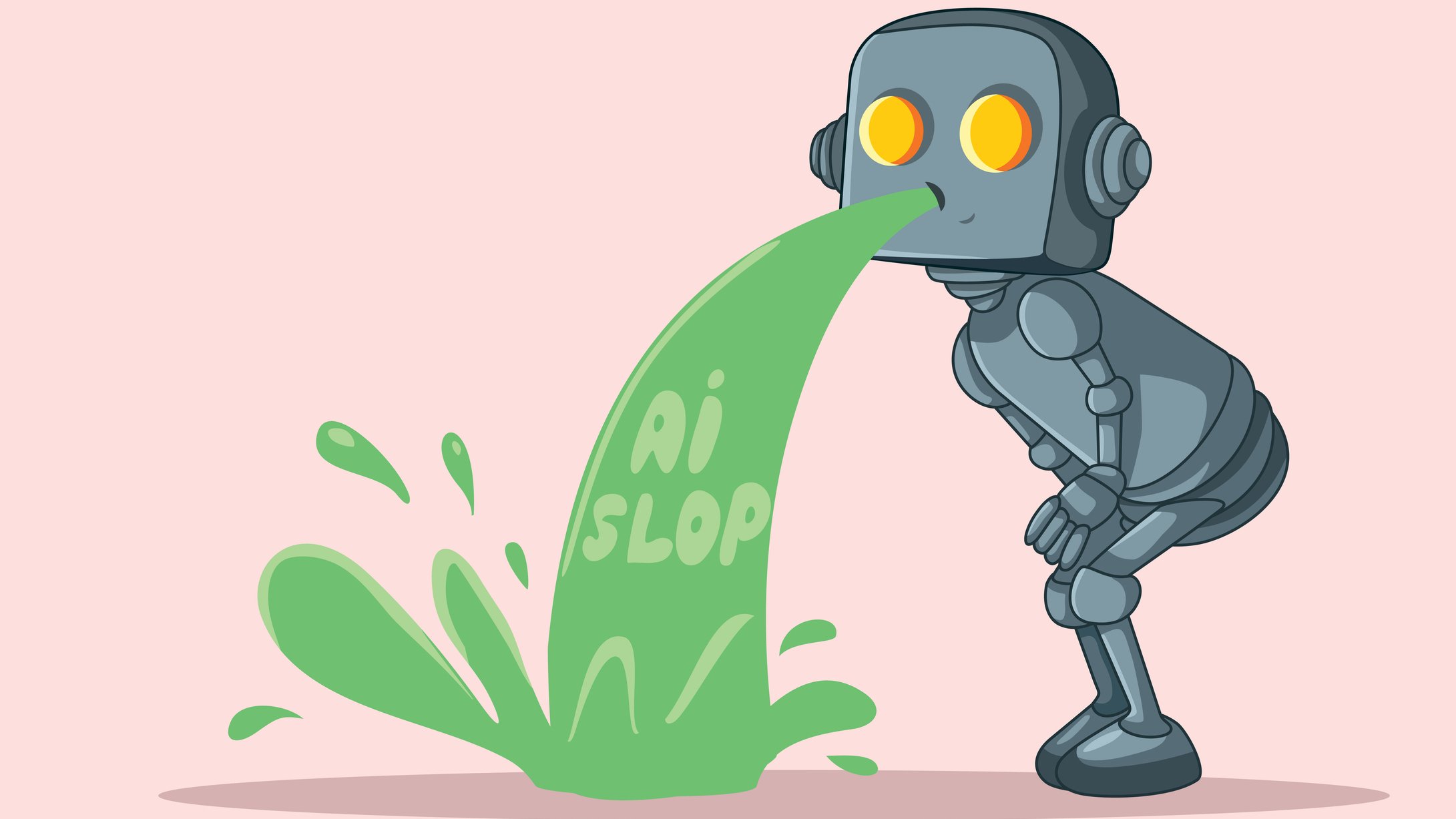
YouTube’s recommendation algorithm has become a slot machine for AI content farms, and it’s paying out jackpots to the tune of $117 million annually. New research reveals that one in five videos served to new users is algorithmic slop, low-effort, AI-generated content engineered to exploit engagement metrics while delivering zero nutritional value to viewers’ brains.
The numbers are staggering: 278 of the top 15,000 global channels are now dedicated AI slop factories, commanding 63 billion views and 221 million subscribers. This isn’t a glitch in the system. It is the system.
The Anatomy of AI Slop
Before diving deeper, let’s define the product. According to video-editing platform Kapwing’s comprehensive report, “AI slop” refers to careless, low-quality content generated using automatic computer applications and distributed to farm views and subscriptions. Its more sinister cousin, “brainrot,” describes compulsive, nonsensical video content that corrodes the viewer’s mental state while watching, often AI-generated but optimized for maximum algorithmic capture.
The distinction matters. Not all AI-assisted content qualifies as slop. The problem is the intention: industrial-scale production designed to game discovery mechanisms rather than inform, entertain, or create genuine value.

The Economics of Algorithmic Exploitation
The financial incentives are brutally clear. India’s Bandar Apna Dost channel, featuring an anthropomorphic monkey and Hulk-like character fighting demons while traveling in tomato helicopters, has amassed 2.4 billion views and generates an estimated $4.25 million per year. The channel’s owner didn’t respond to press inquiries, likely too busy counting algorithmic dividends.
This isn’t an isolated success story. The Kapwing study reveals a global shadow economy:
- Spain leads in subscriber capture: 20.22 million people follow trending AI slop channels, nearly half the country’s population
- South Korea consumes the most: 8.45 billion views across slop channels, nearly double second-place Pakistan
- United States ranks third with 3.39 billion views, led by Spanish-language channels targeting underserved demographics
- Singapore’s Pouty Frenchie (2 billion views, ~$4M estimated earnings) targets children with AI-generated bulldog adventures
- Pakistan’s The AI World (1.3 billion views) exploits disaster themes with AI-generated flooding footage
The operational model is ruthlessly efficient. As KnowTechie reports, content farms combine advanced text-to-video generators, AI voiceover tools, and image synthesis models to pump out hundreds of videos daily with minimal human oversight. Set the bots loose, let the cash roll in.
Enforcement Theater: Disney Gets Protection, Viewers Get Slop
YouTube’s moderation strategy reveals a cynical calculation. When Disney served a cease-and-desist order in December, Google immediately purged dozens of videos featuring Mickey Mouse and Elsa. The platform permanently banned Screen Culture and KH Studio, channels with millions of views, for “spam and deceptive practices.”
Yet non-infringing slop channels thrived during the same period. Cuentos Facinantes grew by 700,000 subscribers in December alone, hosting content identical to the banned “fake trailers” minus protected IP. This discrepancy suggests a “safe harbor” strategy: enforcement triggers only when powerful rights holders intervene, not when user experience degrades.
YouTube CEO Neal Mohan’s public stance exemplifies the contradiction: “The genius is going to lie whether you did it in a way that was profoundly original or creative. Just because the content is 75 percent AI generated doesn’t make it any better or worse.”
The platform claims to remain “focused on connecting users with high-quality content regardless of how it was made.” The data tells a different story. For new users, 21% of recommendations are AI slop, and 33% qualify as brainrot. The algorithm isn’t neutral, it’s actively promoting volume over value.
The Dead Internet Theory Goes Video
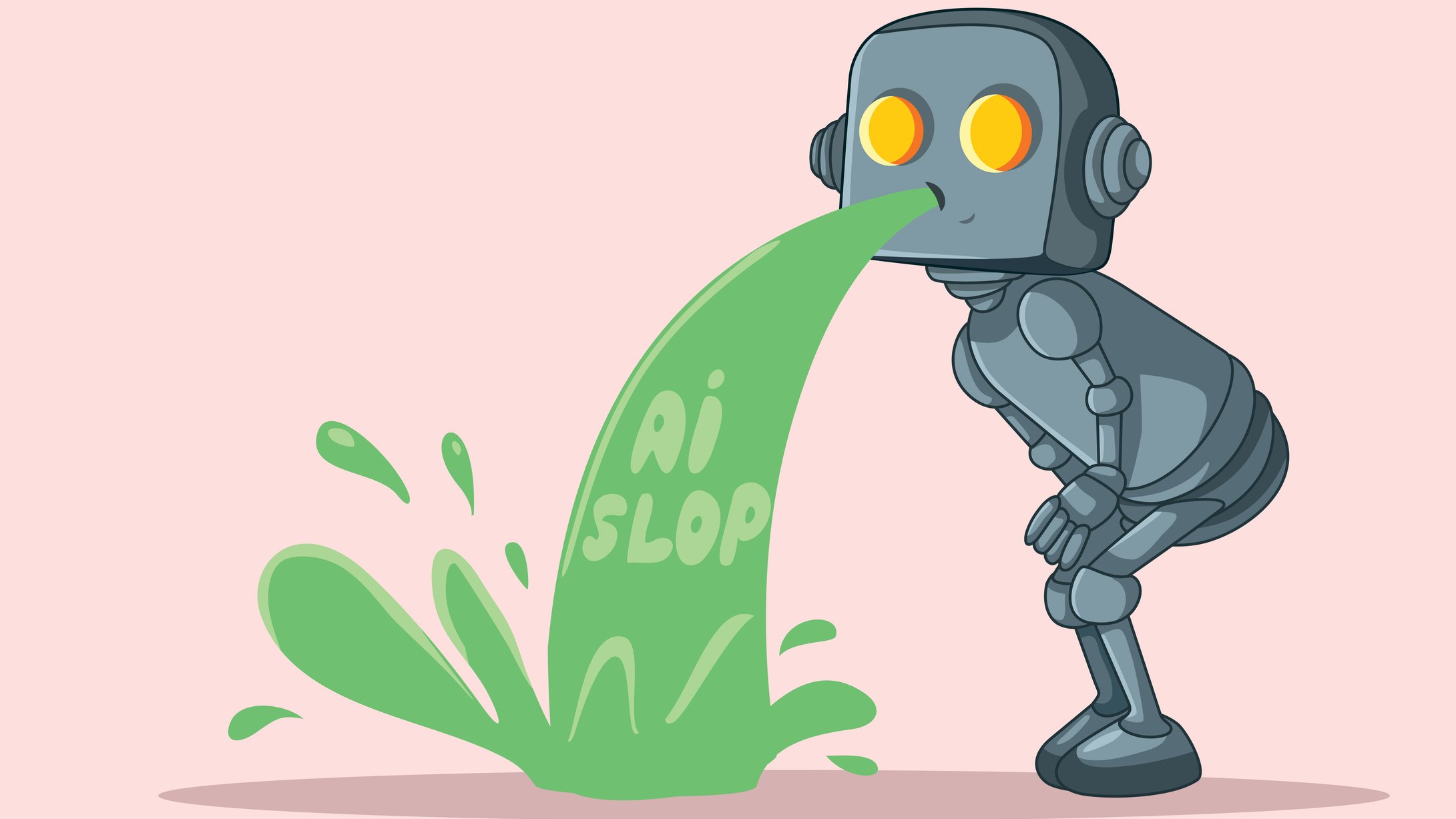
The implications extend beyond YouTube. Reddit discussions reveal a growing sentiment that the “dead internet theory”, the idea that most online activity is now bots interacting with bots, has become empirical reality. One commenter notes: “AI uses so much from the internet to advance their training. Before long, new models will just be trained on what some other model spewed onto the internet.”
This creates a feedback loop. AI models trained on internet data produce slop that floods platforms, which then trains the next generation of models. The result is a progressive degradation of digital information quality, a phenomenon researchers call “information exhaustion.” As Eryk Salvaggio from Cybernetic Forests puts it: “Information of any kind, in enough quantities, becomes noise.”
The trend is accelerating. PCMag reports that over 50% of articles online are now AI-generated. YouTube’s video slop is simply the visual manifestation of a broader phenomenon: the automation of mediocrity at scale.
Platform Divergence: Meta’s Embrace vs. YouTube’s Denial
While YouTube struggles with its identity crisis, Meta has gone full cyborg. The company’s dedicated “Vibes” feed reached 2 million daily active users by productizing AI content explicitly. Facebook VP Jagjit Chawla confirmed the strategy: “If you, as a user, are interested in a piece of content which happens to be AI-generated, the recommendations algorithm will determine…”
Meta’s system is agnostic to origin. YouTube maintains a veneer of “creator-first” prestige while its feed fills with algorithmic noise. The strategic split reveals a fundamental question: Should platforms optimize for human creativity or engagement metrics? The answer, for now, is whichever generates more ad revenue.
The Human Cost of Algorithmic Abundance
Behind the billion-view channels lies a brutal creator economy. Ukrainian creator Oleksandr, who operates 930 channels with a team of 15, admits: “YouTube is basically just clickbait and sexualization, no matter how morally sad it is. Such is the world and the consumer.”
His operation cleared $20,000 monthly at its peak, but YouTube’s aggressive takedowns have reduced revenue to $3,000. The Guardian reports that only 5% of AI creators ever monetize a video, and just 1% make a living. The majority buy into “get rich quick” courses peddled on Telegram and Discord, spending more on tips than they earn from content.
The production pipeline is depressingly efficient:
1. Scrape trending topics from social media
2. Generate scripts using ChatGPT or Gemini
3. Create visuals with Midjourney or Stable Diffusion
4. Synthesize voiceovers using AI text-to-speech
5. Automate video editing and thumbnail generation
6. Publish 50-100 variations daily
7. Let the algorithm sort winners from losers
This “conveyor belt” approach, as Oleksandr describes it, prioritizes volume so completely that quality becomes a liability. Spending more time on a video means fewer uploads, which means lower algorithmic favor. The incentive structure actively punishes craftsmanship.
Advertiser Backlash and the Uncanny Valley
The economic model faces growing headwinds. McDonald’s Netherlands pulled its AI-generated Christmas commercial after just three days when consumers mocked its “soulless” aesthetic. The campaign required “thousands of takes” to produce, highlighting the irony: AI tools marketed for efficiency often demand more human intervention than traditional methods.
Melanie Bridge, CEO of production company The Sweetshop, defended the effort but revealed the core tension: “This wasn’t an AI trick. It was a film. And here’s the thing I wish more people understood: magic isn’t the technology. The magic is the team behind it.”
The problem is scale. When platforms fill with automated output, the perceived value of all digital media declines. Advertisers risk brand safety by appearing next to brainrot content that corrodes viewer attention spans. Yet the sheer volume of slop makes manual brand safety impossible, creating a market for AI slop detection tools that, ironically, will likely be sold back to the same platforms that enabled the problem.
The Path Forward (Or Lack Thereof)
YouTube’s official response remains noncommittal. A spokesperson stated: “Generative AI is a tool, and like any tool it can be used to make both high- and low-quality content. All content must comply with our community guidelines.”
The guidelines, however, don’t address quality. They prohibit copyright infringement, hate speech, and harmful content, but not algorithmic spam designed to exploit engagement loops. This legalistic approach leaves a massive gray area where slop thrives.
Some users have taken matters into their own hands. Reddit communities report creating empty recommendation feeds by aggressively blocking AI channels. Others stick to trusted subscriptions, abandoning discovery entirely. As one user laments: “I now only watch channels I’ve been watching for years, the ones I can trust not to use AI.”
The tragedy is that this defensive crouch destroys what made YouTube revolutionary: the ability to stumble upon genuine human creativity. When discovery becomes a minefield of synthetic content, users retreat to walled gardens, accelerating the platform’s transformation into a broadcast network rather than a democratic video commons.
Technical Implications for AI Practitioners
For those building AI systems, the YouTube slop economy offers several sobering lessons:
- 1. Scale Amplifies Intent: Tools designed for democratization inevitably attract exploitation. Every AI product manager should model for adversarial use cases at 1000x scale.
- 2. Metrics Are Not Values: Optimizing for engagement without quality guardrails creates a race to the bottom. Your north star metric might be your platform’s undoing.
- 3. Moderation Is Not Optional: Post-hoc content review cannot keep pace with generative AI. Real-time detection and throttling are infrastructure requirements, not features.
- 4. The Dead Internet Is A Feature, Not A Bug: When bots generate content for bot audiences, human users become edge cases. Design for human authenticity or watch your platform become a synthetic ghost town.
The Kapwing study concludes with a warning: “The idea that only some AI media is slop propagates the idea that the rest is legitimate and the technology’s proliferation is inevitable.” This normalization is perhaps the greatest danger. As we accept algorithmic mediocrity as the price of scale, we risk forgetting what quality looked like in the first place.
YouTube’s AI slop economy isn’t a temporary glitch. It’s a preview of what happens when engagement capitalism meets generative AI without guardrails. The millions in revenue are real. The billions of views are real. The only thing fake is the content, and increasingly, the entire premise of a human-centered internet.
The Bottom Line: YouTube’s algorithm has become a perverse incentive machine, rewarding content farms that automate mediocrity while punishing creators who invest time and craft. The $117M slop economy is a tax on human attention, paid by viewers who can’t distinguish between synthetic and authentic, and by genuine creators whose work gets buried under an avalanche of algorithmic noise. Until platforms internalize that quality and authenticity are infrastructure requirements, not nice-to-haves, the slop will keep flowing.