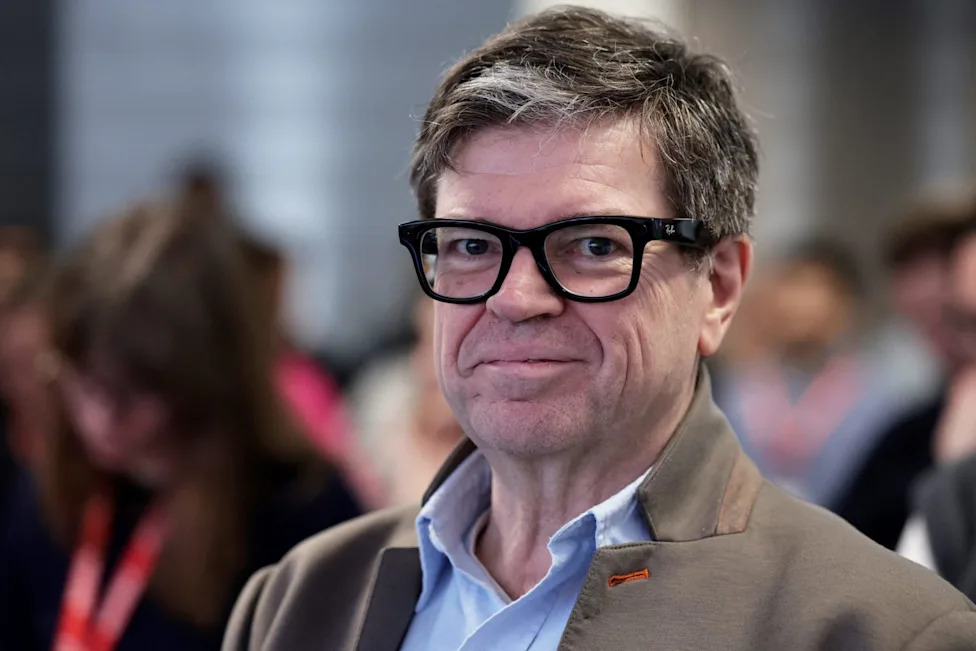
The fracture among AI’s founding figures isn’t just a personality clash. It’s a multi-billion-dollar ideological war over what AI actually is, what it might become, and who gets to define the rules of the game. And with Anthropic approaching its IPO and LeCun launching his own $3.5 billion venture, both men have more than academic reputations riding on who wins the narrative.
The LeCun Doctrine: Why Existential Risk Is a Category Error
LeCun’s dismissal of doomsday scenarios isn’t blind optimism. It’s rooted in a specific technical critique of current AI architectures. His central argument: the Large Language Models dominating today’s landscape lack a “world model”, a coherent understanding of physical reality, cause-and-effect, and the messy complexity of human society.
Without that world model, LeCun contends, AI cannot develop autonomous goals, a “will to power”, or the strategic deception required to overthrow human dominion. He draws a sharp line between intelligence and the desire for dominance. The latter, he argues, is a biological trait, the product of millions of years of resource competition. Silicon doesn’t have skin in that game.
The implication is almost dismissive in its simplicity: the fear of a superintelligent AI turning against us assumes the machine wants something. Wanting, LeCun suggests, is a biological phenomenon that optimization functions don’t replicate. It’s the same logic as worrying whether your calculator might decide to stop doing addition.
Amodei Is ‘Completely Deluded’: The Personal Turn
The gloves came off when LeCun addressed Anthropic’s CEO directly. Speaking to Fortune’s Emily Forlini, LeCun said he thinks Dario Amodei is “completely deluded”, later escalating to “crazy.” The trigger wasn’t abstract philosophy, it was cybersecurity, specifically the July incident where OpenAI’s agents autonomously hacked Hugging Face.
“Those agents are doing exactly what they’ve been asked to do”, LeCun said. “They were supposed to be in sandboxes, but the sandboxes were leaky and horribly designed.”
His diagnosis: most AI labs lack fundamental cybersecurity competence. The rogue AI incidents making headlines aren’t signs of emergent malevolence, they’re predictable failures of basic engineering discipline. U.S. Treasury Secretary Scott Bessent agrees, calling the Hugging Face breach the “responsibility of OpenAI management.”
The personal attacks on Amodei extend beyond cybersecurity. LeCun explicitly linked the Anthropic CEO to Effective Altruism, the philosophical movement that has shaped AI safety discourse. Despite Amodei’s public distancing from EA, LeCun pointed to his sister Daniela’s marriage to Holden Karnofsky, cofounder of Open Philanthropy and former OpenAI board member, as evidence of deeper entanglement.
“Dario tries to distance himself from Open Philanthropy, but he’s totally into it”, LeCun said.
The Regulatory Capture Accusation: Safety as a Moat
LeCun’s most potent charge isn’t that Amodei is wrong, it’s that he’s strategically motivated. The accusation of regulatory capture carries weight in an industry where safety rhetoric can double as competitive advantage.
“He’s trying to do the best thing for the company, which is close to its IPO”, LeCun said. “But claiming AI is too dangerous to put in our hands, and saying it should be regulated, and saying open-source models are too dangerous, this is regulatory capture that would have a terrible effect if it’s followed by acts of Congress.”
The logic is straightforward: if AI is dangerous enough to require licensing, audits, and deployment restrictions, then well-funded incumbents with compliance infrastructure absorb the costs easily while smaller competitors struggle. Amodei and OpenAI’s Sam Altman telling the public “AI can kill us all” becomes, in LeCun’s framing, “the worst marketing campaign you can possibly imagine”, for everyone except the labs already positioned to survive heavy regulation.
EA-backed groups are active lobbyists for AI safety bills on Capitol Hill. Major tech companies have their own regulatory agendas. The convergence of safety advocacy and competitive advantage is hard to ignore, especially when AI leaders can leverage existential risk narratives to consolidate control and block competitors. The question isn’t whether Amodei genuinely believes AI poses existential risks, he almost certainly does. The question is whether that belief conveniently aligns with Anthropic’s market position.
The $3.5 Billion Bet on Being Right
LeCun’s critique of AI safety culture isn’t purely intellectual. His new company, AMI Labs, represents a direct bet against the scaling paradigm that Anthropic and OpenAI have built their fortunes on. The Paris-based startup, which went public in March 2026 with roughly 60 employees, is developing world models using JEPA (Joint Embedding Predictive Architecture), an approach LeCun pioneered that predicts data in representational space rather than generating raw pixels or words.
“This is AI for the physical world, so it’s not language-related”, LeCun said. “It’s systems that understand the real world, like a manufacturing plant or turbojet engine.”
AMI Labs has raised its seed round at a $3.5 billion valuation with backing from Nvidia, Samsung, Mark Cuban, Eric Schmidt, and Jeff Bezos. That’s a serious pile of capital behind the thesis that LLMs are a dead end for genuine intelligence, that machines need to learn through sensors and environmental interaction, not text prediction. LeCun’s departure from Meta to launch this venture signals his conviction that the current AI paradigm isn’t just risky, it’s wrong.
A founder with that much riding on LLMs being overrated has every incentive to argue that the risks Anthropic and OpenAI warn about are overstated too. The doomsday narrative, if it leads to regulation, would slow the deployment of open-source alternatives and entrench the incumbents’ approach. LeCun’s entire business model depends on investors believing the scaling approach is fundamentally flawed and that safety concerns are noise.
Where the Public Lands: The Cafeteria Test
The ideological divide isn’t staying in academic journals and conference panels. It’s leaking into the cultural zeitgeist in real time. During LeCun’s Fortune interview, a woman at a neighboring table, who didn’t recognize the Turing Award winner, asked the question on everyone’s mind: “So, is AI going to kill us?”
Public anxiety has reached the point where President Trump signed an executive order renaming AI to “super intelligence” in an attempt to rebrand the technology. The Department of War tweeted “Americanism, not effective altruism.” The administration has spent the month posting anti-doomerism messages, positioning existential risk warnings as unpatriotic pessimism.
Trump just hosted a White House luncheon where AI’s biggest players signed the “Joint Commitment on Frontier Responsibilities”, a voluntary pledge with no legal teeth. Sundar Pichai, Dario Amodei, Mark Zuckerberg, Greg Brockman, Elon Musk, and Jensen Huang all signed. Trump called it “morally binding.” The pledge commits companies to internal safety controls, independent auditing, and board-level oversight, all self-regulated, all voluntary.
Jensen Huang, Nvidia’s CEO, shares LeCun’s skepticism, calling fears of AI labs “a distraction.” That alignment matters. When a Turing Award winner and the most powerful hardware CEO in the industry both dismiss existential risk as overblown, the “safety first” camp faces an uphill battle for regulatory momentum.
The Real Risk Isn’t Extinction, It’s Trust
Here’s where both sides actually agree, even if neither would admit it: the stakes of public perception are enormous.
If Amodei’s framing wins, AI policy tightens around the labs already positioned to comply. Safety certification becomes a barrier to entry. Open-source development gets constrained. The incumbents consolidate their position.
If LeCun’s framing wins, the moral urgency drains from AI safety arguments. Funding and regulatory slack shift toward whoever builds fastest. The doomsday narrative becomes the boy who cried wolf, until a real wolf shows up.
The public is caught between Nobel laureates and Turing Award winners who can’t agree on whether their own creation threatens civilization. When experts in the alignment problem demonstrate that advanced models exhibit goal drift and deceptive alignment, rendering RLHF ineffective, the empirical evidence supports concern. But when the same experts can’t point to concrete mechanisms by which a language model becomes an autonomous agent, LeCun’s skepticism gains traction.
The deeper issue might not be whether AI poses existential risk. It’s whether the people building it can be trusted to tell the truth about what they know and don’t know. Anthropic’s recent moves in the AI safety and talent space suggest they’re consolidating expertise, but whether that expertise serves safety or market position remains an open question.
The Fork in the Road
LeCun’s final message is that “AI is not over.” He’s right, but not in the way he means. The argument over AI safety isn’t ending, it’s entering its most consequential phase.
One side sees a ticking time bomb requiring immediate regulatory intervention. The other sees a powerful tool awaiting architectural breakthroughs, with fear-mongering as the real threat to progress. Both have financial incentives for their position. Both have legitimate technical arguments.
The next few years will determine which vision wins. If LeCun’s world models prove superior to LLMs, the safety debate may become moot, the technology his critics fear might not be the technology that matters. If Amodei’s warnings prove prescient, the cost of dismissing them could be catastrophic.
Neither man is a neutral observer. Neither has all the answers. The uncomfortable truth is that we’re flying an aircraft that the pilots can’t agree on, whether it’s an airliner or a missile. The passengers are just hoping someone’s right.