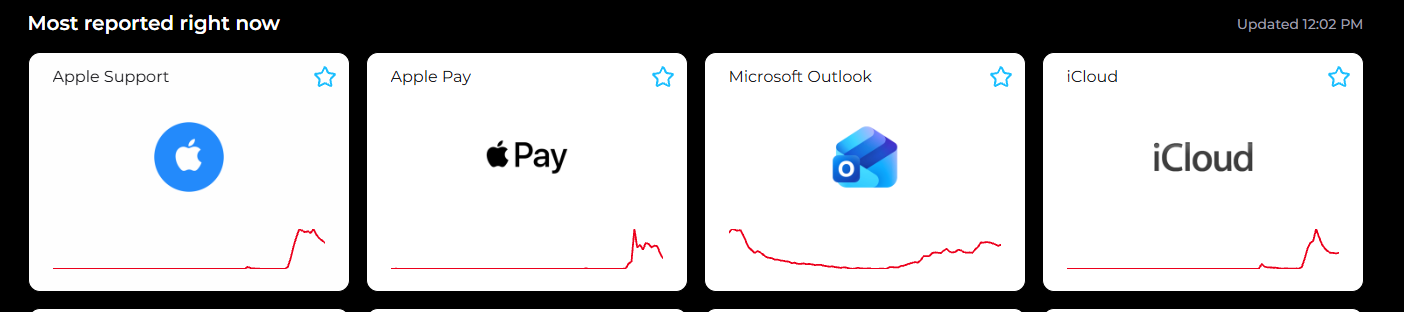
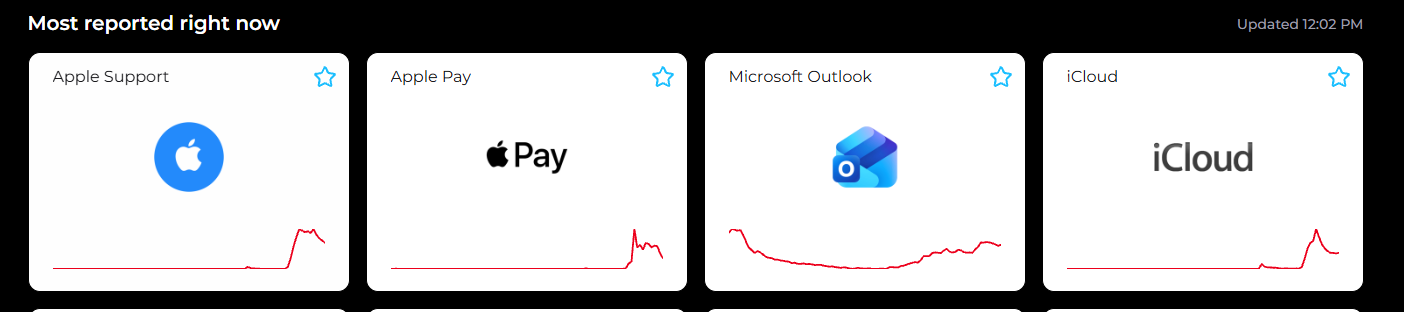
Maybe it was the AirPods beeping in your bag. Or the sudden “Your Apple ID has been signed out” alert on your MacBook. Somewhere around 9:45 AM PT on Tuesday, November 17th, a chunk of the world’s most-valuable tech ecosystem decided to take a collective coffee break.
The outage hit everything at once. iCloud Account & Sign In went down for “all users.” Apple Pay reports on Down Detector spiked past 2,000 in minutes. The App Store, Apple Music, AppleCare, and even Apple’s internal retail software all crumbled simultaneously. If you were in the middle of activating a brand new iPhone, a surprisingly common Tuesday activity, you were out of luck, stuck staring at an activation screen that had suddenly become a brick wall.
The most revealing detail about this incident wasn’t the scope, though. It was the stated cause: an internal update. A routine deployment took down the backbone of a $3 trillion company. This is what architectural fragility looks like at global scale.
The Single-Point-of-Failure Trap That Keeps Springing
Let’s talk about what actually happened, because the “internal update” explanation is doing a lot of heavy lifting.
According to TechCrunch, Apple’s spokesperson confirmed: “Many of our systems are back up and running after an internal update caused some outages this morning.” An internal update. One deployment. Multiple, seemingly-unrelated services taken down simultaneously.
For anyone who’s ever worked on distributed systems, this pattern sounds familiar, and terrifying. When a single change can cascade across iCloud, Apple Pay, the App Store, Apple Music, and even retail store point-of-sale systems, it means the architecture shares a critical dependency somewhere. Identity and account services are the obvious suspects here.
Your Apple ID acts as the master key to nearly every Apple service. That’s evident in the NYT’s reporting on the internal update causing the issue. When sign-in breaks, it’s not just one app that fails, it’s everything downstream.
This is the architectural reality of the Apple ecosystem: a highly integrated identity graph. It’s elegant for users (one login, everything works), but it’s catastrophic for resilience. The architecture doesn’t just share infrastructure, it shares fate. The stronger the integration, the more fragile the system becomes under partial failure.
The Blast Radius Was Wider Than You Think
The consumer-facing outage was bad. The developer-facing one was worse.
Tom’s Guide’s live coverage tracked a separate developer status page that showed a much darker picture. Here’s what they found spread across multiple services:
| Service | Status | Duration |
|---|---|---|
| App Store – In-App Purchases | Outage | ~1h 18m |
| Developer ID Notary Service | Outage | ~7h 45m |
| App Store Connect | Outage (2 incidents) | 6h+ ongoing |
| Xcode Cloud | Outage + Issue | ~5.5h |
| App Store Connect – Analytics | Outage | ~7h |
| Apple Music Connect | Outage | ~7h |
| News Publisher | Performance issue | ~4.5h |
The App Store Connect outage is the interesting one. That’s the portal developers use to submit apps, manage releases, check analytics, and handle test flight distribution. It remained affected after most consumer services recovered. If you were planning a Black Friday app release this week, you were likely left scrambling during a critical submission window.
This timeline reveals another structural issue: recovery is not uniform. A cascade failure tends to heal asymmetrically, and downstream services that depend on restored systems can lag for hours. The same coupling that makes the Apple ecosystem seamless also creates a domino chain of recovery delays.
Why “One Internal Update” Signals Deeper Problems
There’s a temptation to chalk this up to a simple rollback. The update was deployed, systems broke, everyone rolled back, problem solved. But if that were the case, we wouldn’t have seen the staggered recovery pattern or the multi-hour outage windows for developer services.
The NBC News report offers a notable detail: at Apple stores in New York and Chicago, employees said their internal software had stopped working, making it impossible to complete purchases or schedule appointments. Retail operations, the physical stores, are downstream of the same identity infrastructure. This suggests Apple’s internal tools integrate tightly with the same account graph, turning an infrastructure incident into a brick-and-mortar revenue hit.
From an engineering perspective, that’s a design smell. Your internal retail point-of-sale system should not depend on the same deployment and failure domains as your consumer-facing cloud services. These systems have different availability requirements, different security postures, and should absolutely have independent blast radius boundaries.
The Week of Outages Is a Pattern, Not a Coincidence
Here’s where things get uncomfortable. The Apple outage didn’t happen in a vacuum.
Days earlier, Microsoft’s Outlook and Teams infrastructure suffered a cascading software failure. That incident turned into a global cloud crisis. Chase’s banking app went down. Even the NSA’s internal classified network had a partial outage. All attributed to software glitches, not cyberattacks.
This clustering of failures across major platforms is statistically unlikely to be random. But it shouldn’t be read as a coordinated attack, it’s a structural pattern. The industry has spent a decade building increasingly complex, layered, and interdependent systems. Every new feature, every new integration, every new automation layer adds state and coupling. The complexity budget has been maxed out, and now we’re seeing the bill.
For Apple specifically, this outage highlights a painful irony. The company that touts privacy as a differentiator, with on-device intelligence and private cloud compute, relies on centralized identity infrastructure that, when it fails, exposes the limits of that approach. You can encrypt everything in transit and at rest, but if the sign-in service goes down, none of it matters to the user staring at a login screen.
What This Means for Your Infrastructure
If you’re a software architect or platform engineer, this incident should be a wake-up call, not about Apple, but about your own systems.
The first lesson is about failure domain separation. Ask yourself: can a single deployment take down multiple unrelated services in your organization? If the answer is yes, you’re carrying the same latent fragility Apple just demonstrated publicly. The fix isn’t just separate environments, it’s separate dependency graphs. Shared databases, shared identity services, shared deployment pipelines, each one is a potential blast radius amplifier.
The second lesson is about deployment safety. The fact that a routine internal update caused this suggests inadequate canary testing. What should a deployment pipeline catch before hitting production? For high-risk identity services, you need progressive rollout strategies, automated traffic shifting, and, most importantly, automated rollback triggers based on error rate thresholds, not just on-call engineer hunches.
The third lesson is about graceful degradation. Even if your system can’t prevent all failures, it can limit their blast radius through design. Netflix pioneered this with their chaos engineering practices, deliberately injecting failures in production to test resilience. Apple’s outage shows what happens when you skip this discipline.
And for those managing smaller infrastructure: don’t assume your organization is too small to learn from this. Actually, smaller teams have fewer safety margins. If a multi-billion-dollar infrastructure with redundant data centers can be taken down by one update, your two-node Kubernetes cluster is absolutely not immune.
The Security Silver Lining
James Knight, a former government white-hat hacker, offered a pragmatic perspective during the outage: “Don’t panic, don’t click any ‘verify your Apple ID’ emails or texts that show up today, because scammers move fast during outages.”
This is the dark side of outage publicity. Every major incident creates a window for social engineering attacks. Users get anxious, receive phishing emails referencing the outage, and are far more likely to click malicious links because they’re primed for account problems.
For security teams, this is a reminder that incident response isn’t just about infrastructure, it’s about user communication. The faster you publish status updates, the less room there is for attackers to spin their own narratives.
The Recovery Was Fast. The Lessons Are Not.
By 6 PM ET, Apple’s status page showed all systems resolved. The total downtime was roughly eight hours for the most affected services. That’s actually decent incident response, especially for a platform of this scale. But the speed of recovery doesn’t excuse the fragility of the design.
The architectural pattern here has a name: implicit coupling. Services that don’t share codebases or teams can still share a critical dependency, in this case, account infrastructure. When that dependency fails, the entire ecosystem trembles.
For architects, the mandate is clear: map your dependency graphs, identify implicit coupling points, and question whether every shared service actually needs to be shared. Just because Apple’s engineering team builds excellent hardware doesn’t mean their cloud architecture is beyond scrutiny. This outage proves otherwise.
A final note for anyone who experienced the outage: if you were locked out of your account and anxiously waiting for iCloud to come back online, you’ve now experienced first-hand what on-device and edge AI performance could change. Apple has been investing heavily in local processing for ML workloads, and to be fair, there are good privacy reasons why they would. But the more functionality moves to the edge, the fewer opportunities for centralized infrastructure failures to ruin your Tuesday afternoon.
That might be the most valuable architectural takeaway of all: sometimes the best resilience strategy is making the cloud less essential in the first place.